REVIEW · FLORENCE
Uffizi Museum & Gallery Tour with Leonardo & Michelangelo Works
Book on Viator →Operated by Blue Tours · Bookable on Viator
Uffizi galleries feel huge until a guide sorts them out. This Uffizi Museum & Gallery tour pairs timed entry with a professional art historian guide, so you spend your time looking at the art instead of hunting for it. I love that you can choose a morning or afternoon start, plus the visit is set up for an intimate, private group rather than a cattle-call march.
Two things I especially like: the chance to see major Renaissance artists in plain view with clear context, and the way the guide keeps the story connected to Florence itself. A possible drawback is simple: this is a tight 2 hours 30 minutes inside one museum, so if you want to linger for long stretches on every painting, you’ll have to pick your favorites.
In This Review
- Key Points You’ll Care About
- Why This Uffizi Tour Feels Worth the Money
- Piazza della Signoria: The Launch Point for a Smarter Entry
- The Uffizi’s Design Stops You in Your Tracks
- Touring the Works: How an Art Historian Guides Your Eye
- Leonardo, Raphael, and Friends: What You’ll Actually See
- The Experience Does One Thing: Focus
- Language, Pace, and the Questions You’ll Want to Ask
- Who This Tour Suits Best
- Price and Logistics: What You’re Really Paying For
- Should You Book This Uffizi Tour?
- FAQ
- How long is the Uffizi Museum & Gallery tour?
- What’s included in the price?
- Where do we meet, and where does the tour end?
- Is the tour private or shared with other groups?
- What language is the tour offered in?
- What do I need to bring for entry, and what’s the cancellation window?
Key Points You’ll Care About
- Timed entry helps you bypass the most frustrating waiting.
- A professional art historian guide puts paintings into Florence and Renaissance context.
- You can choose a morning or afternoon start to fit your plans.
- Your tour is private (only your group), so questions are welcome.
- The meeting point is easy: Piazza della Signoria by the Uffizi.
Why This Uffizi Tour Feels Worth the Money
At $313.48 per person, this isn’t the cheapest way into Florence’s most famous art museum. The value comes from what’s included: a professional art historian guide, a timed entry ticket, and a private format for your group. Instead of paying for “access only,” you’re paying for a guided experience that helps you understand what you’re seeing—and helps you see more of it in a short visit.
The other big value factor is time. The Uffizi is packed, and it’s easy to lose your bearings. A good guide turns that pressure into momentum: you get directed where to look, what to notice, and how different works connect across the Renaissance world. Even better, the guide’s English is described as impeccable and the personality as friendly, which matters because art can feel technical fast—unless someone makes it feel human.
One more practical perk: your admission ticket is included (listed as €29). That means the price isn’t just “tour fee on top of museum entry.” You’re paying for the guide + the planned entry, which is how you avoid surprise add-ons.
You can also read our reviews of more museum experiences in Florence
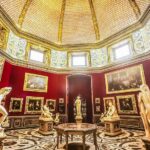


Piazza della Signoria: The Launch Point for a Smarter Entry
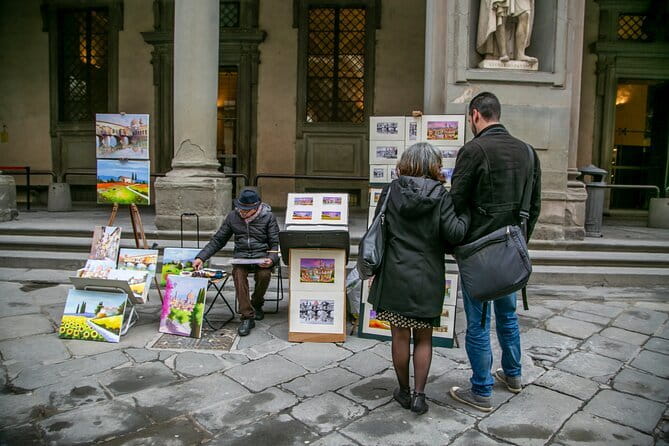
You meet right in Piazza della Signoria, at the public square outside the Uffizi Gallery. It’s a solid choice because it’s central, easy to find, and near public transportation. When you’re in Florence for a day of art stops, that kind of location matters.
From there, the goal is to get you inside efficiently. One review highlighted that the experience felt like breezing through the entrance and getting past the long lines. That tracks with how timed entry works in busy museums: you’re not fighting the biggest crowd wave, and you’re not wasting your energy on logistics.
If you want to use the start time to your advantage, pick based on your day rhythm. The tour offers both morning and afternoon departures, so you can match it to when you’re most alert. For many visitors, afternoon energy means you can linger a bit more afterward in nearby streets; morning means you can ride the early calm into the rest of your sightseeing.
The Uffizi’s Design Stops You in Your Tracks
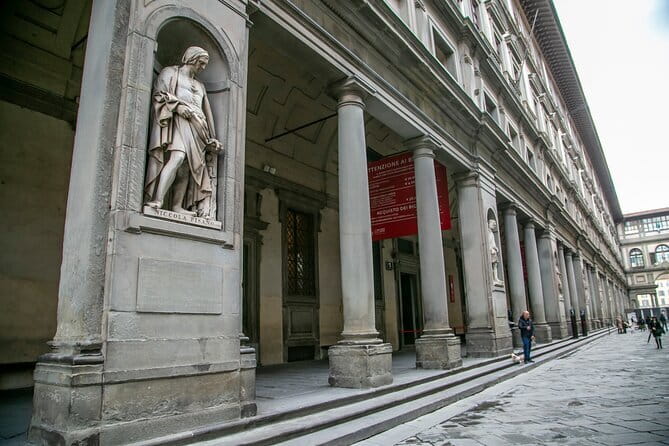
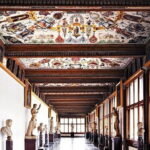
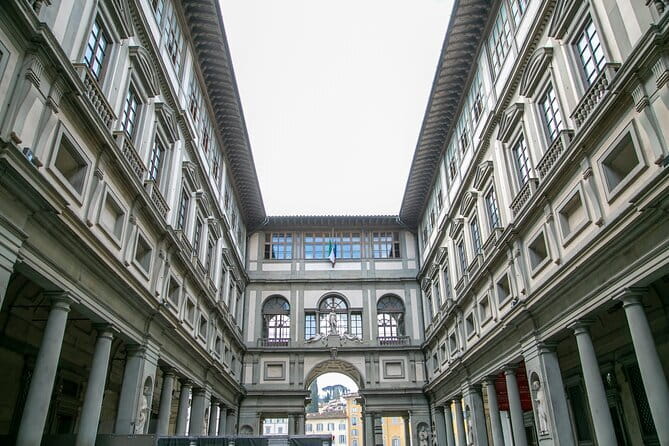
The Uffizi isn’t just a place where art hangs on walls. Even the building itself has a story. The gallery was worked on by Giorgio Vasari around 1560, and you’ll notice the architectural design intrigue: impressive roofs, sharp compositional detail, and finished exhibition spaces. It’s the kind of setting that helps the Renaissance feel real instead of distant.
This matters because it changes how you look. When you understand that the building and display style were part of the overall Renaissance idea, the art feels more integrated. You’re not only looking at masterpieces; you’re stepping into a cultural machine built to showcase power, religion, myth, and learning.
Also, having a guide here helps you spot the rhythm of the collections. Without context, you might see famous names and walk away with a checklist. With guidance, you start to connect themes—religious storytelling, myth and symbolism, political identity, and the technical progress from one artist to the next.
Touring the Works: How an Art Historian Guides Your Eye

This tour is built around a guided walk through one main stop: the Gallerie Degli Uffizi. The experience lasts about 2 hours 30 minutes, which is long enough for real interpretation but short enough to keep energy up when you’re inside a dense museum.
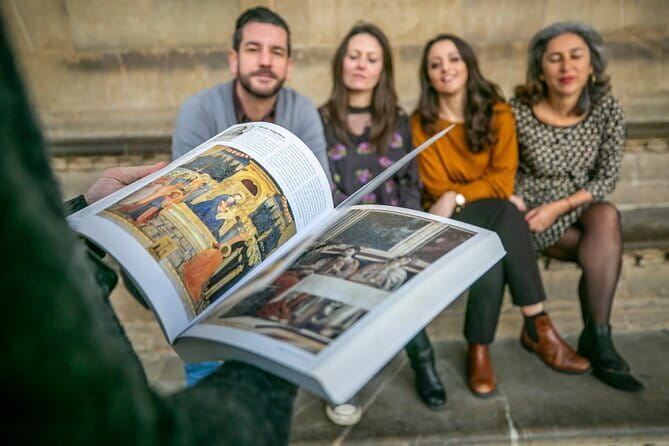
The guide’s role is more than describing. An art historian guide is there to frame what you’re seeing in context—historical, artistic, and Florence-specific. One review emphasized that Leonardo’s strength was situating masterpieces in historic context, along with giving a detailed sense of Florence and its Renaissance geniuses. That kind of structure is what makes the visit stick.
You can expect the conversation to do three useful jobs:
- Explain what you’re looking at (figures, symbols, technique cues).
- Connect the work to larger Renaissance themes and Florence’s place in the movement.
- Point out why it mattered, not just who painted it.
And yes, you can ask questions. The format invites it, so if there’s a detail that makes you curious—what a figure is doing, why a scene looks the way it does—your guide is the bridge between your question and an informed answer.
Leonardo, Raphael, and Friends: What You’ll Actually See
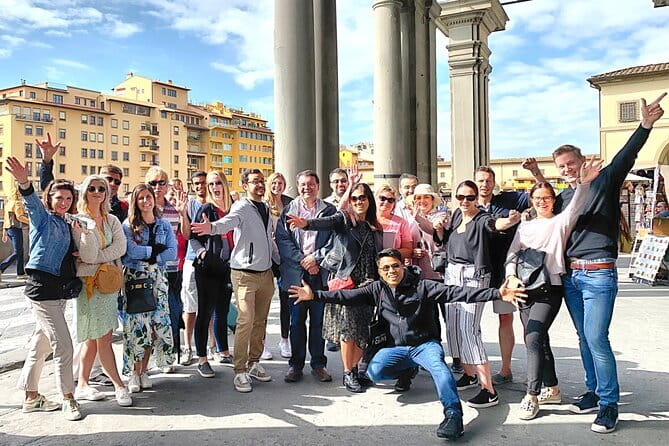
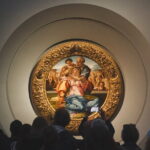
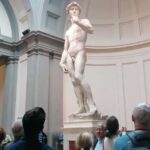
The Uffizi experience described here focuses on seeing major Renaissance names in a way that’s easier to understand. You’ll encounter works by Leonardo da Vinci, Raphael, Titian, Giotto, and Caravaggio, among others. If you’ve studied art a little, you’ll recognize the names. If you haven’t, you’ll still get enough context to follow the storyline.
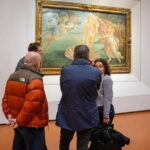
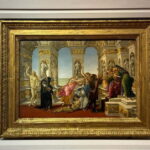
The highlight list specifically points to Botticelli’s Birth of Venue and Da Vinci’s Annunciation. Those two titles matter because they represent different kinds of Renaissance art: mythic storytelling and religious narrative, both with symbolism that can feel obvious—or confusing—depending on whether someone explains it.
This is where the guided approach pays off. You don’t just stand in front of a masterpiece and hope it makes sense. You get tools to read it:
- What the scene is showing and what’s happening.
- Which symbols or visual cues might be doing extra work.
- How the painting fits into broader Florence ideas at the time.
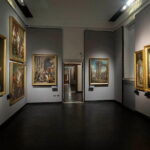
You’ll also notice the collection’s depth beyond the household names. The tour description calls out “highlights of the immense collection plus hidden gems,” but the practical takeaway is this: you’ll be led toward standout works and also toward the lesser-discussed pieces that enrich the overall picture. Think of it as learning the museum’s internal logic, not collecting random images for later.



The Experience Does One Thing: Focus

Some tours try to cover too much. This one stays anchored on one stop for a reason. When you have 2 hours 30 minutes, you can’t do everything. Instead, the design is about quality of attention.
Here’s what that means for you:
- You’ll likely spend more time understanding each major area you visit.
- You’ll have fewer moments of feeling lost in rooms that all look similar.
- Your guide can steer you toward what connects, instead of just what’s famous.
The private format helps too. Because it’s set up as private tour/activity with only your group participating, the pace can be more responsive. If you’re the type who asks “why did they paint it that way?” you’ll get more back than you would in a larger, fixed group.
Language, Pace, and the Questions You’ll Want to Ask

The tour is offered in English, which is an underrated factor in art museums. A lot of value is in the ability to explain ideas clearly. One review specifically praised Leonardo’s English as impeccable, plus his personable style. That combination matters because art history can get dense quickly; clarity keeps you engaged rather than intimidated.
Pace is another piece. The “breezed thru the entrance” comment points to a smooth first phase, then a guided pace inside. Your time inside will feel structured: you move with purpose, stop where it counts, and get guided attention on what to notice.
If you want the most from the visit, come with two or three things you’re curious about. Maybe you want to understand how Florentine Renaissance patrons shaped religious art, or how myths like Botticelli’s connect to the politics and culture of the era. With that kind of curiosity in mind, your questions will land well.
Who This Tour Suits Best
This works well if you fall into one of these categories:
- You want to see the Uffizi’s big names but also understand them, not just photograph them.
- You prefer an intimate setting with a guide who can explain and respond to questions.
- You’re short on time in Florence but still want real context for what you’re seeing.
- You like Renaissance art and want the focus centered around Leonardo (and the tour is framed as Leonardo & Michelangelo themed).
It might be less ideal if you want total freedom to wander at your own slow pace. With a guided plan and a set duration, you’ll have to accept that you can’t linger everywhere equally.
Price and Logistics: What You’re Really Paying For
Let’s talk value honestly. The total price is $313.48 per person, which includes:
- Private tour format
- Professional art historian guide
- Local guide
- Timed entry ticket
Admission to the Uffizi is also listed as €29. The key point: you’re not paying just to get in. You’re paying for the guide’s interpretation, plus the timed entry advantage that helps you avoid the most time-wasting part of museum visits.
In practical terms, if you compare the cost to doing it alone, you’re essentially buying back your time and your confusion. Without a guide, you’d have to research on your own, pick a few works, and still risk missing the bigger connections. With a guide, the connections are part of the package.
Should You Book This Uffizi Tour?
Yes—if your goal is understanding more than collecting images. I’d book this when you want the Uffizi to make sense quickly, with a guide who can connect famous works to Florence and the Renaissance story.
I’d skip it if you’re the type who loves to wander independently and spend long hours on just a couple of paintings. This tour’s strength is focus: guided attention on major works and what they mean.
If you’re choosing based on guide quality, lean into the positive signals you have here. The guide named Leonardo is specifically described as exceptionally knowledgeable, context-driven, personable, and fluent in English—exactly the combination that turns art history into something you actually enjoy.
FAQ
How long is the Uffizi Museum & Gallery tour?
It’s about 2 hours 30 minutes.
What’s included in the price?
The tour includes a private tour format, a professional art historian guide, a local guide, and a timed entry ticket. Admission is listed as included (Uffizi Gallery €29).
Where do we meet, and where does the tour end?
You meet in Piazza della Signoria (P.za della Signoria, 50122 Firenze FI, Italy), and the tour ends back at the meeting point.
Is the tour private or shared with other groups?
It’s private—only your group participates.
What language is the tour offered in?
It’s offered in English.
What do I need to bring for entry, and what’s the cancellation window?
You’ll need a valid passport or ID document that matches the name provided at booking. You must present the voucher with travelers’ full names before entry, or entry may be denied. Cancellation is free up to 24 hours in advance for a full refund.