REVIEW · HOUSTON
Walking Tour of Houston: History, Architecture, Street Art
Book on Viator →Operated by John Gu · Bookable on Viator
Houston is a city best met on foot. This tour gives you a fast, friendly look at downtown Houston history and the street-art mural spots that locals actually point out. I like that it’s led by John Gu, and you get practical context for what you’re seeing, not just building names.
I especially enjoyed the architecture stops, from the Gulf Building’s Art Deco look to City Hall’s 1930s limestone feel. You’ll also get an easy photo moment at the Houston is inspired mural, plus a clear orientation of how the city is laid out.
One thing to consider: the timing is tight, with short stops at each landmark. If you want long hangs, deep museum-style time, or lots of interior exploration, this may feel more like a highlights walk than a slow crawl.
In This Review
- Key things to know before you go
- A quick Houston orientation that stays fun
- Starting at Lyric Market: the easiest kind of meet-up
- Stop 1: Market Square and the Houston is inspired mural
- Stop 2: The Gulf Building, Art Deco up close
- Stop 3: Theater District and the mix of performance spaces
- Stop 4: Houston City Hall in Hermann Square
- Stop 5: Tranquility Park and the NASA connection
- Stop 6: Niels Esperson Building and Italian Renaissance drama
- Stop 7: 1910 Harris County Courthouse and civic architecture
- Price and value: $25 for a local-led downtown crash course
- Who should book, and who should think twice
- Tips for getting the most from the walk
- Should you book this Houston walking tour?
- FAQ
- FAQ
- How long is the Walking Tour of Houston?
- How much does the tour cost?
- What’s included in the tour price?
- Where does the tour start and end?
- Is the tour wheelchair or stroller accessible?
- Are service animals allowed?
- Is the tour offered in English?
Key things to know before you go
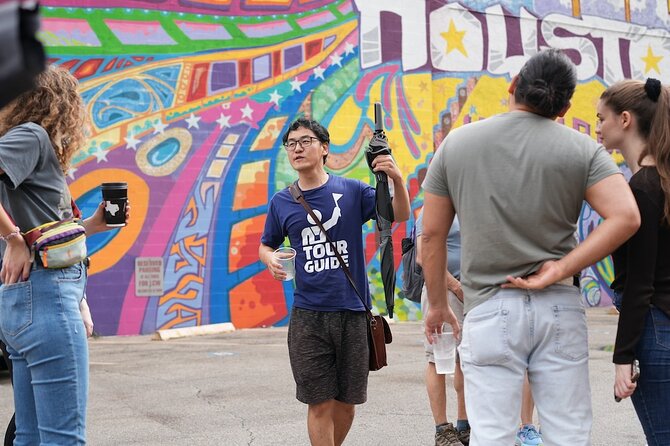
- Local guide approach: John Gu keeps the story clear, with humor and room for questions.
- Short, efficient stops: each highlight is brief, so you cover a lot without getting stuck.
- Downtown landmarks + street art: you mix big architecture with mural photo ops.
- Stroller and service animals welcome: an easy yes for a lot of visitors’ needs.
- Small group size: up to 25 people, which helps the guide keep control and timing.
- Ends near the theater district: you can grab food right after without backtracking.
A quick Houston orientation that stays fun
If Houston is new to you, this is the kind of tour that helps your first day feel like you’re in the know. In about two hours, you trace a line through downtown that connects founding-era roots, major government buildings, and the city’s skyscraper era. Then, you cap it with public-space themes like NASA and the arts.
I like that the guide’s style makes the city feel personal. John Gu doesn’t treat architecture like trivia cards. He explains why these buildings matter, and what to notice as you walk past them. In one recent group, he was loud enough for a larger crowd, and he kept the pace readable even when people had questions.
There’s also a practical payoff for how you’ll explore next. By the end, you can look at downtown and say, oh, that’s the theater zone, that’s the historic center, and that’s the civic core. Get your bearings fast, and you’ll waste less time later.
You can also read our reviews of more tours and experiences in Houston.


Starting at Lyric Market: the easiest kind of meet-up
The walk begins at Lyric Market, 411 Smith St, Houston, TX 77002. It’s a solid place to gather because it’s in the downtown mix, with public transit nearby. One tip from a guide-and-group-friendly experience: the start and finish aren’t far from each other, and the area is close to the tram line, so you’re not trapped in one end of the city.
You’ll start with the Downtown Historic District and Market Square area. This first segment sets the tone: Houston’s origins, plus early buildings in the district, so you can “place” the rest of the route as more modern architecture takes over.
Bring comfortable walking shoes. The tour is very doable for most people, and it’s stroller accessible. Service animals are welcome, too. If you need a restroom break, don’t worry—there’s time built into the flow.
Stop 1: Market Square and the Houston is inspired mural
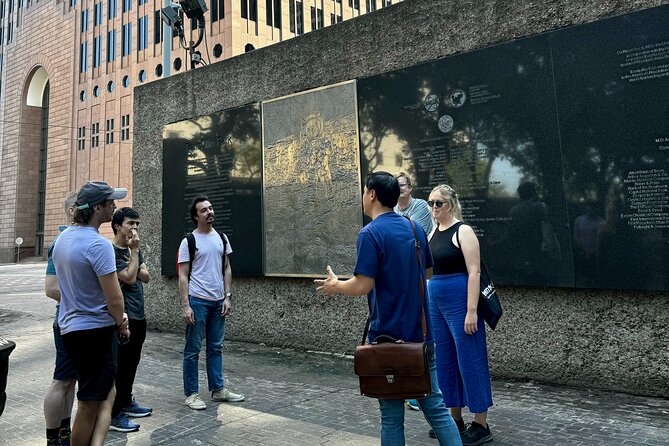
Market Square is a smart opener. It’s close enough to the historic core to get you oriented, but it’s also the kind of place where you can stop, look up, and start spotting the city’s visual identity.
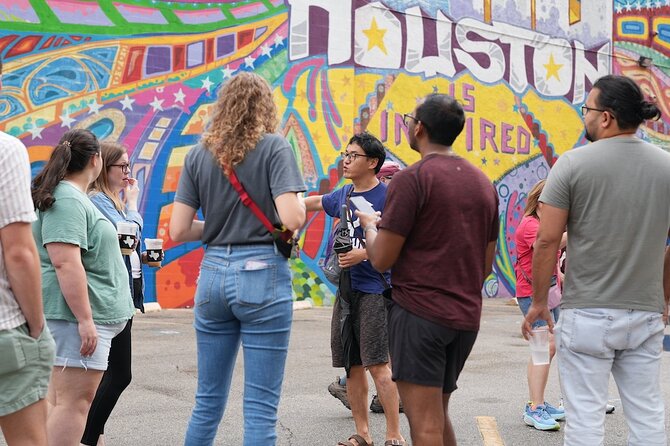
You’ll learn about Houston’s beginnings as you pass some of the oldest buildings in the area. Then you get a clear photo target at the Houston is inspired mural. The tour frames it as the city’s most popular Instagram photo, so it’s not just a random wall. It’s a downtown landmark you can actually remember later when you’re sorting through photos back home.
Why this stop works for you: it mixes story and a real-world snapshot. You’re not just looking at art—you’re learning how it fits into the city’s identity.
A small consideration: the time here is brief. Use it for photos and quick questions, not for a long mural session.
Stop 2: The Gulf Building, Art Deco up close
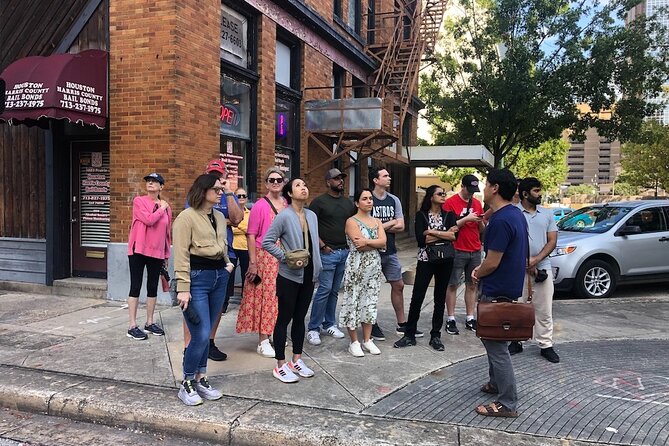
Next comes the Gulf Building, and this is the kind of stop that makes people pause without planning to. Completed in 1929, it’s described as an Art Deco masterpiece with 37 stories, intricate setbacks, gleaming marble, and a stepped crown that lights up the night sky.
Even if you only see the exterior and lobby glimpses, it’s still a strong lesson in “golden age” skyscraper design. Art Deco is all about geometry and confidence, and this building was once the tallest in Houston. That context helps you understand why locals still treat it like a statement piece.
Practical note: the tour is timed, so you won’t get a long viewing window. But you’ll get enough to notice the crown shape and the way the setbacks create that classic stepped skyline look.
Stop 3: Theater District and the mix of performance spaces
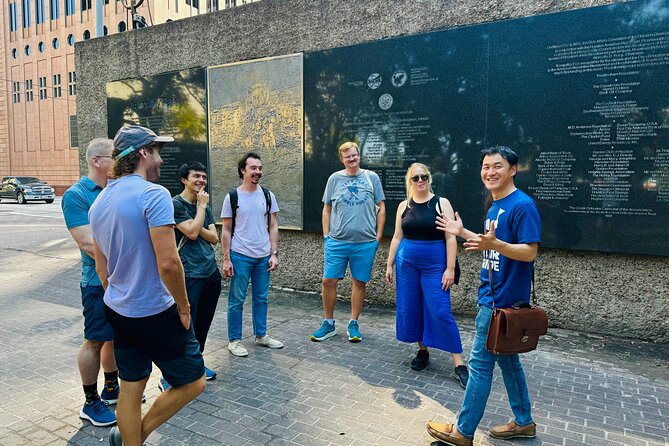
Then you move into the Theater District, where architecture and culture overlap in a way Houston does well. You’ll pass major venues such as the Alley Theater and Jones Hall.
The Alley Theater is highlighted for its bold Brutalist design and for being home to groundbreaking productions. Jones Hall is noted for its iconic marble interior and perfect acoustics. The point here isn’t that you’ll “tour” inside like a formal venue visit. It’s that you’ll see why this neighborhood matters beyond ticket sales. It’s a creative hub, and the buildings reflect that energy.
Why you’ll like it: this stop gives your walking tour a pulse. After the civic and skyscraper segments, it adds a human-scale reminder that downtown isn’t only offices and government—it’s also arts and performance.
If you’re timing this right, you’ll finish near the action too. The tour ends in the theater district area at Lynn Wyatt Square park, so you can keep going with dinner or a casual post-walk stroll.
Stop 4: Houston City Hall in Hermann Square
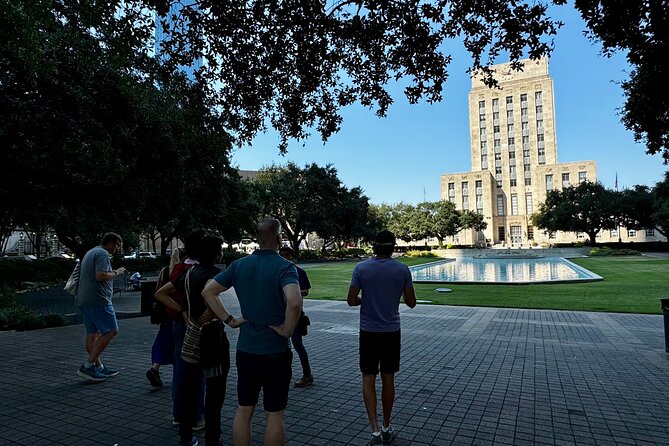
City Hall is one of those buildings where the style tells you what the era wanted to project. The tour describes it as an Art Deco-style landmark completed in 1939, clad in limestone with bold geometric designs and intricate friezes.
It also anchors the stop in Hermann Square, so you’re not only staring at stonework. You learn the stories behind the building, which turns a “pretty façade” into something more meaningful for your trip.
What to notice as you walk: the geometric layout and the frieze details. Art Deco details can feel easy to miss when you’re rushing, so the guide’s timing here helps you slow down for the right things.
One consideration: like the earlier stops, you get a quick look rather than an in-depth architectural time-out. Still, it’s a solid set-up for anyone who wants to return later on their own and take their time.
Stop 5: Tranquility Park and the NASA connection

Tranquility Park adds a different flavor to the route. Instead of focusing on downtown power structures, it connects Houston to NASA through a park dedicated to the space program.
This is a good mid-tour shift because you’re not only following architecture. You’re also tracking how the city talks about its identity. Houston’s role in space research is part of why the city feels different from purely “financial-downtown” places.
The stop is brief, but it gives you something to remember when you leave: Houston isn’t only old buildings and skyscrapers. It has a science-and-mission thread, too.
Stop 6: Niels Esperson Building and Italian Renaissance drama
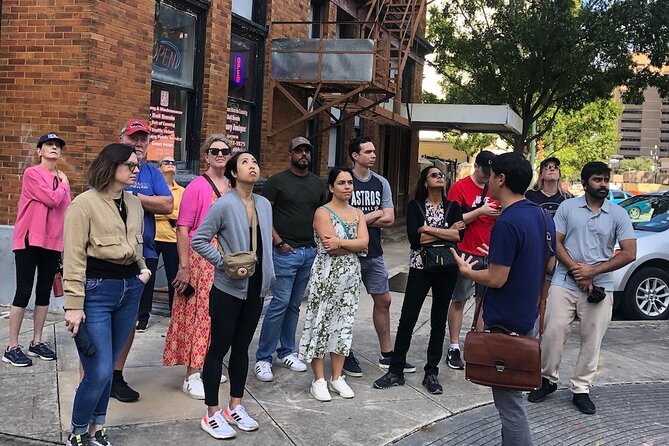
Now you get a different architectural “voice.” The Niels Esperson Building, completed in 1927, is described as an Italian Renaissance-style skyscraper and one of Houston’s iconic architecture gems. It was built as a tribute to real estate magnate Niels Esperson by his wife, Mellie.
That family connection is one of the most interesting context pieces on the walk. It turns a building into a story about wealth, ambition, and who shaped Houston during the early skyscraper era.
Look for the terracotta details, grand columns, and the regal temple-like crown. This is the stop where architecture lovers usually find something to geek out on, even if you’re not an expert.
Practical consideration: since the tour is paced as a walking highlights loop, you’ll get the key features pointed out, but you may not be able to linger long on every carved line. If that’s your style, plan to revisit later when you’re on your own schedule.
Stop 7: 1910 Harris County Courthouse and civic architecture
The final stop leans into civic identity. The 1910 Harris County Courthouse is described as a majestic courthouse from Houston’s golden age and a city landmark, with civic architecture called out as a high point.
This is a strong capstone because it balances all the “wow” of skyscrapers with something about how the city governs and organizes itself. Courthouse architecture often feels more formal, and that matters after you’ve seen so much Art Deco and early skyscraper design.
When you’re done, you’ll conclude near Lynn Wyatt Square park in the theater district. From there, it’s easy to grab a bite at a nearby cafe, take a short walk back toward the start, or keep exploring without a long repositioning.
Price and value: $25 for a local-led downtown crash course
At $25 per person for about two hours, this is a pretty good value if your goal is orientation plus highlights. You’re paying for a local guide, not for a museum ticket marathon. Most of the tour’s stops are presented with admission-free viewing, so you don’t feel nickeled-and-dimed at every location.
This price also makes sense for a quick “reset” on a short trip. If you only have limited time downtown, you get a lot of well-chosen stops packed into a tight schedule. And if you end the walk with ideas—where to eat, what to revisit, which neighborhood vibe you like—you’ll get more out of the money than you would from a broad hop-on/hop-off bus style trip.
One thing to watch: snacks and bottled water are not included. I’d plan to buy what you need nearby or bring your own if that fits your style. Also, the tour is stroller accessible, but it’s still a downtown walk. Comfortable shoes matter.
Who should book, and who should think twice
This walking tour is a great fit if you want:
- a first-time downtown orientation
- architecture plus street art photo moments
- a guide who tells the why behind what you’re seeing
It also works well if you travel with a stroller or rely on service animals. The route is designed to keep things manageable, and the guide’s pacing helps people stay together.
It might not be the best match if you want:
- long, slow time at just one building
- interior-only access as the main event
- a snack or drink plan built into the tour
Because the stops are short, you’ll likely want to do a little follow-up on your own afterward. That’s not a problem. It just changes what kind of day you’re planning.
Tips for getting the most from the walk
A few things will help you enjoy it more:
- Go in with comfy shoes and a photo plan for the Houston is inspired mural.
- Keep one or two questions ready. John Gu seems to handle questions well, and the guide tone makes it easy to ask.
- If you’re coming solo, don’t assume you’ll be left to wander. In at least one recent group, the guide made an effort to check in and include solo participants during a break window.
And since it’s a mobile ticket tour with confirmation at booking, keep your phone charged. Downtown is full of distractions, and it’s handy to have your ticket ready.
Should you book this Houston walking tour?
I’d book it if you want a smart, fun way to see downtown Houston without spending your day figuring out what’s worth your time. The route hits big architecture names, connects them with simple historical context, and throws in street art and a NASA-themed park so the walk feels like more than just buildings.
If your travel style is slow and detailed, you might find the stop lengths a little fast. In that case, pair this tour with a later self-guided return to one or two favorites—City Hall, the Gulf Building, or the Niels Esperson Building are good candidates for a second look.
FAQ
FAQ
How long is the Walking Tour of Houston?
It’s approximately 2 hours.
How much does the tour cost?
The price is $25.00 per person.
What’s included in the tour price?
You get a fascinating city tour led by a local guide. Snacks and bottled water are not included.
Where does the tour start and end?
It starts at Lyric Market, 411 Smith St, Houston, TX 77002. It ends at 601 Capitol St, Houston, TX 77002, and the tour concludes at Lynn Wyatt Square park in the theater district.
Is the tour wheelchair or stroller accessible?
The tour is stroller accessible.
Are service animals allowed?
Yes, service animals are allowed.
Is the tour offered in English?
Yes, it’s offered in English.