REVIEW · BUDAPEST
Alternative Street Art Free Walking Tour of Budapest
Book on Viator →Operated by Perfect European Tours - Budapest FREE Walking Tours. · Bookable on Viator
Street art with real Budapest context. This Alternative Street Art Free Walking Tour turns the Jewish Quarter into an open-air gallery, guided at a slow, human pace. I love how the guide connects what you see on walls to what happened in Hungary, and I love that the price is low enough that you can spend your money on a beer after. The one drawback: it’s mainly outdoors, so you’ll want good shoes and some flexibility if the weather is lousy.
You’ll start around Rákóczi tér in District VIII, and in practice you should find the guide by the yellow umbrella near Blaha Lujza Tér. You’ll walk about 1 hour 40 minutes (approx.) with a small group capped at 15, in English, and finish at a grass-roots ruin bar spot—often with a short stop at Szimpla Kert.
In This Review
- Key things to know before you go
- Street art in Budapest’s Jewish Quarter: what makes this tour work
- Finding the guide: Blaha Lujza Tér and Rákóczi tér
- The walk itself: how you’ll spot street art (and what to watch for)
- Art and history braided together: why the stories feel real
- The ruin bar finish: Szimpla Kert and the end-of-tour mood
- Price and value: a booking fee that leaves room for fun
- Logistics that actually matter (and what to plan around)
- Who should book this street art walk—and who might skip it
- Should you book this Alternative Street Art Tour of Budapest?
- FAQ
- FAQ
- How long is the Alternative Street Art Free Walking Tour of Budapest?
- What is the price?
- Is the tour only for street art fans?
- Where do I meet the guide?
- Where does the tour end?
- How many people are in a group?
- Is the tour in English?
- Is admission included for Szimpla Kert?
- Is transportation nearby?
- What happens if the weather is bad?
- Is cancellation free?
Key things to know before you go
- Yellow umbrella meet-up around Blaha Lujza Tér so you can find your guide fast
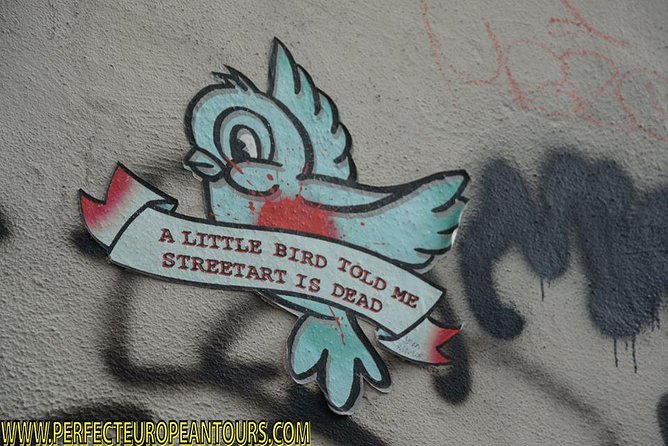
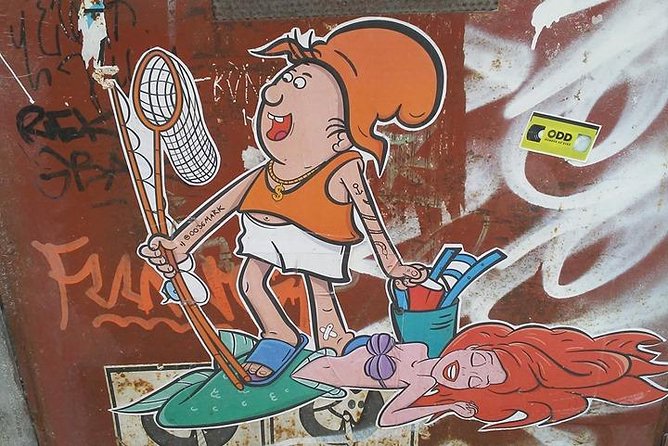
- Dozens of street art stops across the Jewish neighborhood, including commissioned pieces and graffiti
- Small group size (max 15), so questions actually get answered
- A deal, not a premium ticket: low booking fee, then tip your guide
- Finish at ruin bars, including Szimpla Kert, so you can keep the vibe going
Street art in Budapest’s Jewish Quarter: what makes this tour work

If you like seeing Budapest beyond the postcard stuff, this walk is a smart choice. Instead of racing from landmark to landmark, you slow down and pay attention to the city’s walls—where artists react to daily life, politics, and identity.
What I like most is the way the art is treated as part of the same story as history. Street art here isn’t just decoration. It’s a message system. And because you’re walking through the Jewish neighborhood, the context feels personal and specific, not generic.
The guide’s style matters. The best moments come when they connect a small sticker or a bigger mural to why it appeared when it did, and what it says about power, culture, and change in Hungary. That’s the difference between looking at graffiti and understanding it.
You can also read our reviews of more walking tours in Budapest
Finding the guide: Blaha Lujza Tér and Rákóczi tér
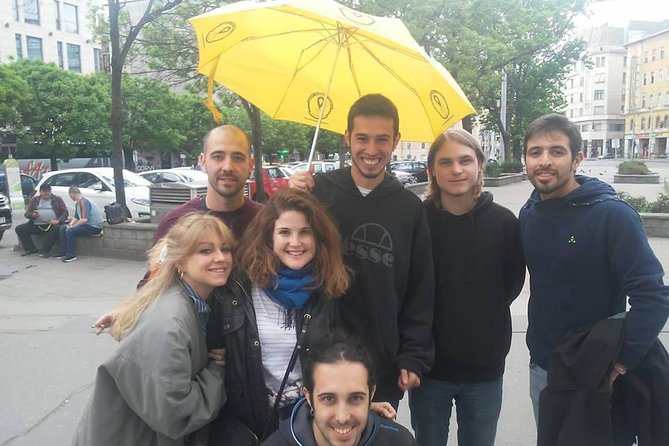
Meet-up can make or break a free walking tour, so it helps that this one gives you a clear visual cue. Look for a guide holding a yellow umbrella near central Blaha Lujza Tér.
The official start point is Rákóczi tér in District VIII (1084), and that fits with where you’ll likely be standing when your guide checks people in. Either way, you’re in the same general area, which keeps the stress low.
Bring your phone. You’ll use a mobile ticket, and you’ll get confirmation at booking time. If you hate last-minute tech, just make sure your ticket is easy to find on your screen before you show up.
The walk itself: how you’ll spot street art (and what to watch for)
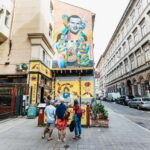
You’re walking through the historic Jewish district with a guide leading the way, and you’ll see dozens of street art pieces. The point isn’t to memorize names. The point is to train your eyes.
Here’s what you should actively look for as you go:
- Different art types: small works you’d miss alone, commissioned murals, and graffiti-style pieces
- Placement choices: where art appears—near everyday spaces versus more exposed walls
- Style shifts over time: changes in tone and themes that often connect to Hungary’s modern era
- Hidden details: symbols, typography, and recurring motifs that a guide can interpret for you
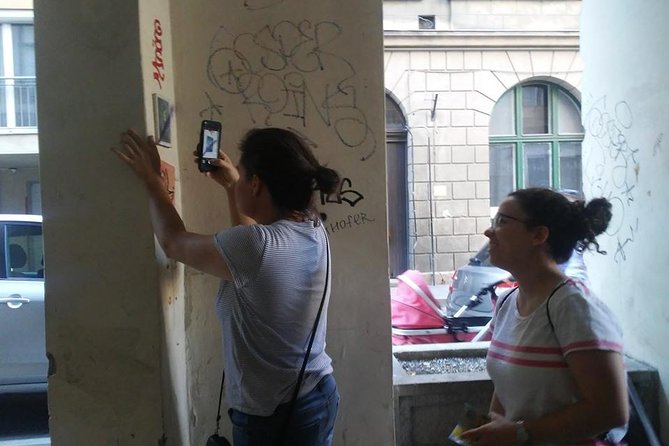
The tour is designed so you’re not just taking pictures. You’re learning how the art fits into the neighborhood. That’s especially helpful if you’ve only ever viewed street art from a distance.
Also, the pace is built for questions. The tour isn’t rushed, and the best guides take time to explain what you’re looking at, then let you ask why it matters.
Art and history braided together: why the stories feel real
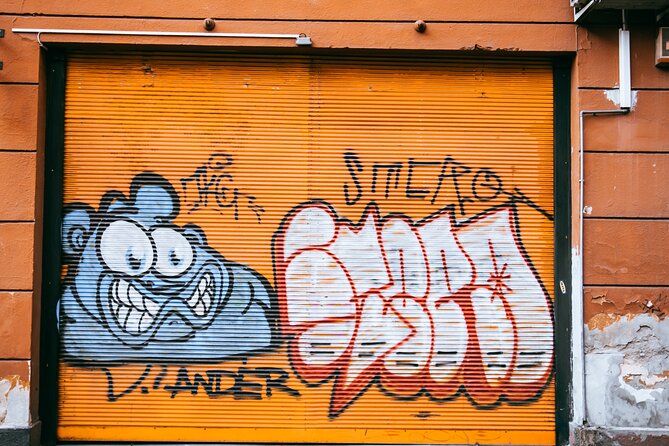
Street art can be easy to dismiss as noise or as a way to get famous. This walk pushes you to see it as communication—often shaped by social pressure, political shifts, and generational change.
The Jewish Quarter is a key reason this works. The neighborhood’s layered past affects what artists choose to say and how people respond to it. On this tour, you’ll get the feeling that the murals aren’t random. They’re responding to the world around them.
The guide’s explanations can include a mix of:
- Cultural and historical context tied to what’s on the walls
- How artists use public space when traditional institutions feel slow or controlled
- Modern social reality—how life in Hungary today shapes the street art you see
If you like a mix of big ideas and small details, this tour hits that sweet spot. One of the recurring themes in the experience is that it’s not only for art fans. Even if you don’t care about street art as a hobby, you’ll still walk away with a sharper understanding of Budapest after communism, and how creative expression changed over time.
The ruin bar finish: Szimpla Kert and the end-of-tour mood
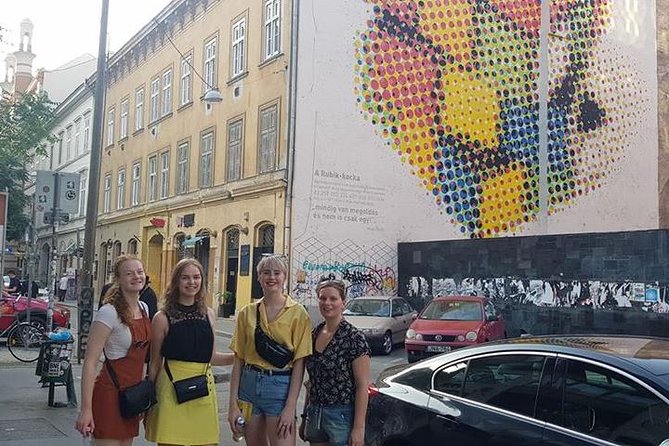
This tour doesn’t end with a museum door closing. It ends with people actually doing the Budapest thing: lingering.
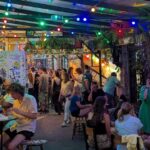
You finish at a grass-roots community ruin bar area, and Szimpla Kert often shows up as the best-known stop. The Szimpla Kert moment is short—about 10 minutes—with free admission at that stop. The goal is to show you the place and point out what makes it part of Budapest’s alternative scene.
Why this matters for you: it turns the tour into an experience, not a lecture with an exit stamp. You get a natural opening to continue the evening—whether you want a quick drink or you want to stay and watch how the ruin bar atmosphere shapes the neighborhood’s vibe.
Practical tip: don’t treat this like a sit-down dinner plan. It’s more of a social finish. If you want a meal, you’ll likely need to head elsewhere afterward.
A few more Budapest tours and experiences worth a look


Price and value: a booking fee that leaves room for fun
Let’s talk money, because this is the big selling point.
The listed price is $3.62 per person, and the tour is described as complimentary in practice—you pay a small booking fee and you tip your guide. That’s a huge difference from the typical “pay full price for a guided tour” model.
Is it worth it? For me, yes—if you want perspective. For the price of a couple coffees, you get:
- a professional guide
- an intentional route through the Jewish neighborhood
- an explanation-heavy walk focused on why street art matters
The time investment is also reasonable: about 1 hour 40 minutes. You’re not committing a full day, and you can still fit other sights in the same afternoon or evening.
Watch-outs on value are simple:
- You might not love it if you only want classic monuments and zero context.
- It’s outdoors, so if you hate walking, you’ll feel it.
Logistics that actually matter (and what to plan around)
This is set up to be easy to join. It’s in English, near public transportation, and it runs with a maximum of 15 people. That small cap is important because it keeps the tour conversational.
A couple practical notes:
- Toilet costs aren’t included, so if you know you’ll need one, plan for it before the tour if possible.
- Parking fees aren’t included, which mostly affects drivers (most people won’t park anyway in this area).
- Service animals are allowed, and the tour says most travelers can participate.
Weather matters. This experience requires good weather. If it’s canceled due to poor conditions, you’re offered a different date or a full refund.
Who should book this street art walk—and who might skip it
Book it if:
- you want street art with meaning, not just photos
- you’re curious about how Hungary’s recent past connects to public art
- you enjoy walking tours that feel personal and story-driven
- you like the Jewish Quarter and want a guide to help you decode what you’re seeing
You might skip it if:
- you need fully indoor time or you don’t handle walking well
- you only want major landmarks and don’t care much about modern culture
- you’re expecting a long ruin bar hangout—this is primarily a guided walk that ends there
It’s also a great fit for first-timers who want a different Budapest angle. Even if you’ve been in the city for a couple days, this can reboot how you notice the place.
Should you book this Alternative Street Art Tour of Budapest?
I’d book it if you like art that talks back. This tour doesn’t treat street art like a novelty. It treats it like part of how Budapest explains itself—especially in the Jewish Quarter.
You should also book it if you like value. The $3.62 booking fee keeps the entry cost low, and the finish at Szimpla Kert (with a free admission stop) makes the experience feel like more than “just another walking tour.”
One last decision helper: if you’re the type who usually walks past murals and ignores the walls, try this anyway. The guide’s job is to make you see what you’d otherwise miss—small pieces, commissioned murals, graffiti, and the stories linked to them.
FAQ
FAQ
How long is the Alternative Street Art Free Walking Tour of Budapest?
It lasts about 1 hour 40 minutes.
What is the price?
The price is $3.62 per person.
Is the tour only for street art fans?
No. The tour explains street art with context about Hungarian and local history, so it can work even if you’re more curious about culture than art techniques.
Where do I meet the guide?
You should look for the guide with a yellow umbrella around central Blaha Lujza Tér. The listed start area is Rákóczi tér (Budapest, 1084 Hungary).
Where does the tour end?
You finish at a grass-roots community ruin bar in Budapest, with the end location listed as Auróra u. 11, 1084 Hungary. Szimpla Kert is part of the finishing experience.
How many people are in a group?
The tour has a maximum of 15 travelers.
Is the tour in English?
Yes, it’s offered in English.
Is admission included for Szimpla Kert?
The Szimpla Kert stop lists free admission, with about 10 minutes there.
Is transportation nearby?
Yes. The meeting area is near public transportation.
What happens if the weather is bad?
This experience requires good weather. If it’s canceled due to poor weather, you’ll be offered a different date or a full refund.
Is cancellation free?
Yes. Free cancellation is available, and you can cancel up to 24 hours in advance for a full refund.