REVIEW · FLORENCE
Florence: David Accademia Gallery Tour & Skip the Line Tickets
Book on Viator →Operated by Slow Tour Tuscany · Bookable on Viator
Florence hits you hard, fast, and then it gets crowded. This skip-the-line Accademia tour is built for a tight schedule, with an English guide who helps you read Michelangelo’s David and what’s around it instead of just snapping photos.
Two things I really liked: you start with the Medici musical-instrument collection (yes, including a prized Stradivari), and you get earphones plus a guided walk that keeps the story clear even when the museum is packed. In guides like Camilla’s style, you also get explanations that make the carving process and the choices behind the works feel much more understandable.
One thing to consider: the guided portion is about 1 hour, so if you want to linger deeply at every gallery you’ll need to plan your self-guided time right after the tour.
In This Review
- Key highlights to know before you go
- Why the Accademia Skip-the-Line Tour is worth it (even if you’re short on time)
- The meeting point: getting started without stress
- Your first stop: the Medici musical instruments collection (and why it sets the mood)
- Getting to the David: the De Fabris Tribune moment
- Standing at Michelangelo’s David: what to notice during the guided minutes
- Don’t miss the other Michelangelo statues: Prisoners and San Matteo
- After the tour: how to use the time until closing
- Price and time: what $71.04 buys you in real terms
- Who this tour is best for (and who should think twice)
- A quick note on accessibility and ease
- Should you book this David Accademia tour?
- FAQ
- How long does the tour last?
- Does the ticket include admission to the Accademia Gallery?
- Is this a skip-the-line experience?
- What language is the tour offered in?
- Are earphones provided?
- How large is the group?
- Where does the tour start?
- Can I stay in the museum after the tour ends?
- Is free cancellation available?
Key highlights to know before you go
- Priority access so you don’t lose your Florence time in long entry lines
- Medici instrument focus first, including a standout Stradivari and an old piano
- De Fabris Tribune route that gets you to David efficiently
- Michelangelo’s David plus extras: the four Prisoners and San Matteo
- Earphones included, which makes the explanations easy to follow in a loud room
- You can stay in the museum afterward until closing if you want more time
Why the Accademia Skip-the-Line Tour is worth it (even if you’re short on time)
The Accademia Gallery is one of those places where arriving at the wrong moment can eat up your schedule. This tour is designed to avoid that. You get priority entry, a real guide, and earphones, so you can spend your limited time looking and understanding instead of orbiting the entrance like a confused tourist planet.
I also like the pacing. In about an hour, you hit the section that most people come for and you add the missing context—why these sculptures look the way they do and what you should notice when you stand close. Then you’re released to explore on your own, which is the best kind of mix: guided clarity first, freedom after.
Group size stays small (up to 19), so you’re not stuck listening in a herd. And the tour is offered in English with a certified guide, which matters in Florence where art terms can get tricky fast.
A few more Florence tours and experiences worth a look
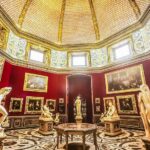

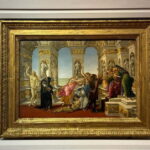
The meeting point: getting started without stress
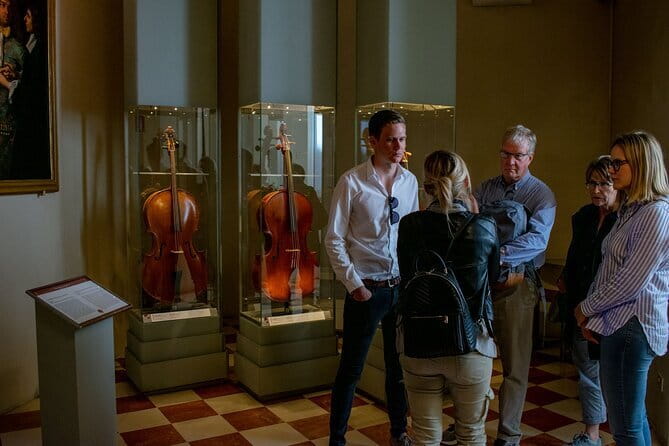
This tour starts at Via degli Alfani, 113 R, 50122 Firenze FI. It’s near public transportation, which makes it easier to stitch into a normal Florence day. That’s helpful because Accademia timing is everything—security checks and entry lines can be real, and the tour notes that delays sometimes happen due to mandatory museum security.
My advice: treat this like an appointment. Arrive a few minutes early so you’re already in the right mindset when the group gathers.
Your first stop: the Medici musical instruments collection (and why it sets the mood)
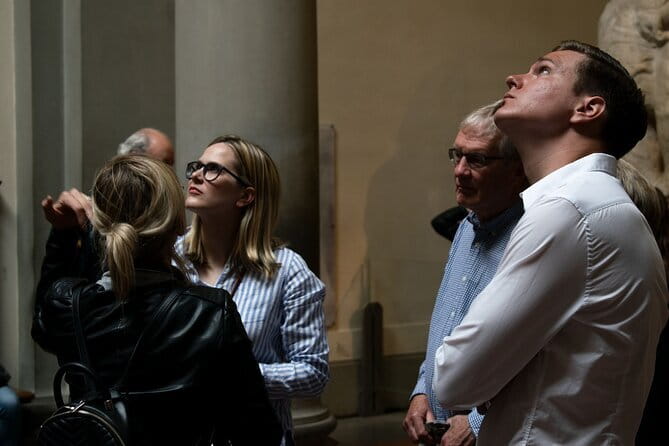
Before you go full Michelangelo-mode, the tour takes you to the Medici family’s musical-instruments collection. This is a smart move. It gives you a different angle on Renaissance power: not just art and sculpture, but the objects that signal status, taste, and wealth.
You’ll get to admire special instruments, including the most expensive Stradivari in the world and the oldest piano, plus other unique pieces. Even if you don’t know anything about violins or keyboards, you can still appreciate what your eyes are catching: craftsmanship, rarity, and the sheer idea that these were treasured like living cultural statements.
The benefit for you as a visitor is simple: the museum stops being one long line of marble. Instead, you get a broader sense of what Florence could look like in a powerful household—where art, music, and prestige all played together.
Getting to the David: the De Fabris Tribune moment
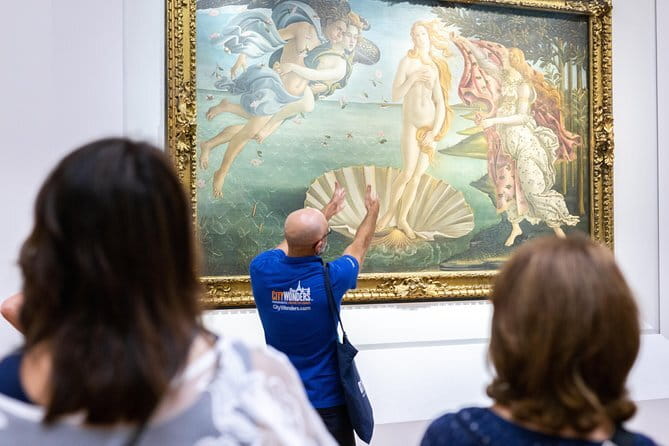
After the instrument section, your guide brings you through the De Fabris Tribune and toward the feet of David. That route matters because it changes how you experience the statue.
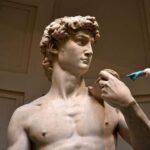
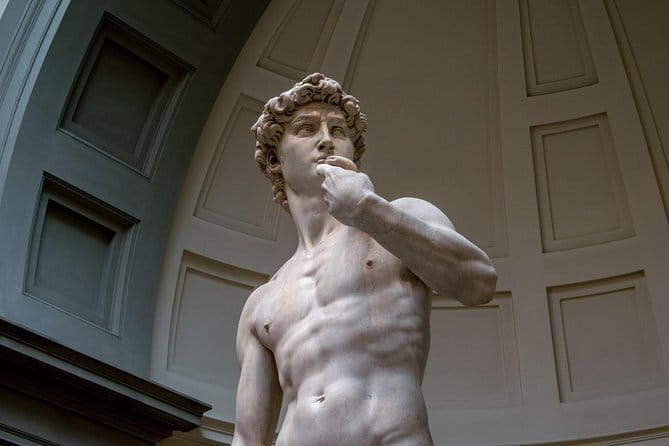
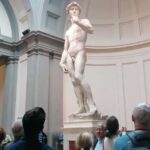
Michelangelo’s David is carved from a single block of Carrara marble, and it took only three years to carve a figure about 6 meters tall. You don’t need to memorize those numbers, but you do need to be aware of scale. When you understand that it’s one piece of marble shaped into a complex human form, the statue stops feeling like a monument you recognize and starts feeling like a physical achievement you can actually sense.
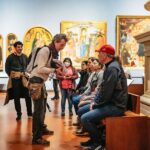
With an English guide and earphones, you’ll get the backstory in plain language—what the work represents and what to look for as you move around the area. The earphones are a big deal here. Accademia can be noisy, and you want your guide’s voice steady as you turn from detail to detail.
Standing at Michelangelo’s David: what to notice during the guided minutes
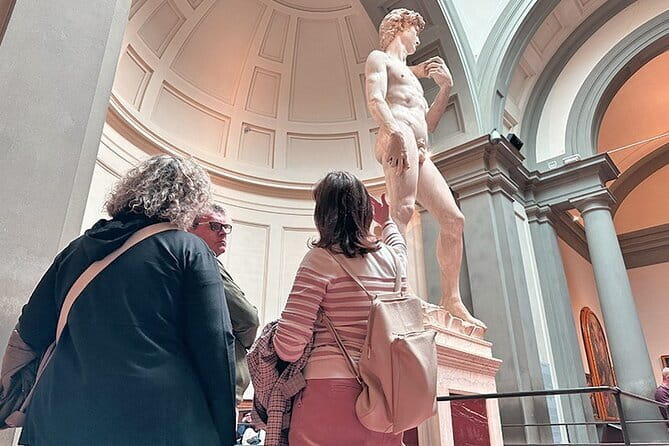
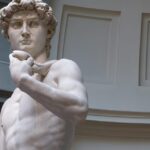
David is famous. That part is unavoidable. But the tour helps you focus on the parts that make it more than a famous face.
Here’s what the guide-style explanation is designed to do for you:
- You learn the story behind the statue, not just the dates.
- You understand the significance of Michelangelo’s choices—what the stance and expression suggest.
- You see how scale and carving technique affect the final impression when you’re standing close.
If you’ve ever looked at a sculpture and thought, Okay, I get that it’s famous… and then moved on, this tour is the antidote. You’ll be prompted to slow down at key points long enough to actually read the work.
And when you’ve got priority access, you avoid the rush that makes people stand for ten seconds, take a photo, and sprint away. You still move through at a good pace, but it feels less like a checklist.
You can also read our reviews of more museum experiences in Florence

Don’t miss the other Michelangelo statues: Prisoners and San Matteo
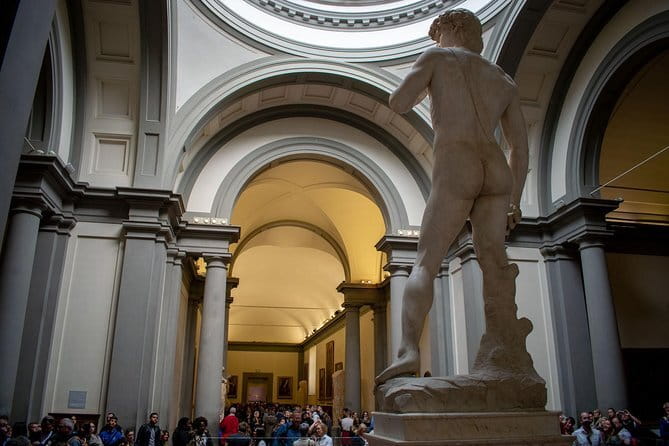
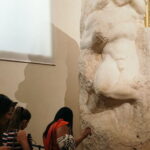
David is the headline, but the tour also makes sure you see the supporting cast. You’ll also be able to admire the other five Michelangelo sculptures highlighted during this walk: the four Prisoners and San Matteo.
This is one of the best values of taking a guided route. If you go in on your own, it’s easy to focus only on David and miss how much the rest adds to the overall picture. The Prisoners are especially worth your attention because they show Michelangelo’s approach to form—how bodies feel as though they are emerging from stone.
San Matteo adds another tone to the mix, reminding you that Michelangelo’s work isn’t just one kind of expression. Seeing them in one connected flow makes the museum feel more coherent.
After the tour: how to use the time until closing

At the end of the guided hour, you can stay inside the museum until closing. That’s where you control the experience.
If you want more texture and variety, keep an eye out for:
- the Gipsoteca, where you can see Lorenzo Bartolini’s plaster casts (these are especially useful for understanding how sculpting ideas can be tested and refined)
- the upper floor’s large collection of gold background altarpieces
- Renaissance paintings from the 15th and 16th centuries
Here’s a practical way to use this extra time without burning out. Take a quick lap to get your bearings right after the tour. Then pick one lane: either stay mostly with sculpture and casts, or switch into the altarpieces and painting rooms. Trying to do everything at museum speed can make the best stuff feel like background noise.
Also, because the museum can get busy, your guided start helps you avoid feeling lost later. You know where you are and what to look for, so the self-guided part feels purposeful instead of wandering.
Price and time: what $71.04 buys you in real terms
At $71.04 per person, this isn’t a throwaway add-on. But the price makes more sense when you list what you actually get:
- an admission ticket included
- priority access to help you avoid the longest delays
- an expert, certified guide in English
- a set of earphones so you can actually follow the explanations
If you’re going to spend money anyway on a ticket, then the real value is the guided interpretation plus the time you save by skipping the waiting portion. For a 1-hour guided window, it’s a good fit when you want David plus context without sacrificing your whole day in line.
The best kind of bargain is the one that protects your schedule. If your Florence itinerary is already packed, this tour’s structure gives you a clean win.
Who this tour is best for (and who should think twice)
This works especially well if:
- you have limited time in Florence
- you want more than a photo-op at David
- you’d rather pay for priority entry than gamble on timing
- you like a small group experience with earphones
It may be less ideal if:
- you want a long, slow museum day with no guided pace at all
- you’re the type who prefers reading everything silently without a guide’s push
- you plan to arrive late and hope the security checks won’t matter (the tour notes they sometimes cause delays)
A quick note on accessibility and ease
The tour includes assistance with museum entry and states disabled accessibility is guaranteed. If that’s important for your planning, this is a good sign.
It also accepts electronic and printed vouchers, so you don’t need to print anything you don’t want to print.
Should you book this David Accademia tour?
If you’re even slightly time-pressed, I’d book it. Priority entry plus a guided route that connects David to the rest of what you’re seeing is a smart use of money in a city where every hour feels booked.
You should especially consider it if you want David but you don’t want to arrive, stand in a crowd, and leave with the photo but not much understanding. This tour is built to fix that. You get the essentials in about an hour, then you’re free to stay and explore until closing—so you’re not forced to choose between a guided hit and a self-guided deepening.
If you tell me your travel dates and what else you want to fit in (Uffizi, Duomo area, Palazzo Vecchio, etc.), I can help you decide whether this timing makes sense for your exact day.
FAQ
How long does the tour last?
The tour is about 1 hour.
Does the ticket include admission to the Accademia Gallery?
Yes. Admission is included, and the tour includes ticket booking with priority access.
Is this a skip-the-line experience?
Yes. You get priority entry and assistance with museum entry.
What language is the tour offered in?
The tour is conducted in English.
Are earphones provided?
Yes. You’ll receive a set of earphones to clearly follow the guide’s explanations.
How large is the group?
The tour has a maximum of 19 travelers.
Where does the tour start?
The meeting point is Via degli Alfani, 113 R, 50122 Firenze FI, Italy.
Can I stay in the museum after the tour ends?
Yes. After the tour, you could stay inside the museum until closing to continue exploring.
Is free cancellation available?
Yes. You can cancel up to 24 hours in advance for a full refund.