REVIEW · KRAKOW
Krakow: Jewish Quarter and Ghetto Sightseeing Golf Cart Tour
Book on GetYourGuide →Operated by INTERCRAC Ltd. · Bookable on GetYourGuide
Krakow’s Jewish story is easier to follow on wheels. This 90-minute golf cart tour links Kazimierz and Podgórze with audio commentary and a calm pace that still hits the key places. You’ll see the lived-in streets of the Jewish Quarter and then shift to the wartime sites that many visitors come to understand.
Two things I really like: the way the route covers both Kazimierz and Podgórze in one go, and the fact that every cart ride comes with a built-in audio guide so you can control how closely you listen. The audio is offered in tons of languages, including English, which helps you stay oriented even when streets get twisty.
One possible drawback: the stops are brief, so if you want long, quiet time at each memorial or building, you may feel a bit rushed—especially compared to a slow walk.
In This Review
- Key Things To Know Before You Ride
- Why a Golf Cart Tour Works So Well Here
- Getting On Board: Meeting Point, Timing, and What’s Included
- Kazimierz: The Jewish Quarter and the Streets You Can Still Read
- The Christian Side of Kazimierz: Coexistence You Can See in Modern Streets
- Crossing Into Podgórze: WWII Krakow and the Sites of Memory
- The Audio Guide Experience: Helpful, Multi-Language, and Sometimes Timing-Sensitive
- Price and Value: What You Get for $34 in 90 Minutes
- Pace and Comfort: Great for Many Visitors, Not for Everyone
- Who Should Book This Tour (and Who Might Skip It)
- Should You Book This Krakow Jewish Quarter and Ghetto Golf Cart Tour?
- FAQ
- How long is the golf cart tour?
- How much does it cost?
- Where is the meeting point in Krakow?
- Is an audio guide included, and in what languages?
- Is there an English-speaking driver?
- Is a live guide included?
- Is the tour wheelchair accessible?
- Are entrance tickets included?
- What is the rule about luggage?
- Is the audio guide on a heated cart?
Key Things To Know Before You Ride
- Heated electric carts keep you comfortable while you cover more ground in 90 minutes.
- Kazimierz first, Podgórze second gives you a clear before-and-after storyline.
- Ghetto Heroes Square and a chair memorial are part of the wartime segment.
- A remaining fragment of the ghetto wall is visible during the route.
- Under the Eagle Pharmacy is included as a powerful, local reminder of WWII Krakow.
- Audio guide in many languages means you’re not stuck waiting for a specific live-guiding style.
Why a Golf Cart Tour Works So Well Here
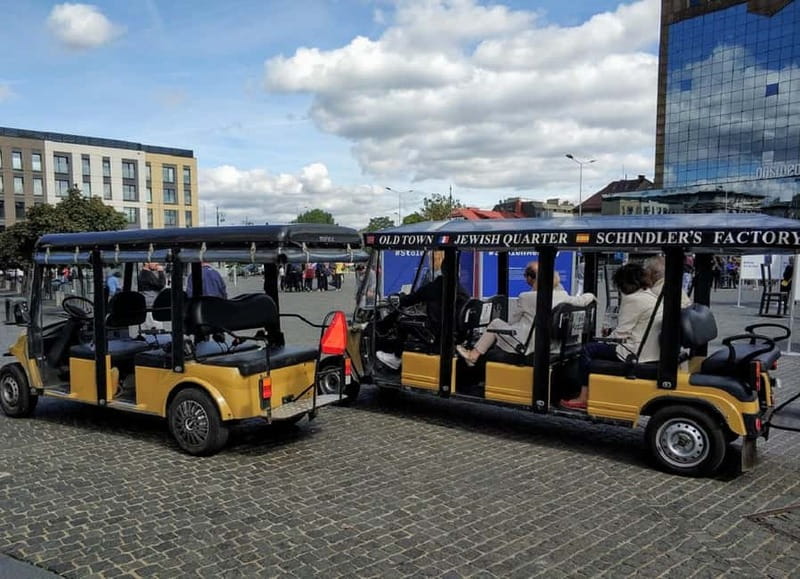
Kazimierz and Podgórze can feel like two different worlds—culturally, historically, and emotionally. What’s tricky is that they’re also visually dense. Streets change character fast, and on foot it’s easy to burn energy without fully processing what you’re seeing.
A golf cart tour solves that. You get smooth movement through the neighborhoods while still getting context at the stops. I like that the ride is built for comfort and time management, not for sprinting.
And because this is an audio-based experience, you can listen for details without competing with a loud group conversation. That matters when you’re trying to understand the layers: community life first, wartime rupture next.
You can also read our reviews of more tours and experiences in Krakow.

Getting On Board: Meeting Point, Timing, and What’s Included
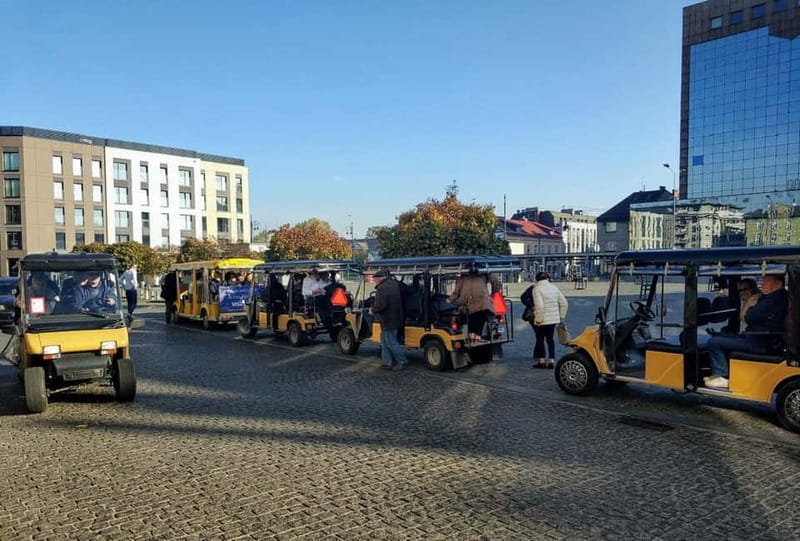
The meeting point is simple: Parking Kiss&Ride in front of the Zabka store, and you should look for a golf cart labeled excursions.city. Arrive about 10 minutes early, because once the group departs, latecomers can’t join and tickets are non-refundable.
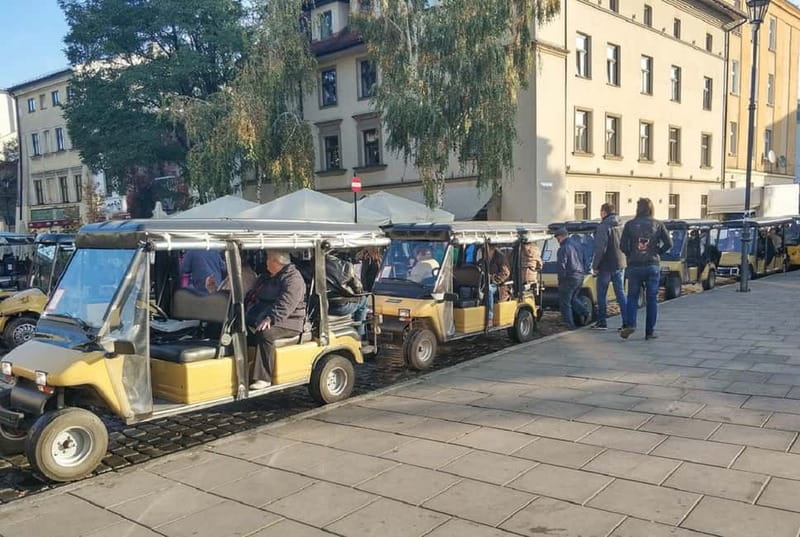
You’ll ride in a heated, electric cart. The cart includes the audio system, and there’s an English-speaking driver on board. So even if you don’t know Polish, you’re not stuck guessing what’s happening as you pass sites.
This tour includes the audio guide and the cart ride around Kazimierz & the ghetto. Entrance tickets, food, and drink aren’t included, and you won’t have a separate live guide.
Kazimierz: The Jewish Quarter and the Streets You Can Still Read
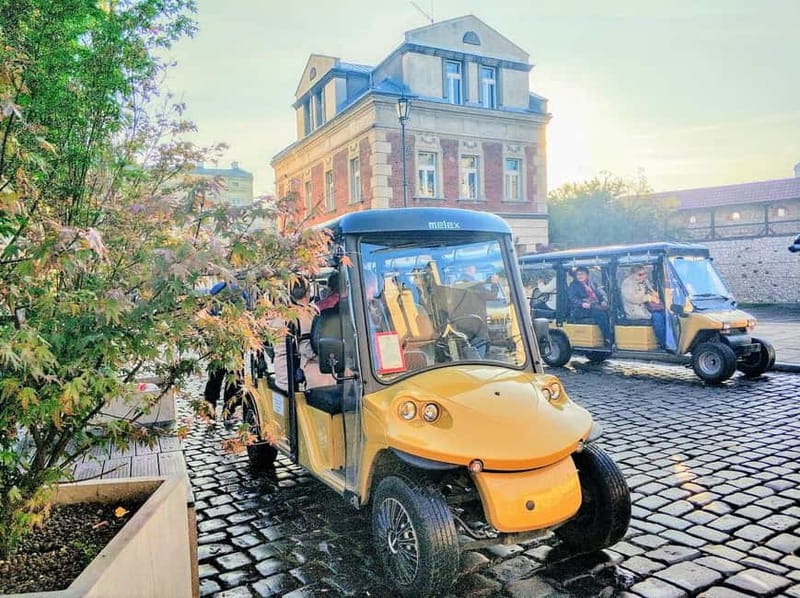
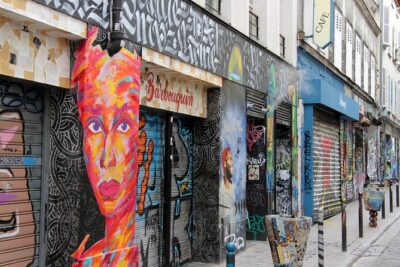
Kazimierz is where the story starts for most people—and the tour keeps it chronological in a smart way. You’ll spend time in the historic Jewish Quarter, an area that functioned as its own town for centuries and became a major hub of Jewish culture.
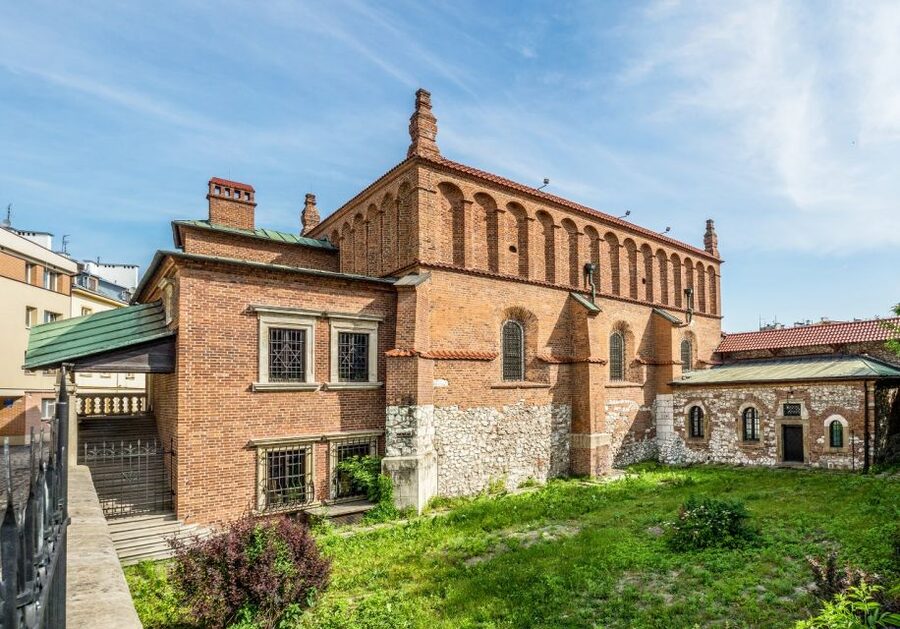
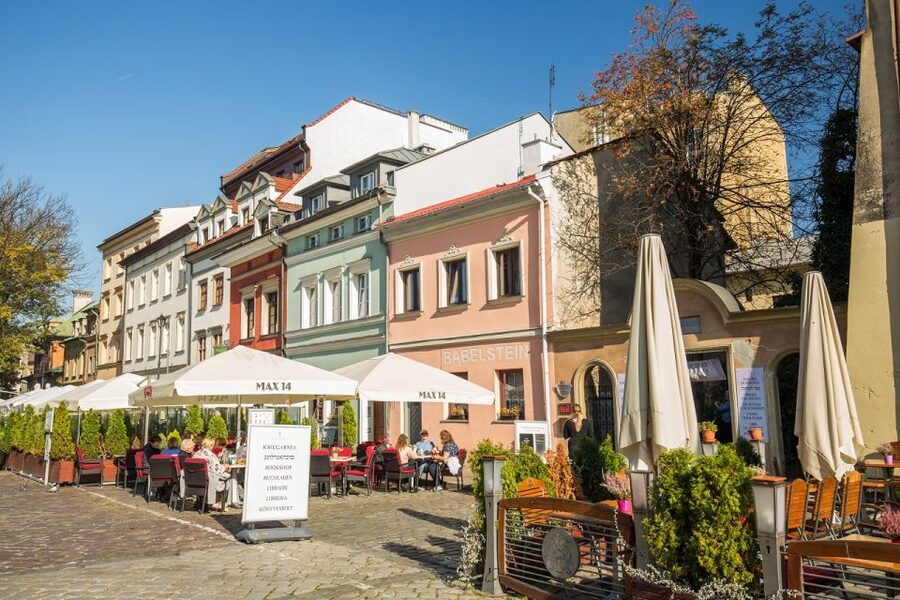
You should expect the ride to focus on the texture of the neighborhood: narrow streets, traditional-area atmosphere, and the sense that daily life used to be tightly knit. Along the way, the commentary points you toward historic synagogues and the everyday surroundings that helped the community function.
Even without walking every lane, you’ll get a clear orientation. I like how this part of the route teaches you what you’re looking at before the wartime sites appear. It’s easier to absorb the tragedy when you understand what was there to begin with.
The Christian Side of Kazimierz: Coexistence You Can See in Modern Streets
After the distinctly Jewish-history segment, the tour continues through the Christian part of Kazimierz. This matters because it shows the city as it has been lived in, not just photographed.
In this section, you’ll pass areas known for cafés and galleries. The point isn’t to turn the tour into a walking food stop. The point is context: Krakow’s neighborhoods have carried multiple communities over time, and you can feel that through the everyday streetscape.
This segment is also where an audio-first format can be especially helpful. As the neighborhood changes character, the commentary can keep your attention anchored to what the area means historically. You’re not just watching scenery drift by.
Crossing Into Podgórze: WWII Krakow and the Sites of Memory
Then the route crosses the Vistula River and enters Podgórze, the district associated with the former Jewish ghetto during World War II. This is the emotional pivot of the tour, and the itinerary clearly structures it that way.
You’ll see a remaining fragment of the ghetto wall. Even a small surviving section can hit hard because it’s tangible. It’s not just a concept; it’s a physical trace of confinement.
You’ll also reach Ghetto Heroes Square, where there’s a distinctive chair memorial. It’s the kind of landmark that works well during a cart tour because you can stop, take it in, and let the audio commentary frame what you’re seeing.
And the tour includes Under the Eagle Pharmacy, another major reminder of Krakow’s wartime past. Places like this often feel more real than museum-only stops because they’re part of the city’s continuing street life.
The Audio Guide Experience: Helpful, Multi-Language, and Sometimes Timing-Sensitive
This tour uses an included audio guide rather than a live lecturer. The upside is flexibility: the carts are heated, you can listen as you like, and the commentary is integrated into the ride so you don’t have to hunt for information at each corner.
The audio language list is impressively wide. You can choose from many options, including English, German, French, Polish, Spanish, Hebrew, and several others. If you’re traveling with someone who prefers a specific language, the audio guide setup usually makes that easier than coordinating a live guide.
One caution: depending on the language track, you may notice the audio ending before another language track finishes. If you’re very detail-sensitive about matching commentary to a specific moment at a stop, keep in mind that timing can vary by language and stop length.
Price and Value: What You Get for $34 in 90 Minutes
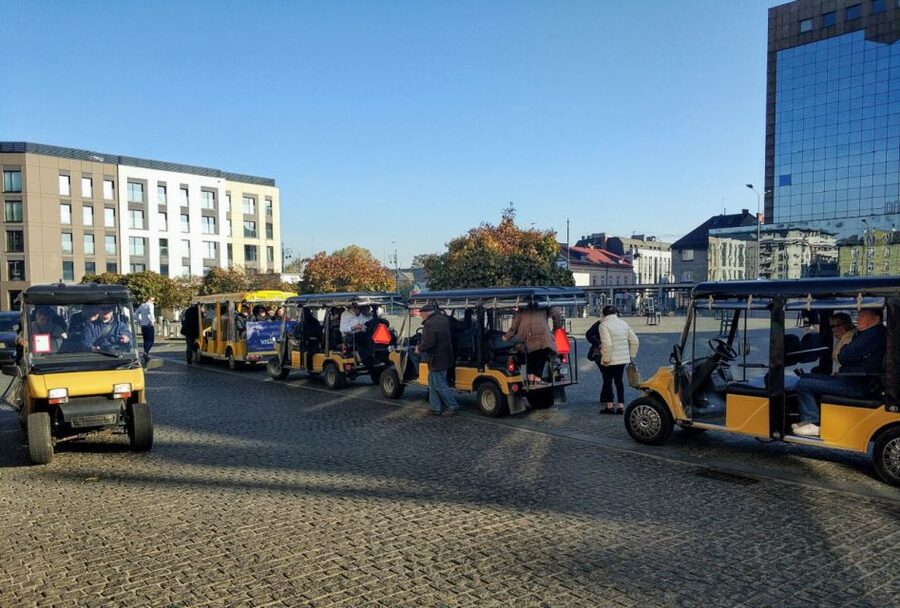
At about $34 per person for a 90-minute group cart tour, the value is mostly about efficiency and comfort. You get a heated ride plus audio commentary, and you cover both major neighborhoods tied to Jewish Krakow’s story—Kazimierz and Podgórze—without needing to plan a self-guided route from scratch.
This price also reflects the “guided by tech” style. You’re not paying for museum entry tickets or a live guide, but you are paying for curated narration delivered at the right moments on the street.
What’s not included matters. Entrance tickets aren’t part of the tour price. Also, you should plan for no food or drink stops built into the experience. If you want snacks or a longer break, you’ll need to arrange it around the tour time.
Pace and Comfort: Great for Many Visitors, Not for Everyone
The tour is designed for easy movement and a manageable schedule. It’s wheelchair accessible, and you’ll be in a heated vehicle throughout the main transfer segments. That makes it a strong choice if you have mobility limits, bad knees, or simply don’t want to spend hours walking while processing heavy history.
The main trade-off is pacing. Some stops are brief, which is usually fine for orientation and key memorial recognition. But if your goal is contemplative time—pausing, reading every sign, and sitting with the meaning of a site—this format may feel too fast.
Also note the luggage rule: large bags aren’t allowed. If you’re traveling light, you’re set. If you’ve got a bigger backpack or extra gear, plan to travel with less.
Who Should Book This Tour (and Who Might Skip It)
This tour is ideal if you want two things at once: a clear overview and a comfortable way to cover ground. You’ll like it if you’re visiting Krakow for a short stay, you want structure without booking multiple separate stops, or you’re bringing family members who don’t want to walk long distances.
It can also be a good choice if you prefer learning through commentary rather than live explanation. The audio guide keeps you moving, and you can listen in your chosen language.
I’d think twice if you strongly dislike audio commentary formats or if you need more time at each memorial site than a brief stop allows. For those travelers, a slow self-guided walking day might better match the pace you want.
Should You Book This Krakow Jewish Quarter and Ghetto Golf Cart Tour?
If you want an efficient, street-level introduction to Kazimierz and Podgórze, I’d say yes. The heated electric cart plus multi-language audio guide makes the experience easy to manage, and the route hits some of the most important memory places: the ghetto wall fragment, Ghetto Heroes Square with its chair memorial, and Under the Eagle Pharmacy.
Just go in with the right expectations. This is a 90-minute overview by design, not a long-form, read-everything, sit-and-stare experience. If you can accept that pace, you’ll leave with a much clearer sense of how Krakow’s Jewish story moved from daily life to wartime horror—and back into remembrance.
FAQ
How long is the golf cart tour?
The tour lasts 90 minutes.
How much does it cost?
It costs $34 per person.
Where is the meeting point in Krakow?
Meet at Parking Kiss&Ride in front of the Zabka store. Look for a golf cart labeled excursions.city.
Is an audio guide included, and in what languages?
Yes. An audio guide is included, with many languages available such as English, French, German, Spanish, Polish, Hebrew, and more.
Is there an English-speaking driver?
Yes, the driver is described as English speaking.
Is a live guide included?
No. The tour includes audio commentary, but a live guide is not listed as included.
Is the tour wheelchair accessible?
Yes, it is listed as wheelchair accessible.
Are entrance tickets included?
No. Entrance tickets are not included.
What is the rule about luggage?
Luggage or large bags are not allowed.
Is the audio guide on a heated cart?
Yes. All vehicles are heated and equipped with an audio guide.