REVIEW · ROME
National Gallery of Modern Art Ticket & Rome App Audioguide
Book on GetYourGuide →Operated by GetYourGuide Tours & Tickets GmbH · Bookable on GetYourGuide
Rome’s modern art has room to breathe. This skip-the-line ticket to the National Gallery of Modern Art in Rome pairs with a Rome app audioguide so you can see nearly 20,000 works at your own speed. You’ll move through 19th-century art downstairs and 20th-century work upstairs, with plenty of paintings, sculptures, and installations to keep you busy.
I love the time-saving part: you’re not stuck waiting just to get in. I also love the sheer range of what you’ll see—Italian and foreign artists, plus the split between 19th-century and 20th-century collections. That layout makes it easier to understand what you’re looking at instead of wandering randomly.
The main drawback is also the museum’s strength: it’s big, so you can lose your place if you don’t use the audio guide and pay attention to labels. Some visitors find that artist and work names aren’t always obvious at a glance, so plan for a bit of “find and match” work.
In This Review
- Key things to know before you go
- Skip-the-Line Entry at Rome’s National Gallery of Modern Art: What You Get
- How to Plan Your Visit in 1 Day (Without Getting Lost)
- Ground Floor: 19th-Century Art That Sets the Stage
- Top Floor: 20th-Century Works and the Art That Breaks Rules
- The App Audioguide: Your Best Tool for a Big Museum
- Rules That Actually Affect Your Day (Bags, Food, Pets, Photos)
- Price and Value: Does $20 Make Sense?
- What This Experience Suits Best (And When to Choose Something Else)
- Final Check: Should You Book This Ticket and Rome App Audioguide?
- FAQ
- How long is the experience valid?
- Does this include a guided tour?
- Can I skip the line?
- What’s included with the ticket?
- Are food and drinks allowed inside the museum?
- Is photography allowed?
- What about large bags or backpacks?
- Is the museum wheelchair accessible?
- Is it refundable?
Key things to know before you go
- Skip-the-line entry: go straight in with your official ticket.
- Nearly 20,000 works: this is a full-day museum, not a quick stop.
- Two-floor structure: 19th-century art on the ground floor, 20th-century on top.
- Big-name artists: expect references to Monet, Van Gogh, Antonio Canova, and Joseph Kosuth.
- Self-guided with an app: no guided tour, so you drive your own route.
- Photographs allowed, no flash: bring a camera, but keep it polite.
Skip-the-Line Entry at Rome’s National Gallery of Modern Art: What You Get
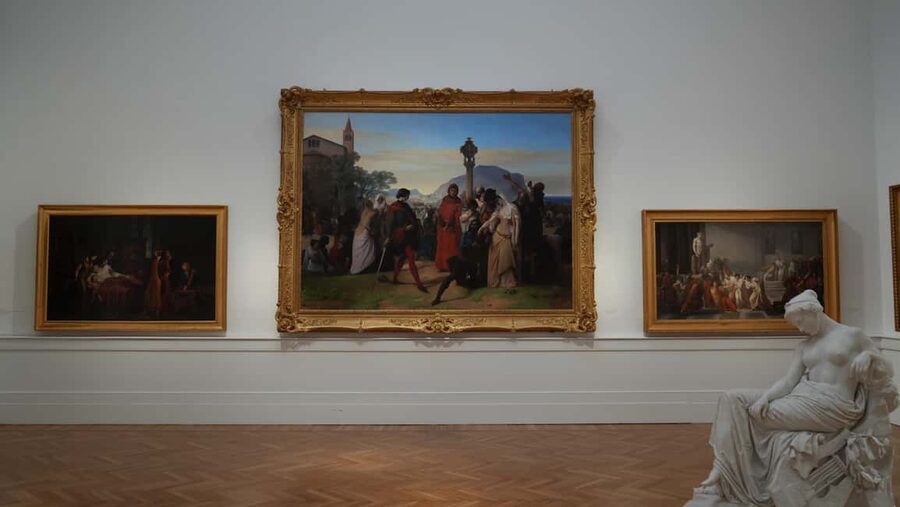
This experience is basically a clean, practical deal: a skip-the-line ticket to the National Gallery of Modern Art in Rome, plus a Rome app audioguide. No group herding. No meeting point dance. You just enter using your official ticket.
In real terms, skipping the line matters here because modern art museums can be slow-moving. You’ll want time to stop, look longer than you planned, and not feel rushed before you even get inside.
The museum’s scale is part of the point. You’re dealing with close to 20,000 works of art, and the collection spans major art movements. That’s great for curiosity, but it also means you should pick a strategy so you don’t spend your day doing laps.
A few more Rome tours and experiences worth a look



How to Plan Your Visit in 1 Day (Without Getting Lost)
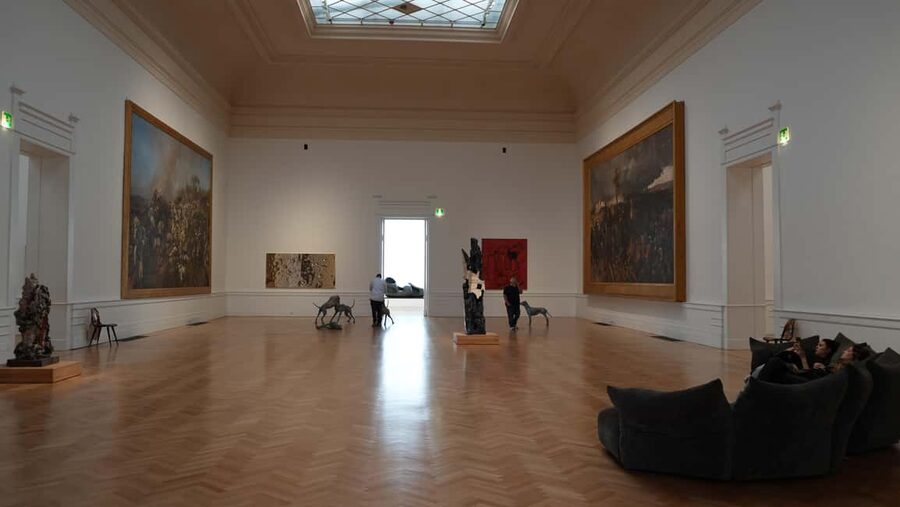
You’re working with a 1-day ticket. That’s enough time to enjoy the museum, but only if you manage your energy. This is the kind of place where your legs will quietly file a complaint if you treat it like a sprint.
Start by deciding what kind of visitor you are:
- If you love art history, you’ll probably want to follow the timeline split between floors.
- If you love atmosphere, you might move more by themes—paintings versus sculpture versus installations.
One thing that helps: use the app to get your bearings fast. Even if you don’t catch every detail, having audio context keeps you from staring at labels without understanding what you’re really seeing. A French visitor noted the museum can feel like a bit of a treasure hunt for artist and work names. The solution is simple: don’t rely only on signs; let the app guide you.
Also, check the museum’s open day. It’s closed on Mondays, so don’t plan a Monday “culture day” unless you’ve built a backup.
Ground Floor: 19th-Century Art That Sets the Stage
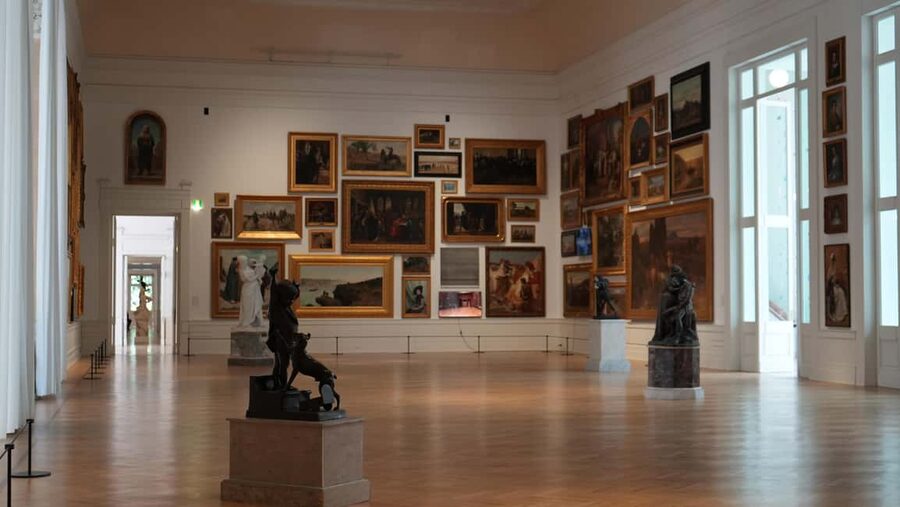
The ground floor is where the museum gives you its historical spine. Expect 19th-century art and artists discussed in the listing such as Claude Monet and Vincent Van Gogh.
Why that matters: seeing these works on the ground floor first helps your brain sort styles faster. You’re not jumping straight into everything at once. You can stand in front of works and start recognizing how techniques, subjects, and mood shift over time.
What you’ll actually be looking at in this section includes drawings, paintings, sculptures, and installations. That variety makes the floor more than a gallery of frames. You’ll get moments where the art changes how you look at the next room—especially when sculpture or installation changes the scale of what a “work” means.
A practical tip: don’t try to see every single piece. With nearly 20,000 works in the building, that goal will turn your day into exhaustion. Instead, aim to see a representative sweep—then slow down when something grabs you. If you find yourself speeding up, you’re probably missing the art that’s worth your attention.
Top Floor: 20th-Century Works and the Art That Breaks Rules
Upstairs is the payoff for visitors who like art that feels more experimental. The listing says the top floor covers 20th-century art, including artists such as Antonio Canova and Joseph Kosuth.
Now, one small caution: names can be surprising when you see them in a museum context. The listing places these works in the 20th-century section, so follow the museum’s organization rather than trying to match it to your memory from textbooks. In practice, that’s better anyway. The museum’s arrangement is what your eyes are going to experience.
This floor covers a wide range of art movements, from Neoclassicism to Impressionism, and it also includes Futurism and Surrealism. Even if you’re not an art-terms person, you’ll feel the differences:
- Some rooms will reward close looking, like brushwork, form, or expression.
- Other areas will reward stepping back, because installations and large-scale pieces change how you perceive space.
When an installation is part of a room, take one full circuit. Look once from the most obvious viewing spot, then look again from an angle you might normally skip. That’s often where the “why it’s placed this way” clicks.
The App Audioguide: Your Best Tool for a Big Museum
This ticket includes a digital audioguide through a Rome app. Since there’s no guided tour, the app becomes your main support system.
Here’s how I’d use it in a museum like this:
- Play it when you enter a new area so you understand what that section is trying to do.
- Turn it off when you want silence to really study a work.
- Use it as a compass, not a constant narration.
A common problem in big museums is staring at labels and still feeling like you’re missing the point. The app helps with that, especially when you hit areas where signs might be harder to read quickly or where it’s not instantly obvious which artist a work belongs to. That treasure-hunt feeling is part of the charm, but only if you’re not doing it out of frustration.
Also remember: photography is allowed, but flash is not permitted. If you plan on taking pictures for later study, keep your lighting off and your focus on steady looking first. Photos come second.
You can also read our reviews of more museum experiences in Rome


Rules That Actually Affect Your Day (Bags, Food, Pets, Photos)
The rules here are pretty standard for a major museum, but they matter because they affect what you bring and how you move.
- Food and drinks are not allowed inside galleries. This means you should either eat before you go or plan for breaks outside the museum. Don’t assume you can grab a snack mid-route.
- Large bags and backpacks must be left at the cloakroom. Travel light if you can. If you do bring a big pack, plan extra time for the cloakroom stop.
- Pets are not allowed (assistance dogs are allowed). If you’re traveling with an animal, you’ll need another plan.
- Photography is allowed, flash is not permitted. Great for documentation, but keep it considerate.
One more practical point: the meeting instruction is simple—enter the museum and access with your official ticket. That’s helpful because it reduces “where do we stand?” stress. Still, build in a few minutes of buffer so your day doesn’t start with a scramble.
Price and Value: Does $20 Make Sense?
The listing price is $20 per person, but the details are more interesting than the headline number. The ticket cost is 15 EUR, and the remainder goes toward the digital audio guide and GetYourGuide services.
So the real value question becomes: is the skip-the-line plus app audio guide worth the difference to buying a plain ticket at the counter? In a museum this large, time matters. Getting in smoothly helps you use your one-day visit to actually see art instead of waiting.
You’re also paying for structure without a guided tour. There’s no lecturer, no group program. Instead, you get audio support and priority entry. For independent travelers—especially those who hate being rushed—that can be the sweet spot.
And based on the feedback you might notice online, one thing people clearly like is the convenience of buying ahead of time. If you want less friction on the day you arrive, booking this way is a smart move.
What This Experience Suits Best (And When to Choose Something Else)
This is ideal for you if:
- You want to visit independently with skip-the-line access.
- You like museums with a lot of content and you’re willing to pace yourself.
- You’re okay using a digital audio guide instead of paying for a live tour.
- You want a museum visit that covers multiple art movements in one location.
It might not fit you as well if you:
- Want a fully guided experience with a specialist leading the narrative start-to-finish.
- Prefer small, tightly focused exhibitions rather than a giant collection.
- Get frustrated easily when a museum feels like you have to work a little to match labels to artworks.
If you’re the kind of person who likes to plan your route with a spreadsheet, you’ll probably love this. If you’re more “walk in and follow what grabs you,” use the app at the start so you don’t wander into the wrong section for too long.
Final Check: Should You Book This Ticket and Rome App Audioguide?
I’d book this if your goal is a smooth, independent museum day at the National Gallery of Modern Art in Rome. The combo of skip-the-line access plus an app audioguide is practical value, especially with nearly 20,000 works competing for your attention.
Before you commit, make sure your timing works:
- The museum is closed on Mondays.
- You’ll need to comply with no food inside galleries and store large bags at the cloakroom.
- Photography works, but no flash.
One last note: it’s non-refundable, so book with confidence only after you’ve confirmed your day in Rome.
If you want an art-filled day without a guide voice in your ear the whole time, this is a solid choice. Bring comfortable shoes, use the audio guide like a map, and let the museum’s two-floor story do the heavy lifting for you.
FAQ
How long is the experience valid?
Your ticket is valid for 1 day. You can check availability for starting times.
Does this include a guided tour?
No. This experience includes admission and a digital app audioguide, but it does not include a guided tour.
Can I skip the line?
Yes. The ticket provides skip-the-line access into the museum.
What’s included with the ticket?
You get access to the Museum of Modern Art, plus a digital app audioguide for Rome.
Are food and drinks allowed inside the museum?
No. Food and drinks are not allowed inside the museum galleries.
Is photography allowed?
Photography is allowed, but flash photography is not permitted.
What about large bags or backpacks?
Large bags and backpacks must be left at the cloakroom.
Is the museum wheelchair accessible?
Yes. The museum is wheelchair accessible.
Is it refundable?
No. This activity is non-refundable.