REVIEW · BUENOS AIRES
Palermo: Graffiti and Street Art Guided Tour in English
Book on GetYourGuide →Operated by Buenos Aires Free Walks · Bookable on GetYourGuide
Street art in Palermo has a political pulse. This 2-hour English walking tour turns everyday walls into a timeline, from Argentina’s early political poster energy to the way aerosol paint changed protest in the 1970s.
I love that the tour does not treat graffiti like random decoration. You learn how street marking was seen as political endorsement, used in propaganda and election campaigns, and why people eventually got more involved in protesting through public art.
My other favorite part is the photo-friendly route built around real Palermo street corners. You’ll get that classic stop at the Trump Wall at Madison Avenue Bar, plus plenty of other pieces to study up close while an enthusiastic guide keeps the story moving. One consideration: there’s no hotel pickup, so you’ll need to get yourself to the meeting point and then finish at a different plaza.
Guides lead this tour in English, and the vibe tends to be upbeat. Names that come up often include Vito, Juan, Elina, and Aylen, and the common thread is a mix of art talk, local storytelling, and humor so the history lands without getting heavy.
It also helps that the pace is designed for photos. At a low price point like $13, you’re paying for a guide’s eye—someone who points out details you’d likely miss while just wandering on your own.
Possible drawback: rain does not cancel it. If the weather turns, plan for wet pavement and shorter attention spans, because you’ll still be walking and stopping often.
In This Review
- Key things I’d bet on before you go
- Palermo’s street art turns into a timeline of protest
- Plaza Serrano meeting point: what to find and how to start fast
- Two hours on foot: the pace, group energy, and rain reality
- Madison Avenue Bar and the Trump Wall: the iconic photo moment
- The 1920s story: election campaigns, endorsement, and street politics
- 1969 aerosol paint: why faster messages reshaped the 1970s
- The 1970s protest atmosphere: social conflict you can read on the walls
- Why this Palermo route feels eclectic (and worth walking)
- Price and value: why $13 makes sense for a guided story
- Who this tour is best for in Palermo
- Practical takeaways before you book
- Should you book Palermo Graffiti and Street Art in English?
- FAQ
- How long is the Palermo graffiti and street art tour?
- How much does the tour cost?
- Where do I meet the guide?
- Where does the tour end?
- What language is the tour in?
- Will the tour run in the rain?
Key things I’d bet on before you go
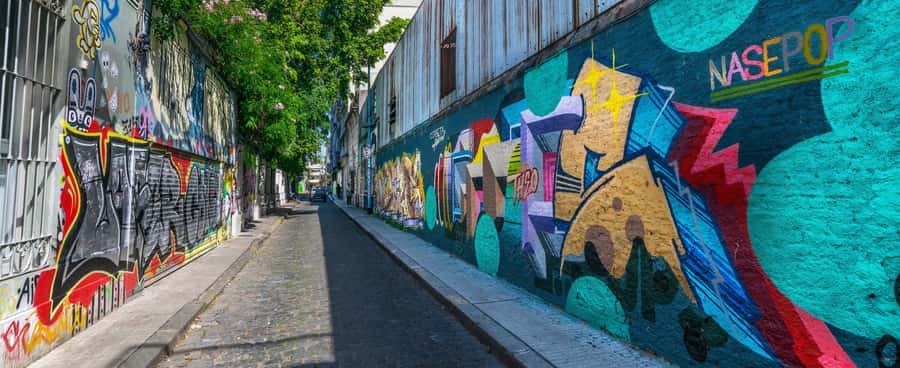
- Political origins of Argentine street art: propaganda, election campaigns, and protest-era messaging
- Trump Wall photo stop at Madison Avenue Bar: an iconic visual checkpoint
- A tight 2-hour walk: enough time for multiple murals without tiring you out
- English live guide in an orange t-shirt: easy to spot at the start
- Start and finish at different plazas: build your return plan around the route
Palermo’s street art turns into a timeline of protest
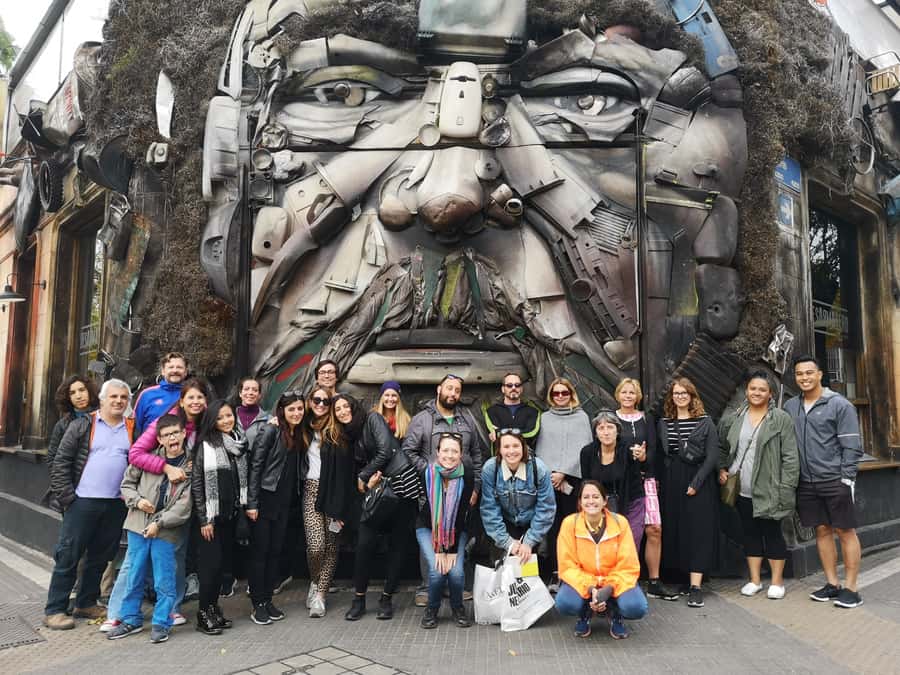
Palermo is famous for color and street style, but this tour frames it differently. You’ll see murals and graffiti as part of the city’s political conversation, not just street decoration.
That shift matters because it changes how you look. Instead of asking what’s pretty, you start asking what it’s saying, who it’s for, and why it shows up on that exact kind of wall.
You can also read our reviews of more tours and experiences in Buenos Aires.

Plaza Serrano meeting point: what to find and how to start fast
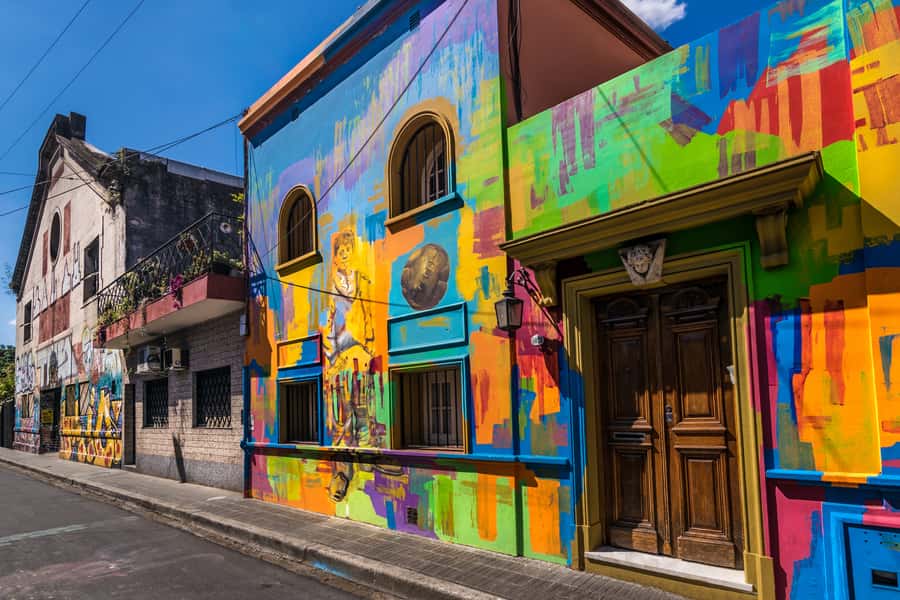
You’ll meet in Palermo at Plaza Serrano, also known as Plaza Cortázar. The corner is Jorge Luis Borges and Honduras St., and the guide wears an orange t-shirt with a big PALERMO sign.
If you’re arriving by foot from somewhere nearby, give yourself a few extra minutes to orient. This is one of those starts where being “close” isn’t the same as being at the right corner, especially when a group is gathering.
And because there’s no pickup, getting there on time is your job. Once you locate the orange-shirt guide, the rest of the flow is simple.
Two hours on foot: the pace, group energy, and rain reality
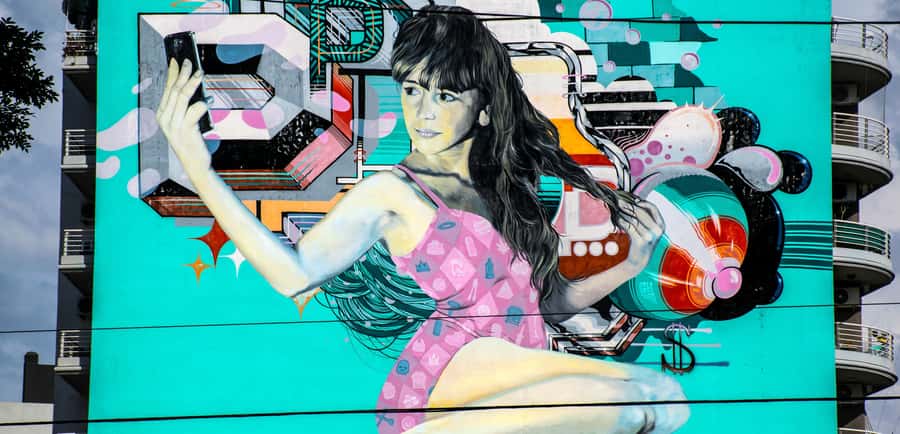
This tour runs for 2 hours, which is a sweet spot for Palermo walking. It’s long enough to make the neighborhood feel real, but short enough that you can still do other plans after.
From what I’ve seen in the guide feedback, groups can be larger at times, but the lead keeps things organized. The bigger point for you: if you like clear audio and a steady group pace, this is the kind of tour built to handle that.
Now the weather note: it still runs in the rain. That doesn’t mean it becomes miserable; it means you should bring a light rain layer and expect more walking and more stopping on slick sidewalks.
Madison Avenue Bar and the Trump Wall: the iconic photo moment
One of the headline stops is the Trump Wall at Madison Avenue Bar. Even if you only know it from photos online, seeing it in the context of street art history changes the whole meaning.
On this tour, that wall is not treated like a standalone novelty. It’s a launching point into the wider idea that street imagery often carries a message—sometimes satire, sometimes endorsement, often political intent.
Bring your camera, but also take a minute to read the surrounding details. The best shots usually come from stepping back and catching the piece plus its street setting, not just zooming in.
The 1920s story: election campaigns, endorsement, and street politics
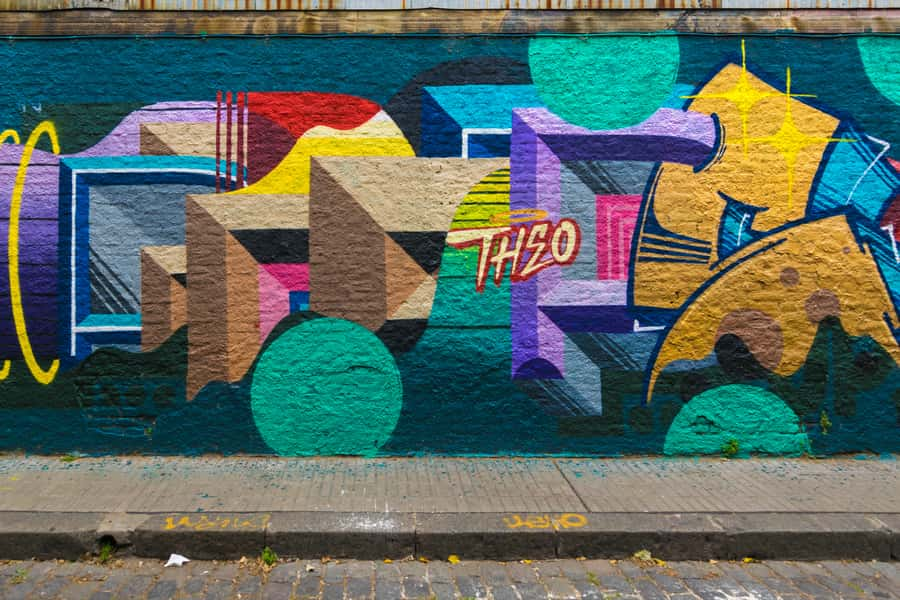
The guide’s big historical thread starts back in the 1920s. You’ll connect Argentina’s street art to political movements gaining traction at the time and to the idea that public marking could act like endorsement.
Here’s what you’ll likely find useful: the tour explains graffiti as communication. You’ll hear how street messages weren’t just about art style; they were tied to propaganda thinking, where visibility on the street could equal persuasion.
It also gives you a better lens for what you see today. When you understand that street art has long been used for messaging, you stop seeing every mural as random or purely artistic and start recognizing patterns in how cities communicate.
1969 aerosol paint: why faster messages reshaped the 1970s
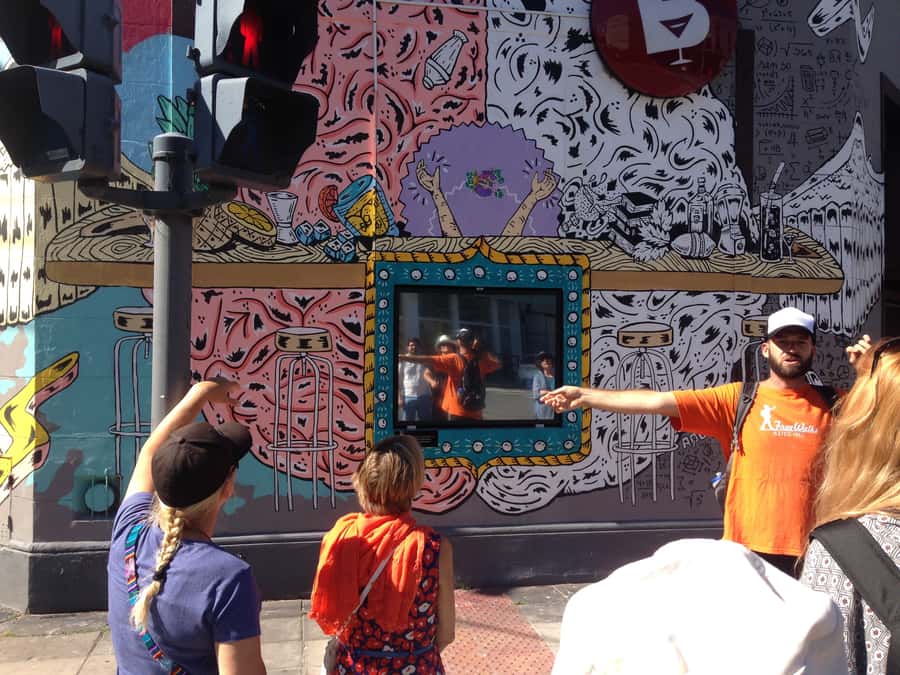
The story then jumps to 1969 and the arrival of aerosol paints. The key idea is straightforward: aerosol made messages faster to write and easier to repeat at scale.
That change mattered for the 1970s, when urban movements needed speed. You’ll learn how quicker application influenced protest culture and how people became more involved in public disagreement.
This section is especially good if you like cause-and-effect stories. Technology changed tactics, and tactics changed the look of the city’s walls—simple mechanics, big consequences.
The 1970s protest atmosphere: social conflict you can read on the walls
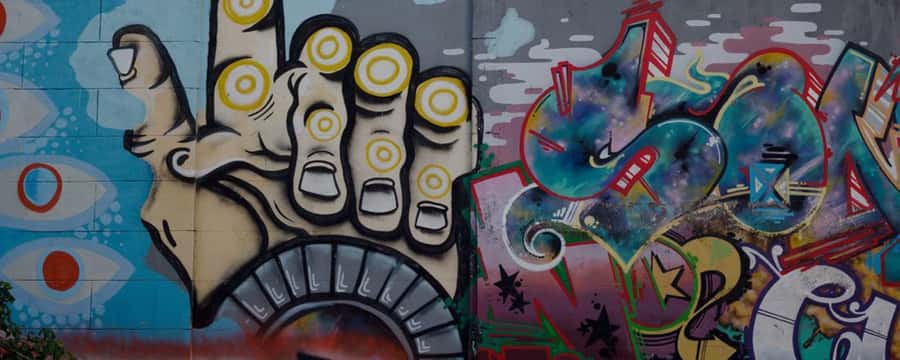
After aerosol paint enters the picture, the tour focuses on the growing role of protesting. You’ll hear how participation became more social and more intense as conflict escalated.
The practical value here is that the guide helps you connect meaning across decades. You start spotting why certain messages might be bold, direct, or recurring—because the context demanded urgency and impact.
And because the tour is walking-based, you’re not just hearing about history. You’re looking at Palermo right now while the guide ties it back to what was happening socially and politically back then.
Why this Palermo route feels eclectic (and worth walking)
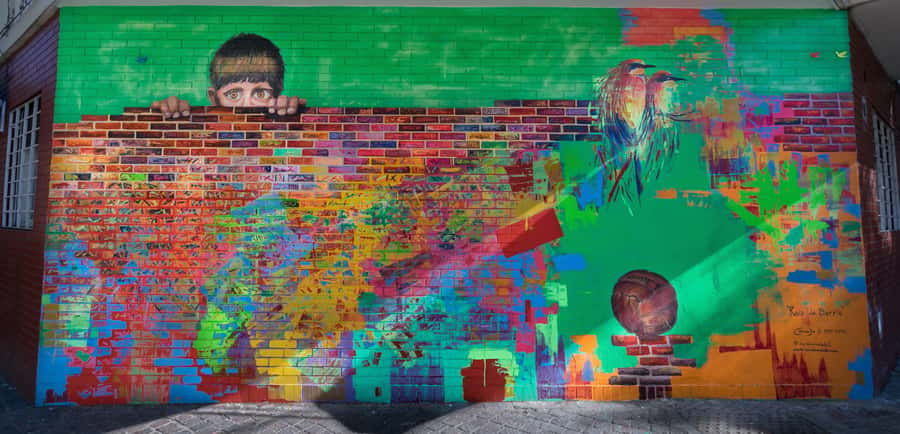
This is described as one of Palermo’s eclectic neighborhoods, and you’ll feel that in the mix of visuals along the way. You won’t be stuck staring at one style of mural; you’ll encounter different approaches to street art and graffiti.
That variety is part of the point. Street art isn’t one uniform language, and Palermo shows that fact well, from political messaging to pop-cultural references.
You’ll also learn how your guide “reads” the street. The guide’s eye helps you notice details like style choices and message placement—things you would likely overlook if you just pass by at regular walking speed.
Price and value: why $13 makes sense for a guided story
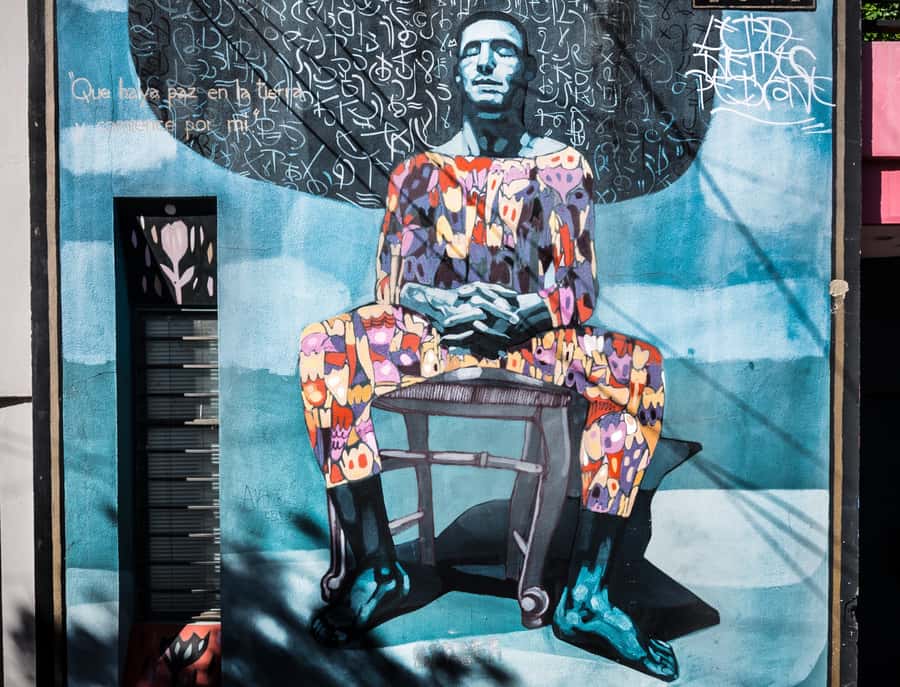
At $13 per person for a 2-hour guided walk, you’re paying for two things: access and interpretation. Access is simple—you’re getting a planned route that gets you to the right corners. Interpretation is the real value, because the guide connects what you see to why it exists.
This tour is also good value because it includes the hard part you can’t replicate by yourself: the history thread. A lot of street art walks show you images. This one explains political origins, propaganda use, and protest-era shifts tied to aerosol paint.
Not included are food and drink, so plan a snack or a drink on your own before or after. The tour itself stays focused on walking and storytelling, which is exactly what you want from a short, cost-effective activity.
Who this tour is best for in Palermo
If you like street art but also want context, this is a strong match. It works for art lovers, photography-minded travelers, and history buffs who prefer stories told on the ground rather than in a museum.
It’s also a good fit if you want something low-commitment. Two hours is manageable on a travel day, and the walking route gives you a Palermo feel without eating your whole afternoon.
Accessibility is listed as wheelchair accessible, which is a big practical win to check. Just note that you still need to meet at the designated plaza and finish at the other one, so plan how you’ll navigate your transport from there.
Practical takeaways before you book
Bring a camera or phone you’re willing to use. This tour is built around stops where you’ll want photos, including the Trump Wall at Madison Avenue Bar.
Wear something you can walk in comfortably. It’s a walking tour with multiple stops, and you’ll likely spend time looking closely before moving on.
Finally, plan your return to match the finish point. You end at Plaza Inmigrantes de Armenia, so don’t schedule a tight connection immediately afterward unless it’s close.
Should you book Palermo Graffiti and Street Art in English?
Book it if you want street art with a message behind it. I’d especially recommend it if you like understanding how politics and public expression shape what you see on walls, not just snapping pictures of murals.
Skip it only if you hate walking or you’d rather do a self-guided roam without historical framing. This tour’s value is the guide’s storytelling, and without that context, the route would be more about visuals than meaning.
If you’re curious about Argentina’s protest history and you want a smart, low-cost way to see Palermo in a new light, this is an easy yes.
FAQ
How long is the Palermo graffiti and street art tour?
It lasts 2 hours.
How much does the tour cost?
The price is $13 per person.
Where do I meet the guide?
Meet at Plaza Serrano (Plaza Cortazar) in Palermo, at the corner of Jorge Luis Borges and Honduras St. Look for the guide in an orange t-shirt with a big PALERMO sign.
Where does the tour end?
The tour finishes at Plaza Inmigrantes de Armenia.
What language is the tour in?
The tour is offered in English with a live guide.
Will the tour run in the rain?
Yes, it still takes place even if it rains.