REVIEW · PHILADELPHIA
Philadelphia Murals and Street Art Tour with Magic Gardens
Book on Viator →Operated by WeVenture · Bookable on Viator
Mosaics meet street-level Philly art. This two-hour tour threads together South Street street life, community art spaces, and the famous walk-in wonder of Philadelphia Magic Gardens. You start at the Theatre of Living Arts and finish at the Gardens, with a guide mapping what you see to the people and places behind it.
I love the personal scale: small-group pacing, frequent stops, and stories that connect the art to local culture. I also like the built-in purpose, because part of your ticket supports community arts through stops like the Da Vinci Art Alliance.
One consideration: it’s advertised as a small-group tour capped at 12, but on at least one departure the group ran bigger than expected.
In This Review
- Key highlights at a glance
- Starting on South Street: Theatre of Living Arts sets the tone
- South Street murals and art shops: what to look for as you walk
- Da Vinci Art Alliance: community art with real stakes
- Bella Vista and Queen Village side streets: how neighborhoods evolve
- Philadelphia’s Magic Gardens: Zagar’s transformation as your included finale
- The $45 value: what you’re really paying for
- Walkability, timing, and what to expect on the ground
- Who should book this mural and Magic Gardens tour
- Should you book? My practical take
- FAQ
- What does the tour cost, and how long is it?
- Where does the tour start and end?
- Is Philadelphia Magic Gardens included?
- How big is the group?
- What language is the tour offered in?
- Is there a donation included in the price?
- Do I need to bring tickets?
- What’s the cancellation policy?
- Is it easy to get to the meeting point?
Key highlights at a glance
- South Street first, then deeper neighborhoods: you get street art context before you go exploring off the main tourist flow
- Stops tied to real community organizations: Da Vinci Art Alliance is part viewing, part mission
- The Magic Gardens finale is included: you end with free admission rather than a quick photo stop
- A route built for walking: you’ll cover multiple South Philly blocks and alleys at an easy pace
- Multiple guide styles, same local storytelling focus: guides seen on past tours include Carla Stein, Chuck, Carla, Marty, James Robinson, Nina, and Heather
Starting on South Street: Theatre of Living Arts sets the tone
The tour meets outside the Theatre of Living Arts at 334 South St in the heart of South Street. Even if you’ve only skimmed Philly’s reputation, you can feel the area’s attitude here: this isn’t a museum route with everything behind glass. It’s street culture, music culture, and art culture in the same neighborhood.
At this first stop, your guide frames the Theater of Living Arts as a symbol of South Street’s counterculture spirit. That matters, because it tells you how to read the murals and mosaics that come later. Instead of treating street art like random decoration, you start seeing it as local conversation—people responding to their community in public.
You’ll also get your bearings fast. The route is designed so you’re not just standing around. You’re walking, looking up, and learning how to spot details you’d otherwise miss—like design choices on storefront facades and the difference between a one-off mural and a long-running art presence.
A few more Philadelphia tours and experiences worth a look
South Street murals and art shops: what to look for as you walk
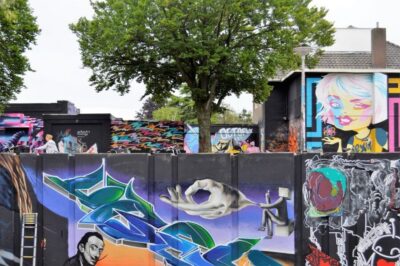
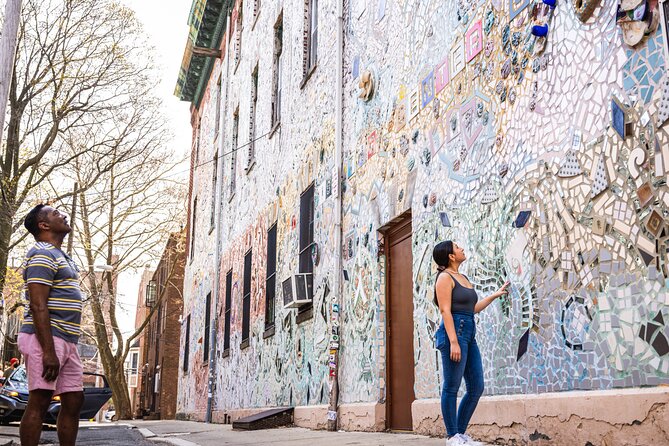
Next is South Street itself, where the guide leads you past locally-owned galleries and shops and points out decorative facades. This is where the tour earns its “street art” label. It’s not only murals on big walls. You’ll see the neighborhood’s art streak in smaller touches—painted details, window displays, and building exteriors that feel designed for people to notice.
Why this part is valuable: South Street can look busy from the sidewalk, but a guide helps you separate noise from meaning. You’ll pick up the historical bits that explain why the neighborhood became a magnet for creative people for generations. That makes the later stops hit harder, because you know the setting that produced the artwork.
A practical tip: if you love photography, this is your warm-up section. You’ll be moving constantly, and you’ll get a feel for where the best angles are—side streets often offer cleaner lines than the main strip. Wear something comfortable enough that you can pause without rushing.
Da Vinci Art Alliance: community art with real stakes
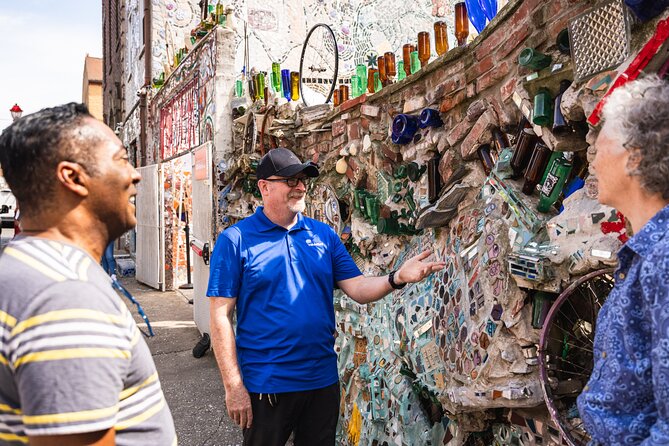
One of the smartest moves on this tour is the stop at Da Vinci Art Alliance (DVAA). It’s a community-based organization that’s been active since the 1930s. Today it supports local artists in LGBTQ and BIPOC communities by offering exhibit space and grant funding.
Here, you’re not just consuming art as a product. You’re learning how community art infrastructure works. Your ticket includes admission to see current exhibits, and the guide ties what you’re viewing to past efforts and future goals.
The other reason this stop stands out: your ticket proceeds donate to DVAA. That means the tour isn’t only informational. It’s contributing to the same kind of artistic support that the neighborhood depends on.
Potential drawback: this portion can feel more like an art organization visit than a street-photo hunt. If you’re only interested in outdoor murals, you might want to mentally switch gears. Still, it adds depth and makes the Magic Gardens finale feel less like a random spectacle and more like part of a broader Philly art ecosystem.
Bella Vista and Queen Village side streets: how neighborhoods evolve
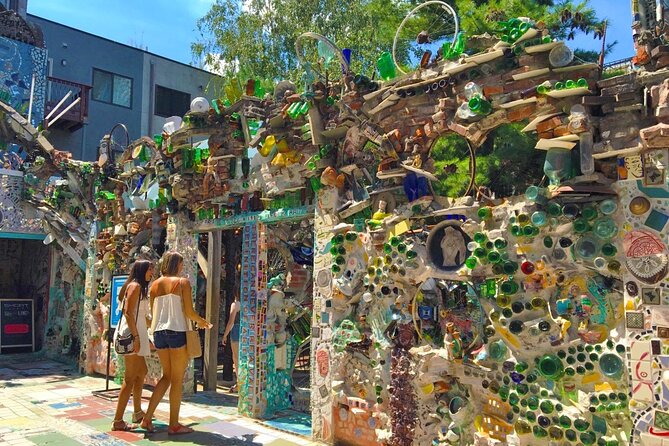
After DVAA, the tour shifts into the maze-like rhythm of South Philly, weaving through streets and alleys in Bella Vista—the neighborhood around the Italian Market and Magic Gardens. Your guide frames Bella Vista as Philadelphia’s first suburb, and you’ll see evidence of that long timeline in how the neighborhood looks and how public art fits into it.
Expect a mix of homes, small gardens, and public artworks. The point here isn’t to list every building. It’s to help you understand how Philly uses space—how art shows up in places that also hold daily life. You’re walking through a living neighborhood, not a curated district.
Then, you’ll also pass through the Queen Village area, just south of Center City. Queen Village is known for its historic row houses, cobblestone streets, and a cozy blend of cafés and shops. On this route, it works as a contrast: you’ve been in arts-forward South Street mode, then you get the quieter side of old Philly.
What to watch for during this segment: street art doesn’t always announce itself. In neighborhoods like this, you’ll spot artwork in side walls, small stretches of frontage, and alley-adjacent spaces. Slow down for the corners. That’s where the surprise usually lives.
Philadelphia’s Magic Gardens: Zagar’s transformation as your included finale
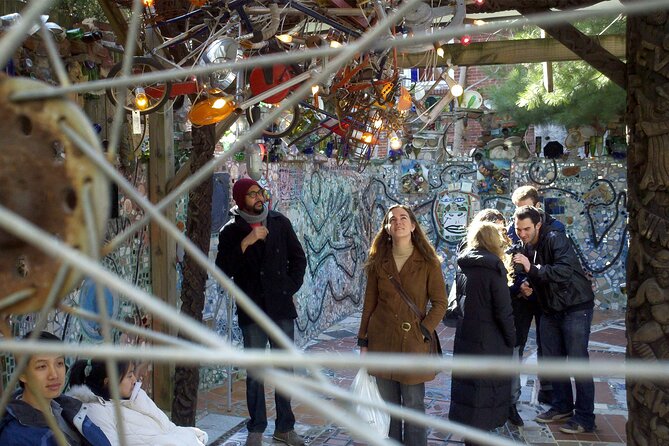
The tour ends at Philadelphia Magic Gardens (1020 South St) with included free admission. This is where all the street art context becomes a full-on experience.
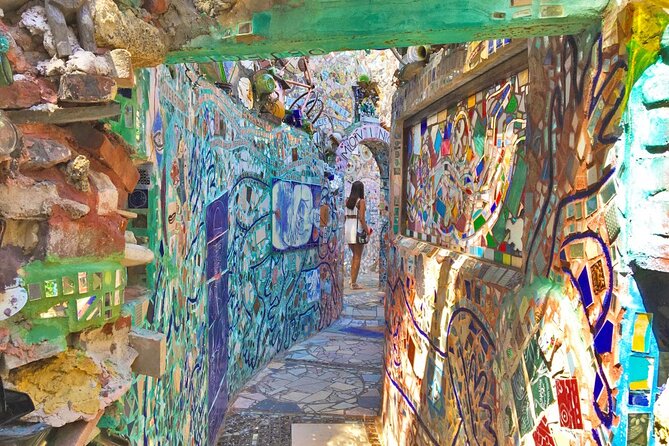
If you’ve heard the legend, you’ll recognize the key detail: Isaiah Zagar’s masterpiece turned an abandoned lot into a mind-bending labyrinth of glass, tile, paint, and found materials. The whole place feels like a personal universe you can walk through, not a single artwork viewed from one angle.
Why ending here is smart: you’ve spent the first part of the tour learning how to read Philly street art—how it’s tied to community, identity, and the neighborhood’s creative history. When you finally step into the Magic Gardens, you’re better prepared to notice patterns and thought behind the chaos. You’re not only seeing mosaics. You’re seeing a long-running artistic language.
Timing note: you’ll get about 30 minutes at the Gardens. That’s usually enough to soak in the main areas, but it’s not a “wander for hours” situation. If you want to spend extra time, plan your pace. Go for the big visual zones first, then circle back for close looks.
Also, if you’re visiting with kids or friends who get restless on longer museum walks, this ending tends to work well. It’s immersive, visual, and fun. You can point, explain, and keep moving without it feeling like a lecture.
The $45 value: what you’re really paying for
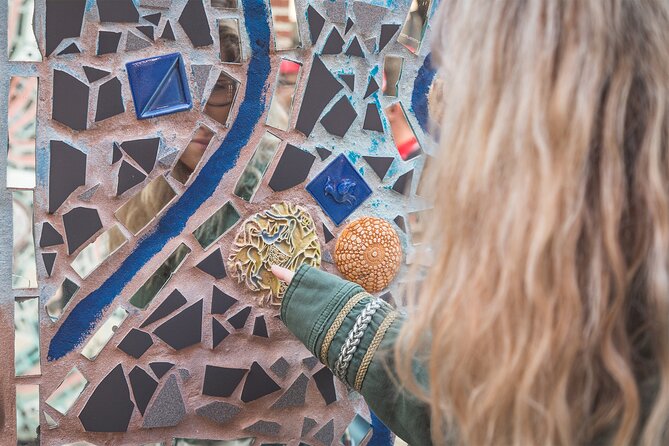
At $45 per person for about 2 hours, this tour is priced like a specialty walking experience. The value comes from three things you can feel right away:
First, you get an organized route through multiple art-heavy areas rather than trying to DIY it. Street art looks casual until you want context—and then suddenly you’re hunting for answers mid-walk.
Second, the tour includes two meaningful admission pieces: DVAA and your entry to Philadelphia Magic Gardens. That turns the price into a mix of guided street exploration plus paid-access experiences.
Third, part of the ticket supports a community art organization. That’s not just feel-good marketing. It aligns with what the tour is teaching you: art here is made and sustained by local institutions and local artists.
One more value note: the group size max is 12 travelers, and that matters for questions and pacing. Even if you’re not a “talk to strangers” person, you’ll appreciate not feeling swallowed by a crowd.
Walkability, timing, and what to expect on the ground
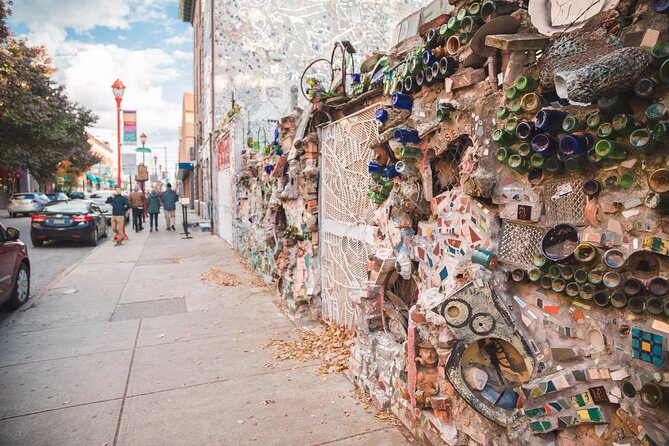
This is a pleasant walking tour with a neighborhood feel, not a bus ride. The route starts at 2:00 pm at Theatre of Living Arts and ends at Philadelphia Magic Gardens. The total duration is about 2 hours, including multiple stops.
The stops are short at first—think 10 to 15 minutes for initial areas—then you’ll get longer time once you’re in the Bella Vista and Gardens segments. That pacing helps you stay focused. You’re not stuck staring at one wall for 30 minutes. You’re constantly “resetting” your eyes.
Clothing-wise, bring the kind of comfort you’d wear for a city stroll. Since this is South Philly and you’ll be moving through sidewalks and alleys, you’ll want shoes that handle uneven surfaces and frequent turns. If you’re prone to foot pain, go a little extra on support and consider arriving early so you’re not rushing at the start.
Not every location is guaranteed, as with many tours. That’s worth knowing if you have a strict schedule. The core experience—South Street energy, community art stop, and the Magic Gardens finale—still anchors the day.
Who should book this mural and Magic Gardens tour
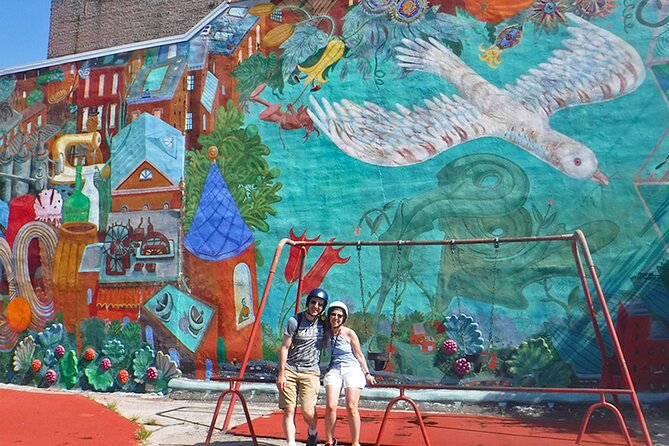
This tour is a great fit if you want street art with context, not just selfies. I’d point it toward:
- Art lovers who like stories behind the wall
- People who want an efficient way to see more than one neighborhood in South Philly
- Visitors who value local organizations, not only famous attractions
- Anyone who wants Magic Gardens included without planning the timing separately
It may be less ideal if you dislike walking city blocks or you’re the type who needs long, free-form time at one site. You’ll get about 30 minutes at the Gardens, and that’s a deliberate choice to keep the whole experience moving.
And if small-group size is your top priority, the official cap is 12, but keep in mind that one departure ran with a larger group. If you’re sensitive to that, you might want to compare reviews and timing before you commit.
Should you book? My practical take
Yes, I think you should book this tour if you want a focused, guided way into Philly street art—with Magic Gardens included and community support built into the ticket. For $45, you’re not paying just for photos. You’re paying for interpretation: how South Street culture connects to the artists and spaces you visit.
Skip it only if you want a fully flexible self-guided day with no pacing, or if you only care about one location. This experience is about the route. The payoff is how the guide connects the dots from Theatre of Living Arts to South Street, through DVAA, and finally into Zagar’s mosaic world at the Gardens.
If you do book, go in with a camera-ready mindset and a question-ready attitude. The best moments usually come when you stop rushing and let the guide’s stories change how you see the walls.
FAQ
What does the tour cost, and how long is it?
The tour costs $45.00 per person and runs for about 2 hours.
Where does the tour start and end?
It starts at Theatre of Living Arts, 334 South St, Philadelphia, PA 19147 and ends at Philadelphia’s Magic Gardens, 1020 South St, Philadelphia, PA 19147.
Is Philadelphia Magic Gardens included?
Yes. You get free admission into the Gardens at the end of the tour, and entry to DVAA is also included.
How big is the group?
The tour is limited to a maximum of 12 travelers.
What language is the tour offered in?
The tour is offered in English.
Is there a donation included in the price?
Yes. A portion of the ticket cost is donated to a local community arts organization, including proceeds to the Da Vinci Art Alliance.
Do I need to bring tickets?
You’ll have a mobile ticket.
What’s the cancellation policy?
You can cancel for a full refund up to 24 hours before the experience starts. If you cancel less than 24 hours before, the amount paid is not refunded.
Is it easy to get to the meeting point?
Yes. The meeting point is near public transportation, and the tour notes most travelers can participate. Service animals are allowed.