REVIEW · ROME
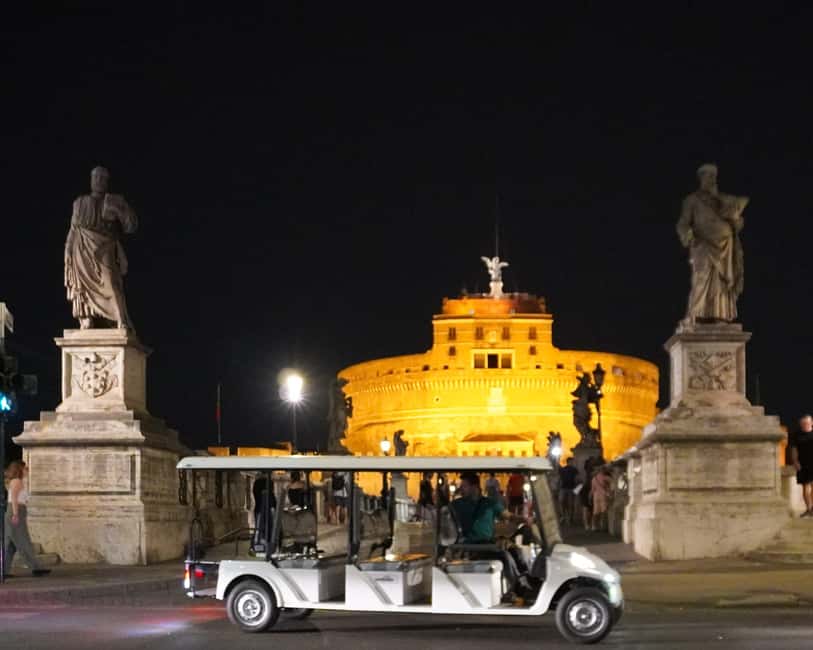
Rome: Nocturnal Golf Cart Tour
Book on GetYourGuide →Operated by RoamRome · Bookable on GetYourGuide
Night changes how Rome feels. This 3-hour ride-and-walk tour keeps the main sights in view after dark, when the city gets quieter and the monuments look sharp under lights. I like that you’re guided through the center with a plan, so you’re not stuck zigzagging through traffic and tourist swarms at peak hours.
I love the golf cart comfort for covering serious ground without burning your energy. I also like that you get included photos, taken during stops, so you come home with more than just shaky phone pictures.
One thing to consider: the tour hits lots of places in a short window, so some stops are brief. If you’re the type who prefers more riding and less talking, you may want to pace yourself and ask your guide to keep things moving at certain points.
In This Review
- The Best Parts (Quick Hits)
- Rome at Night, by Golf Cart: The Value of a Calm Start
- Piazzale Flaminio to Pincio Terrace: City Views Without the Fuss
- Via Veneto and Baroque Stops: La Dolce Vita, Up Close
- Capitoline Hill and Piazza Venezia: A Michelangelo Moment
- Imperial Rome to the Colosseum: Big Stops, Big Theater
- Circus Maximus and Mouth of Truth Possibility: Legend on the Route
- Baths of Caracalla and Theatre of Marcellus: Quick Glimpses of the Ancient World
- Piazza Navona and the Pantheon: When Rome Stops Showing Off and Starts Teaching
- Trevi Fountain and Spanish Steps: The Classic Finish With a Night-Glow
- How Much Walking Will You Do, Really?
- Price and Logistics: Is $78 Worth It for 3 Hours?
- Guide Style: What Makes This Tour Feel Personal
- Who Should Book This Night Golf Cart Tour?
- Should You Book This Tour?
- FAQ
- How long is the Rome nocturnal golf cart tour?
- How much does the tour cost?
- Where is the meeting point?
- What sites does the tour include?
- Is the tour guided, and in what language?
- Are photos included?
- Is there walking involved?
- Is the golf cart wheelchair accessible?
- Where does the tour end?
The Best Parts (Quick Hits)
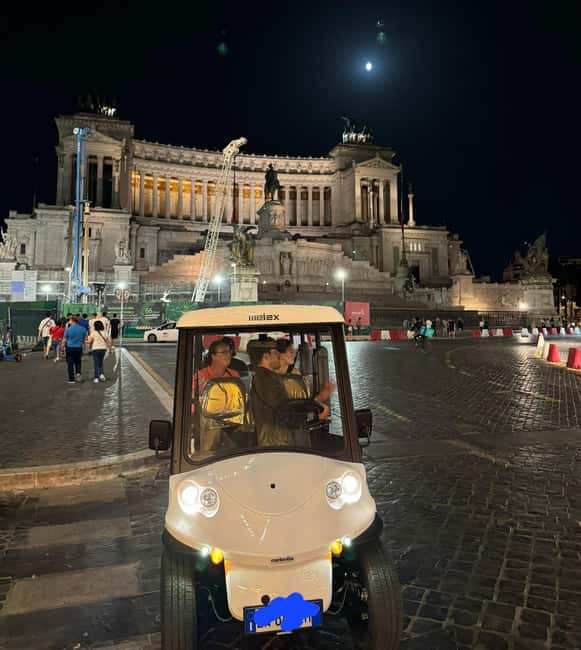
- After-dark sightseeing that avoids the biggest daytime crowds
- Cart comfort plus short guided walks at key points
- Photo stops at major landmarks, with photos included
- Local guidance with real city context, shared in clear English
- High-impact Roman landmarks packed into one efficient loop
- A flexible bonus moment (like seeing the Circus Maximus area and a Mouth of Truth/keyhole stop if timing allows)
Rome at Night, by Golf Cart: The Value of a Calm Start
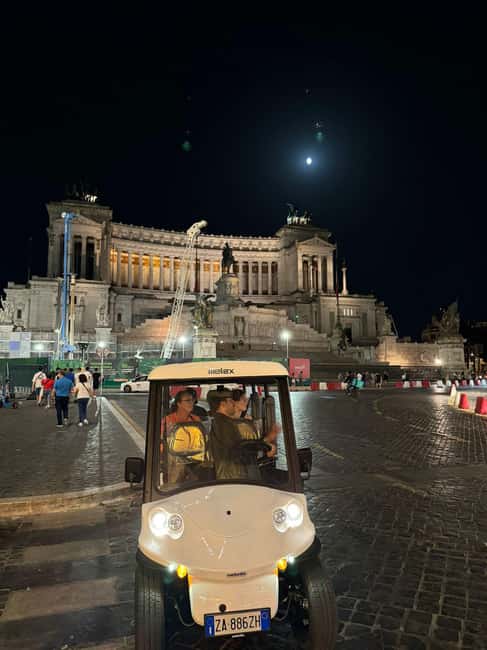
Rome at night isn’t just prettier. It’s easier. Less heat, fewer bodies, and streets that feel more like neighborhoods than queues. This tour leans into that by putting the big hits on a route you can enjoy at a human pace.
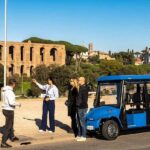
You start in Piazzale Flaminio (right by McDonald’s). From there, the tour turns into a smooth ride with planned pauses. The golf cart format matters because Rome’s center can be deceptively tiring: even if the distances look short on a map, cobblestones and crowds stack up fast.
Price is $78 per person for about 3 hours, which is a fair trade if you want efficiency plus guidance. You’re paying for organization, transport, and an English-speaking guide, not just admission to monuments. For a one-night Rome visit, that can be a smart use of time.
You can also read our reviews of more tours and experiences in Rome.
Piazzale Flaminio to Pincio Terrace: City Views Without the Fuss
The route kicks off at Piazzale Flaminio, 15, then heads into Villa Borghese for an early view stop. You’ll pause at the Pincio Terrace for photo time and panoramic views over Piazza del Popolo and the rooftops.
This is a great “get your bearings fast” moment. In daylight, Villa Borghese can be crowded and busy; at night, the atmosphere is calmer and the view feels more dramatic. It’s also the point where you start to understand the shape of central Rome—how neighborhoods stack, how streets funnel toward landmarks, and where the viewpoints really matter.
The stop is short (just a few minutes), so treat it like you would a good photo session: have your camera ready and take a couple steady shots before you move on.
Via Veneto and Baroque Stops: La Dolce Vita, Up Close
Next you roll through the classic photogenic stretch around Porta Pinciana and Via Veneto, famous from the la dolce vita era. The cart keeps things comfortable while you pass grand hotels and cafés without waiting in lines or dodging daytime foot traffic.
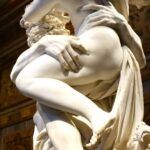
You also get picture-and-pass moments tied to Rome’s Baroque look. Stops along this stretch include Palazzo Barberini (seen from the outside), and nearby fountain architecture such as San Carlo alle Quattro Fontane. The point here isn’t to stand around reading plaques. It’s to see how Rome’s style shifts—how Baroque designs turn plain streets into layered, theatrical scenes.
If you like architecture and details, this part rewards you because the lighting at night makes stone textures and curves easier to notice from the street. Just remember: “pass by” means you’ll get views, not extended time.
Capitoline Hill and Piazza Venezia: A Michelangelo Moment
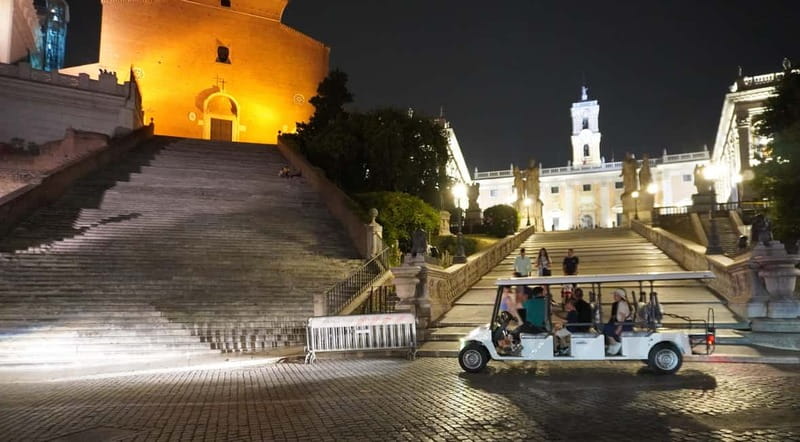
One of the more hands-on segments is the time around Capitoline Hill. You get photo time, a visit, and a guided tour plus a short walk (listed around 15 minutes). This is where you start feeling the “ancient Rome to modern power center” story.
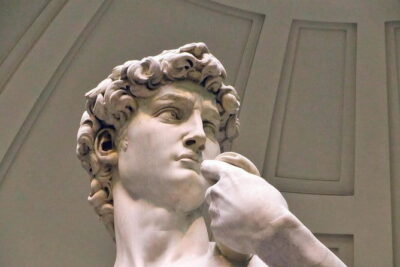
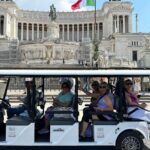
From there, you head to Piazza Venezia for a quick photo pause. You’ll see the Vittoriano (the large white monument) and the general area of the Capitoline Hill designed by Michelangelo. Even if you’ve seen pictures, it’s the scale at night that gets you. The square opens up and the monuments read like part of a stage set.
The tradeoff: these are stops with tight time limits. You’ll want to follow your guide’s cues and not get distracted wandering off for extra photos.
Imperial Rome to the Colosseum: Big Stops, Big Theater
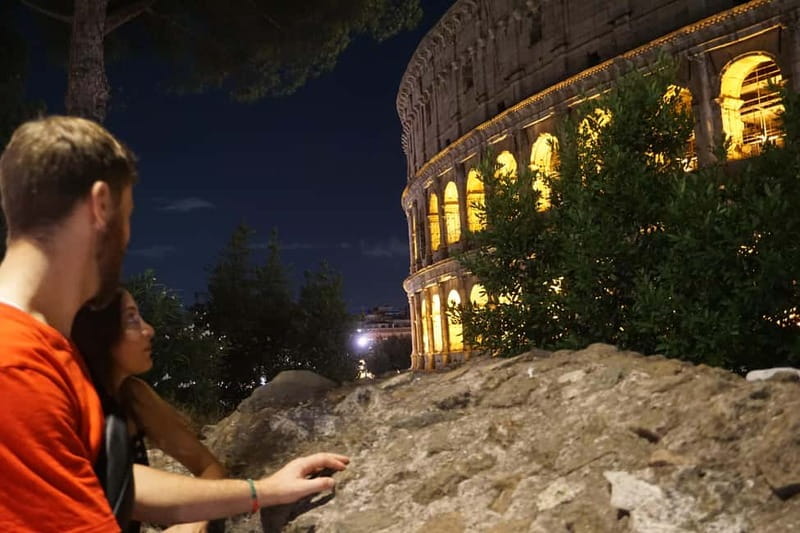
Driving past sites near the Imperial Forums, the tour builds suspense toward one of the world’s most recognizable ruins. When you approach the Colosseum, the stop is mainly a photo stop (around 10 minutes), but it’s worth it because night lighting changes the mood.
The Colosseum at night can look less like a postcard and more like a real structure from a different era—especially when you catch it from a viewpoint where the scale feels immediate. You’re not waiting for a daytime entry window. You’re seeing it as part of a nighttime Roman scene.
This also helps if you’re short on time. With only three hours, the tour prioritizes visual impact over long museum-style pacing.

Circus Maximus and Mouth of Truth Possibility: Legend on the Route
From the Colosseum area, the tour moves toward the Circus Maximus. You’ll get a quick photo stop/pass-by (just a few minutes listed), enough to see the broad arena footprint and get the “this is where chariot races once ruled” idea.
The tour may also include a stop tied to the Mouth of Truth area (and the legendary keyhole nearby), if timing allows based on queue length. That’s a smart add-on because it’s the kind of story Rome does well: a single object with a whole chain of myth attached to it.
Just keep expectations realistic. Queue-dependent moments can’t be guaranteed on a strict schedule, but the tour’s design tries to give you the chance.
Baths of Caracalla and Theatre of Marcellus: Quick Glimpses of the Ancient World
You’ll pass by major ancient spaces like the Baths of Caracalla and Theatre of Marcellus. These aren’t “stand and tour for an hour” stops. They’re meant to connect dots as you travel.
Why this works: it makes Rome feel like one continuous timeline instead of disconnected attractions. You’re still in the center, but you’re constantly reminded that daily life developed over ancient foundations.
If you’re the type who likes to read every detail, you might wish for more time. If you’re building a best-of Rome overview in limited time, these quick passes are useful, because they keep your energy for the deeper stops.
Piazza Navona and the Pantheon: When Rome Stops Showing Off and Starts Teaching
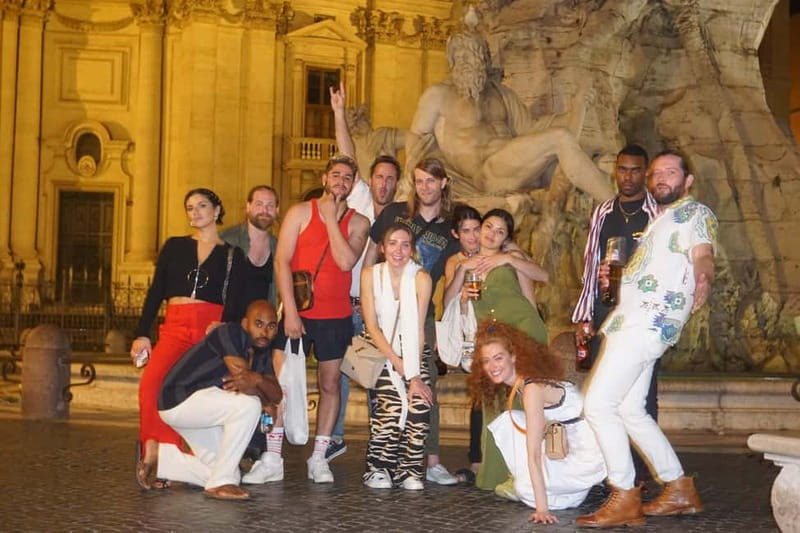
Piazza Navona is next, with a short photo stop. The big idea here is that it’s not just a modern square. It’s built on the ancient Stadium of Domitian, and at night the fountains and stone buildings feel like they’re set to music.
Then you hit the Pantheon, one of the most important stops on the route. You’ll have photo time, a guided tour, and a short walk (around 15 minutes). The Pantheon’s real power is scale and precision: it’s ancient engineering that still works in your eyes. At night, it also feels more serene, because the crowd density is often lower than during peak daytime hours.
This stop is a key reason the tour can work well even if you don’t want an all-day walking schedule. You get a guided orientation to the building, and you can actually look up and absorb details instead of rushing.
Trevi Fountain and Spanish Steps: The Classic Finish With a Night-Glow
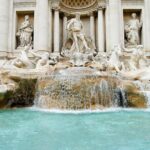
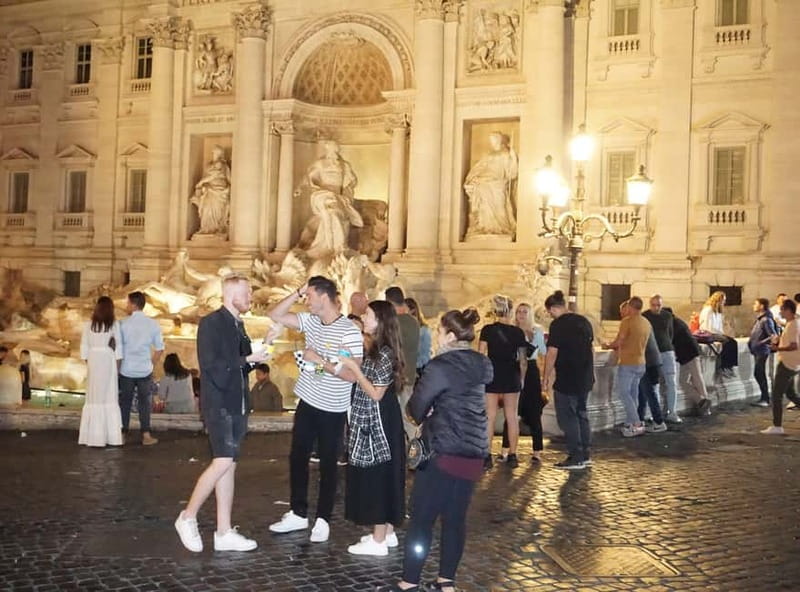
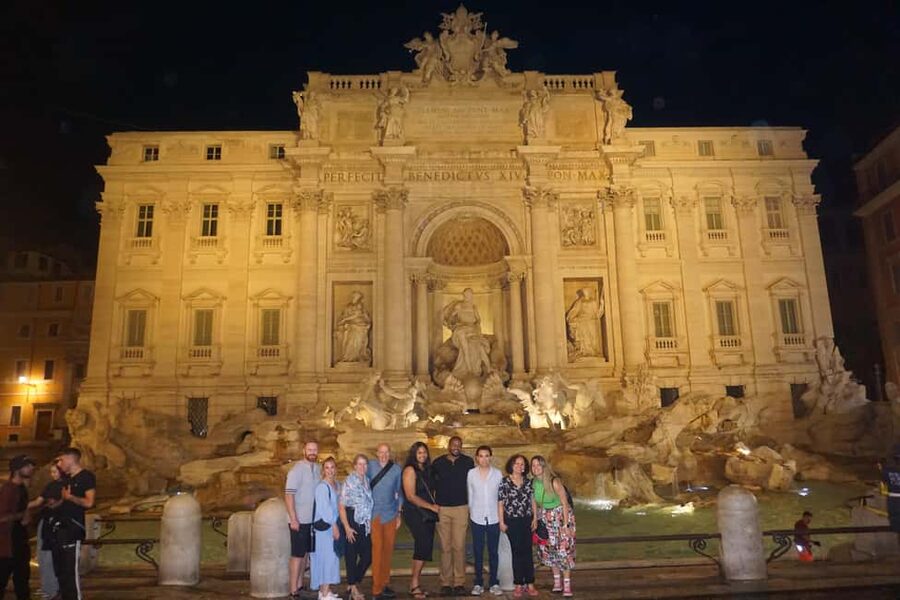
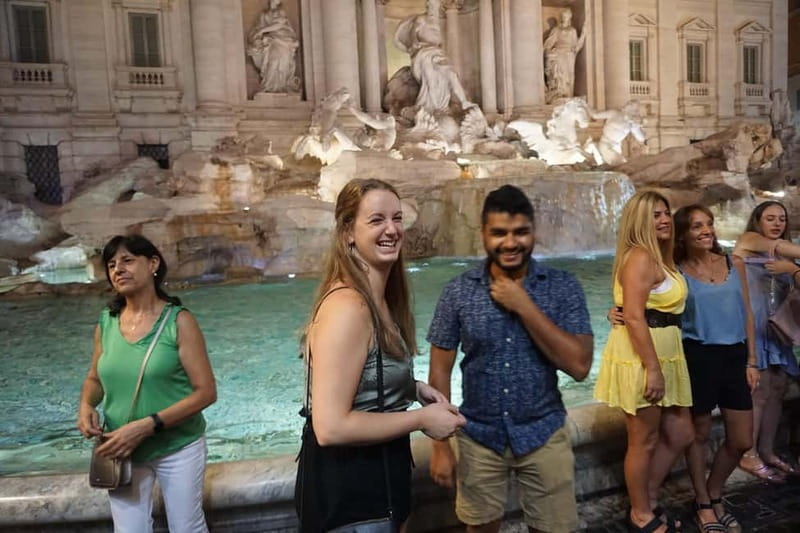
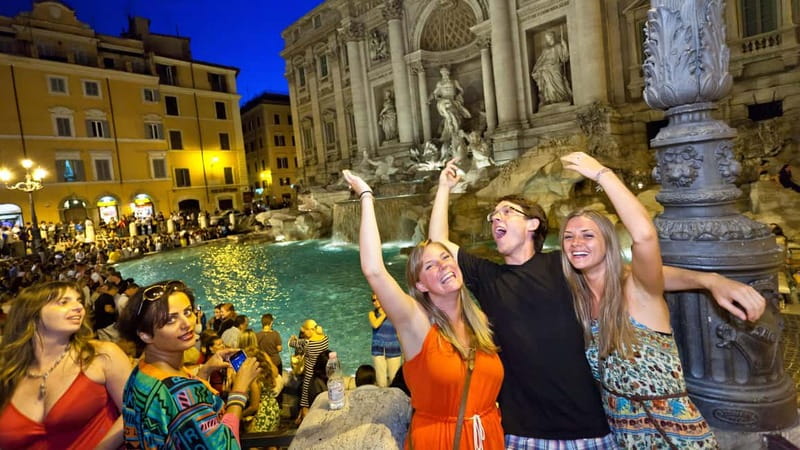
No Rome night tour feels complete without the Trevi Fountain. You’ll have a photo stop plus a guided moment (around 10 minutes). You’ll also have time for that coin toss moment, which is a fun tradition and an easy anchor for the end of the route.
After Trevi, the tour finishes at the Spanish Steps area in Piazza di Spagna. There’s another quick photo stop (listed at about 5 minutes). Even if you’ve already seen the steps in daytime photos, night changes their texture and the way people move through the space.
This ending is practical: it puts you back in a central zone where you can keep exploring on foot, grab a drink, or get yourself moving toward dinner without starting your whole journey again from the edge of town.
How Much Walking Will You Do, Really?
Even though it’s a golf cart tour, it’s not a zero-walk experience. You should plan for short guided walks at the Capitoline Hill area and the Pantheon (each listed around 15 minutes), plus brief stop moments elsewhere.
The best approach is to think of it like this: ride most of the time, but when you park the cart, the guide uses the small windows to help you see what matters. If your legs get tired easily, this format is still usually a win because the walking segments are controlled and planned.
Also note one simple timing reality. If you’re trying to take perfect photos, you’ll sometimes stand still longer than the stop duration. Build in a little flexibility so you don’t feel rushed at the end.
Price and Logistics: Is $78 Worth It for 3 Hours?
For $78, you’re buying several things at once:
- a golf cart and driver
- a local guide (English)
- planned photo stops
- photos of your tour included
- a route designed to connect major landmarks efficiently
That’s solid value if you want a fast, guided overview without the stress of figuring out routes and timing. It’s also a good option if you’re in Rome for a short stay and still want to hit the headline sites.
If you already love slow, independent wandering with heavy reading, you might prefer a self-guided day. But if you want to do a lot without burning your energy, the cart format plus guiding logic makes the price feel more reasonable.
Guide Style: What Makes This Tour Feel Personal
The guide quality is a big part of the experience. Some guides you may get, based on past participants, include people like Eli and Eliphas, both praised for history and for being friendly and helpful.
What stands out in how these tours run is the balance: you’re not just transported. You’re oriented. Guides explain what you’re looking at so the landmarks stop being random monuments and start feeling connected.
There is also room to adjust the vibe. One participant suggested the tour could be shorter or with less commentary, which tells me that if you prefer silence or shorter narration, you can still enjoy the ride. You might just ask for a lighter talk pace during the stops where you’re mostly there for photos.
Who Should Book This Night Golf Cart Tour?
This tour fits best if:
- you want a Rome overview in limited time
- you care more about seeing key sights than spending hours inside museums
- you prefer less walking and fewer daytime crowds
- you like history told in a way you can actually track while moving
It may be less ideal if:
- you want deep, slow exploration at each monument
- you’re sensitive to a guided pace and lots of explanation
- you need long, uninterrupted time at any single site
Should You Book This Tour?
If you’re trying to pack Rome into a tight schedule, I think this is one of the easiest wins: night timing, a golf cart, and a local guide covering the must-sees without forcing you into day-long crowds.
Book it if your priority is seeing the big landmarks with photo moments and learning just enough to make the city click. Skip it if you’re craving a long, quiet deep dive at one or two sites, because this tour is designed for breadth, not extended stays.
If you want the best outcome, go in with a simple mindset: treat it like your guided “Rome intro,” then use the rest of your trip to return to the places that truly grabbed you.
FAQ
How long is the Rome nocturnal golf cart tour?
The tour lasts 3 hours.
How much does the tour cost?
The price is $78 per person.
Where is the meeting point?
Meet at Piazzale Flaminio 15, right by the McDonald’s.
What sites does the tour include?
You’ll see major landmarks such as the Trevi Fountain, the Colosseum, the Pantheon, Piazza Navona, and the Spanish Steps, plus several other stops and pass-by sights like Circus Maximus.
Is the tour guided, and in what language?
Yes. It includes a live English-speaking guide.
Are photos included?
Yes. Photos of your tour are included.
Is there walking involved?
There is some walking at specific points, including guided segments such as Capitoline Hill and the Pantheon (both with a short walk time listed).
Is the golf cart wheelchair accessible?
The tour is listed as wheelchair accessible.
Where does the tour end?
The tour finishes at Piazza di Spagna.