REVIEW · AMSTERDAM
Street Art Walking Tour, private local Dutch guide
Book on Viator →Operated by Artsy Tours · Bookable on Viator
Street art looks better when it has context. This private Amsterdam street art walking tour pairs a local Dutch guide with a route that mixes famous walls, quick-wink sculptures, and street-level storytelling—so you spot what’s actually going on. I especially like the private pace (no crowd crush) and the way you get both big-name spots and small details most people miss. One drawback: it’s still a walking tour, so pack comfortable shoes and be ready for some heat or wind if the weather cooperates.
You also get a practical route flow: NDSM Wharf first, then Amsterdam Central Station, a look at the Red Light District, and finally the canal ring in Grachtengordel-West. I like that the stop plan keeps momentum—about 2 hours 30 minutes total—while still giving enough time to actually notice art. Most stops are free to view, and the tour includes a ferry ride, which is a nice break from foot power.
In This Review
- Key highlights worth planning around
- NDSM Wharf: the quickest way to understand Amsterdam street art
- Stop 1: NDSM Wharf and the IJ River graffiti industrial vibe
- Amsterdam Central Station: a five-minute street art wink
- Red Light District: canals, bronze street art, and survival tactics
- Grachtengordel-West: canal-ring walking with named street artists
- Price and logistics: why this costs $118.66 and what you get back
- Your guide makes the difference: what Anna’s reviews reveal
- Practical tips for a smoother street art walk
- Who this street art tour is for (and who might skip it)
- Should you book this Amsterdam street art walking tour?
- FAQ
- How long is the street art walking tour?
- What does the tour cost?
- Is this tour private or shared with other groups?
- What language is the tour offered in?
- What stops are included?
- Are there admission fees for the stops?
- Is a ferry ride included?
- What should I do about water?
- Where does the tour start and end?
- What’s the cancellation policy?
- Is the tour near public transportation?
Key highlights worth planning around

- Private-by-default walking time: your guide works for your group only, so questions don’t get rushed.
- NDSM Wharf sets the tone: former shipyard texture, IJ River setting, and lots of graffiti-covered industrial buildings.
- Central Station has a hidden street art moment: a quick stop that adds a fun contrast to the station’s grand architecture.
- Red Light District street art comes with protection tricks: you’ll see how works can be hidden to avoid removal.
- Grachtengordel-West adds the canal-side payoff: Ring of Canals scenery plus street art by recognized names.
- Included ferry ride: a built-in “pause” that also gives you river views.
NDSM Wharf: the quickest way to understand Amsterdam street art

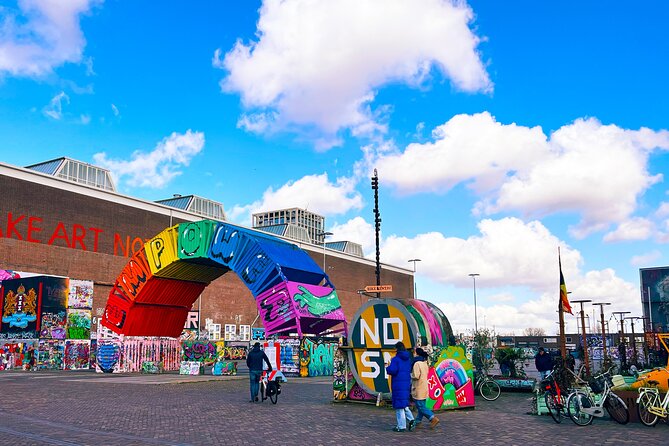
If you only have a short time in Amsterdam, you want your street art tour to start where the street art culture feels real. NDSM Wharf is that place. It’s a former shipyard turned urban playground near the IJ River, with events, markets, and trendy cafes nearby—so the art doesn’t feel like a museum display.
I like the order too. NDSM Wharf lands first, which means the guide can explain how Amsterdam street art works before you move into the more controlled tourist zones later. It also makes your second stop easier to read, because you’ll already understand the difference between commissioned-looking work and guerrilla-style placements.
There’s also a practical win: you get about 45 minutes here, and the stop is structured as “walk and look,” not “stand and listen.” That matters if you like taking photos, comparing styles, or just letting your eyes adjust to the details.
You can also read our reviews of more tours and experiences in Amsterdam.



Stop 1: NDSM Wharf and the IJ River graffiti industrial vibe
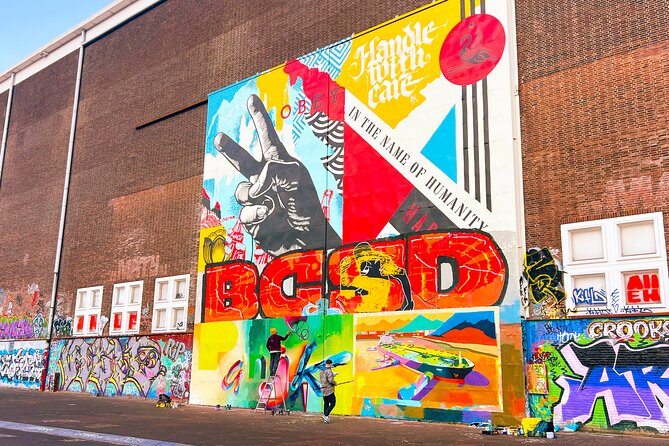
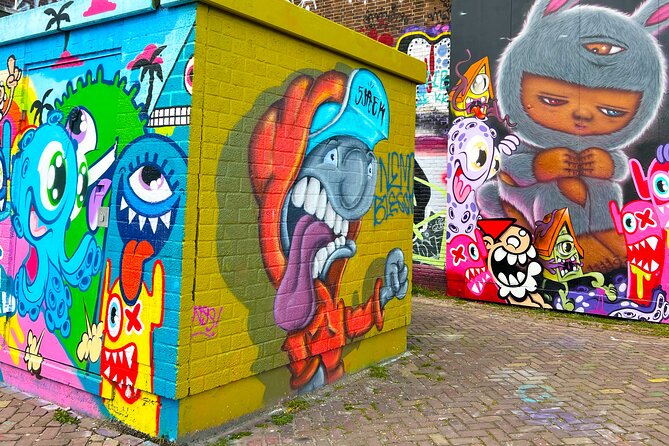
At NDSM Wharf, you’re looking at graffiti-covered industrial buildings that have been repurposed over time. That mix—old shipyard bones plus modern street expression—is what makes this stop feel different from typical street art walks.
During your time here, expect two things to happen. First, you’ll notice how the setting changes what street art can do. Flat walls, long industrial facades, and under-the-roof areas all create different “surfaces” for artists to work on. Second, you’ll hear the stories behind the art as you stroll, which is where a good guide really pays off.
This is also the stop where the crowd variable is most likely. Even though your tour is private, NDSM Wharf can still get busy because it’s a popular hangout area. If you’re sensitive to heat or noise, plan for it with sunscreen and a water plan—even though bottled water isn’t included.
What you’ll love here: the gritty-to-chic contrast and the sense that this is part of daily Amsterdam life, not a staged photo spot.
What to watch: it’s industrial, so wear shoes you don’t mind getting scuffed, and keep an eye on weather because you’re often outdoors.
Amsterdam Central Station: a five-minute street art wink
Amsterdam Central Station can swallow your attention fast. It’s a striking 19th-century architectural landmark that sits on the waterfront, and it’s also the hub for trains, trams, buses, and ferries. With that much going on, it’s easy to miss anything smaller than a destination sign.
That’s why the quick five-minute street art stop works. Your guide points out a cleverly hidden sculptural work by local street artist Street Art Frankey. You’ll get a moment where you’re forced to slow down and look, even though the station is designed for fast movement.
This kind of stop is underrated. Street art isn’t only for alleyways. Seeing it tucked into a high-traffic civic place helps you understand the point: it can show up in ordinary routines, not just fringe locations.
Best use of the time: look first, then listen. If you let your eyes scan for the sculpture, the guide’s explanation lands better.
Potential drawback: the station is active, so if you dislike crowds at transit points, keep your expectations modest for this segment.
Red Light District: canals, bronze street art, and survival tactics
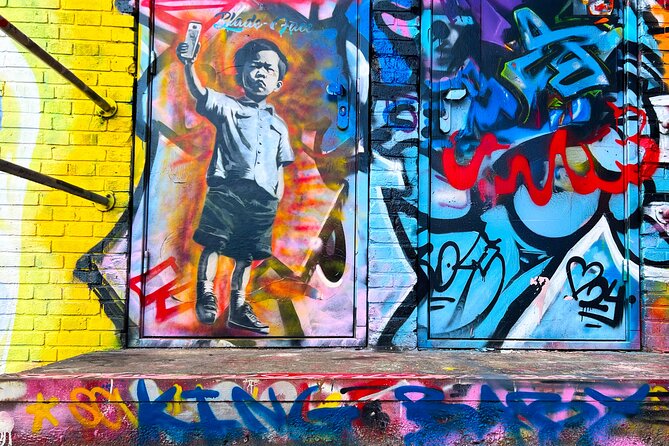
Red Light District sounds like one thing on paper. In real life, it’s more layered. Here you’re walking narrow, picturesque alleys tied into canal views that date back to the middle ages. That older urban fabric matters, because street art placed here has to compete with tight spaces and high visibility.
In about 20 minutes, you’ll get a guided look at a famous sensual bronze work by street artist The Doctor. You’ll also see how other artists have hidden their work to avoid being removed by authorities. That second part is the real education.
I like that the tour frames this area as historic and cultural, not just a headline. The guide’s job is to keep it factual and grounded while still pointing out the art techniques and placement logic. It’s the difference between spotting a sculpture and understanding why it was placed where it is.
One consideration: this area has adult themes. Even though the tour is presented as street art and city context, you should be prepared for that atmosphere and choose your comfort level accordingly.
Grachtengordel-West: canal-ring walking with named street artists
After the Red Light District, you move into a totally different visual rhythm. Grachtengordel-West sits within the Ring of Canals, a UNESCO World Heritage site made up of three grand canals lined with elegant 17th-century townhouses. It’s a striking backdrop for street art because it’s so planned, so architectural, so Amsterdam-on-postcards.
And that’s exactly why your guide points out specific works and street art names. In this 30-minute stop, you’ll view works connected to Kamp Seedorf, The London Police, and Space Invader. Seeing recognizable street art names in a canal setting helps you make a mental map of where street art culture shows up across the city.
This segment is also where photos get easier. The canals offer natural lines and angles, and you’ll have plenty of time to pause between viewpoints. Just remember: the art is the point, but the canal architecture is the frame.
What might feel different: compared with NDSM Wharf’s industrial surfaces, canal-side placement can feel more controlled and less raw. That doesn’t make it less interesting—it just changes the way you look.


Price and logistics: why this costs $118.66 and what you get back

At $118.66 per person for about 2 hours 30 minutes, you’re paying for a few specific advantages, not just someone walking beside you. You’re getting a private local Dutch guide, you’re getting a route plan that hits multiple key areas without turning into a random hopscotch, and you’re getting guided stories that help you read street art placement.
A big value point: most of the street art viewing is free. Your stops don’t require paid admission to see what’s outdoors. Add in that the tour includes a ferry ride, and you’re also getting a practical transport moment folded into the itinerary.
Does the price work if you’re only interested in one wall? Not really. This tour shines if you want variety and you like understanding the why behind the art. I also found it reassuring that you’re not stuck in a rigid group schedule; the private format keeps the experience focused.
Booking wise, this is commonly reserved about a week in advance. If your dates are tight, that’s your cue to book earlier. If plans shift, you have free cancellation up to 24 hours in advance of the start time.
Your guide makes the difference: what Anna’s reviews reveal
The strongest theme in real feedback is guide quality, and the name Anna comes up clearly. People praised her for staying effective even in tough weather, including heat, and for making the walk feel like Amsterdam you don’t automatically find on your own.
You can also infer what makes the tour work from the way Anna gets described: patient, flexible, prepared, and well connected in the street art community. That combination matters because street art can be technical—styles, placement choices, and why something gets protected or removed all have a story. A guide who can explain that clearly turns a wall into a lesson.
The best part for your day is that you’re not just collecting stops. You’re collecting context. Those are the anecdotes and stories that make the art stick in your brain after you leave the street.
Practical tips for a smoother street art walk
Since bottled water isn’t included, I’d treat hydration as your responsibility. Bring a small bottle or plan to buy one near your route. Also, pack sunscreen if the forecast looks sunny; the NDSM Wharf portion is outdoors and you’ll likely be under open sky for chunks of time.
The route is designed for good pacing, but it’s still walking. Comfortable shoes help. If you’re the type who loves stopping for photos, expect the tour to feel even better, not rushed.
If you’re hoping to start with a clear sense of direction, use the official meeting spot at De Ruijterkade 10, 1012 AA Amsterdam. Your tour ends near Westerkerk and the Anne Frank House area on Prinsengracht 279, 1016 DL Amsterdam, which is handy if you want to keep exploring after.
One more smart thought: you’ll see very different sides of Amsterdam in a single afternoon. That can be fun, but it can also mean your mood shifts. If you plan ahead—mentally and with snacks—you’ll get the full payoff.
Who this street art tour is for (and who might skip it)
This tour fits best if you want street art with city context. If you like learning the stories behind placement—why something appears where it does, and how artists try to avoid removal—this format is built for that.
It also works well for couples and friends who want private time. A private guide is perfect if you’re the sort who asks questions mid-walk or wants the route to match your interests. Because the stops include both major landmarks and quieter details, it’s a solid choice for mixed groups too.
If you’re not interested in street art stories and you only want quick photos, you might feel the time is better spent self-guided. Also, if you strongly dislike adult-themed environments, be careful with the Red Light District portion.
For most people, though, the mix of NDSM Wharf, Central Station, canals, and canal-ring culture hits a sweet spot.
Should you book this Amsterdam street art walking tour?
I’d book it if you want a smart, guided way to see street art across real neighborhoods—not just one district. The private format, the ferry ride, and the named artist stops make the itinerary feel purposeful, and the guide quality is the real reason it earns top marks.
I’d skip it if you only care about one or two murals and you’d rather wander freely. Also, if you’d rather avoid adult-themed street atmosphere, consider whether you’re comfortable with that stop.
If you’re on the fence, here’s my quick checklist:
- You like street art that has context, not just visuals.
- You’re okay walking for about 2.5 hours.
- You want a guide who can point out what most people miss.
If those are yes, this is a good use of your time in Amsterdam.
FAQ
How long is the street art walking tour?
It runs for about 2 hours 30 minutes.
What does the tour cost?
The price is $118.66 per person.
Is this tour private or shared with other groups?
It’s a private tour, so only your group participates.
What language is the tour offered in?
The tour is offered in English.
What stops are included?
You’ll visit NDSM Wharf, Amsterdam Central Station, the Red Light District, and Grachtengordel-West (the Ring of Canals area).
Are there admission fees for the stops?
The tour information lists admission as free for each stop.
Is a ferry ride included?
Yes, a ferry ride is included.
What should I do about water?
Bottled water is not included, so you’ll want to bring or buy your own.
Where does the tour start and end?
It starts at De Ruijterkade 10, 1012 AA Amsterdam, and ends near Westerkerk and the Anne Frank House area (Westerkerk/Prinsengracht 279, 1016 DL Amsterdam).
What’s the cancellation policy?
You can cancel for a full refund up to 24 hours before the experience starts.
Is the tour near public transportation?
Yes, it’s near public transportation. Service animals are allowed, and most travelers can participate.