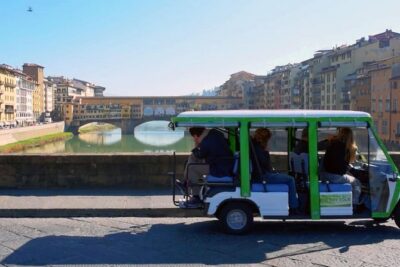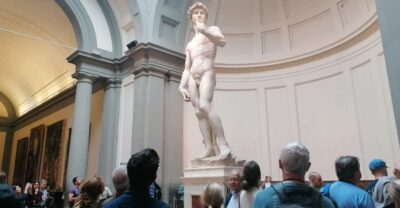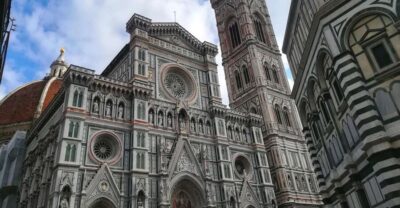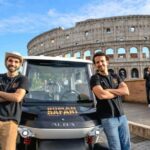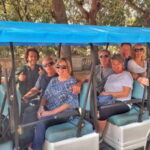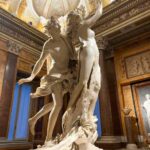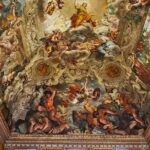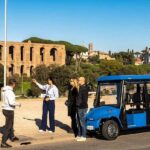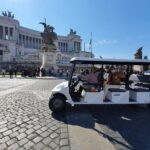
Rome hides clues in plain sight. This private golf-cart loop pairs big church art with smart logistics. You’ll cover more ground than walking, with stops built for looking up, not just powering through.
I like the private setup most. Your group goes together, you get real back-and-forth time with the guide, and the cart helps when cobblestones or distance would otherwise slow you down. I also like how the route focuses on variety: you move from church to church, but each stop has a different kind of “why does this exist?” moment.
One thing to consider: Pantheon admission isn’t included, so you’ll want to plan for that extra ticket cost. Also, one church stop may be adjusted for holidays, bank holidays, or road closures, so don’t expect a perfect, clockwork script every time.
In This Review
- Key things to know before you ride
- Why a golf-cart church tour works in Rome
- Meeting point, hotel pickup, and the “get there” advantage
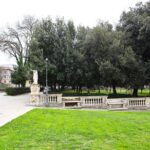
- Piazza del Popolo: echoes, the twin-church clue, and a square that plays tricks
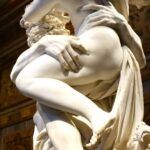
- San Pietro in Vincoli: Peter’s chains, then Michelangelo’s Moses
- Church of St. Louis of the French: France in Rome, with Caravaggio payoff
- Sant’Ignazio di Loyola: illusion ceiling, then a second look that most people miss
- The Pantheon: pagan past, Catholic present, and a sacred place layered over time
- Piazza Navona: stadium geometry, baroque spectacle, and ruins you can still feel
- How the pacing keeps you from feeling rushed
- Guides you might meet: driving skill plus real storytelling
- Price and value: is $204.70 a good deal?
- Who should book this golf-cart church tour
- Should you book? My quick call
- FAQ
- How long is the Rome golf-cart church tour?
- Is the tour private?
- Do you offer hotel pickup?
- Which stops have free admission?
- Can the itinerary change?
- What is the cancellation policy?
Key things to know before you ride
- Private pace, private stops: it’s only your group, and you can slow down when something grabs you.
- Guides who can drive and narrate: names you may meet include Luisa, Antonio, Marco, Carlos, Yashar, and Gianluca.
- Six major stops in about 3 hours: each is around 20 minutes, so you see a lot without hours of walking.
- Most sites are free (except Pantheon): several stops list free admission, while the Pantheon ticket is not included.
- A cart that handles Rome’s streets: one review notes easy handling over narrow cobblestones.
- It can shift on church/holiday days: the St. Louis of the French stop may be modified.
Why a golf-cart church tour works in Rome
Rome is built for walking, but it’s also built for detours. Streets can be tight, distances add up fast, and church visits often mean standing still, looking up, and repeating that all day.
This tour makes a practical promise: you’ll see six churches and basilicas in a 3-hour window without turning your day into a knee test. The golf-cart format helps you get the art and atmosphere of central Rome while spending less time in transit.
And unlike a bus ride where everyone’s rushed, the private setup means you’re not trapped in someone else’s pace. You can stop for a moment, listen longer, or simply enjoy the drive through the city.
You can also read our reviews of more private tours in Rome
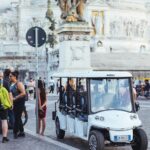
Meeting point, hotel pickup, and the “get there” advantage
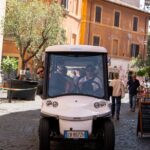
You start at Piazzale delle Canestre, 00197 Roma RM and the tour ends back there. If your hotel is within golf cart range, pickup is offered, which is a big deal in Rome when you’re trying to limit taxi stress.
One of the underrated wins here is timing. In the reviews, people call out getting picked up on time in a comfortable cart and being delivered back to where they started. That matters because Rome’s traffic can mess with a day.
The tour also comes with a mobile ticket, and confirmation arrives within 48 hours of booking (if availability holds). If you’re using public transport, the tour is listed as near it too, so you’re not left guessing if pickup isn’t possible.
Piazza del Popolo: echoes, the twin-church clue, and a square that plays tricks
This stop starts in one of Rome’s best-known squares, but the angle here isn’t just sightseeing. The point is to watch for details you’d likely miss on foot.
You get about 20 minutes at Piazza del Popolo, and the guide focuses on:
- the idea of the twin churches and whether they truly are identical
- the way echoes bounce around the square
- other small “mystery-in-plain-sight” observations
Why it’s worth doing this by cart: the square is iconic, but it can also feel like a quick photo stop. With narration and a little prompting, it becomes more like solving a puzzle you didn’t know you wanted to solve.
Potential drawback: since this is a short stop, you’ll want to be ready to look and listen right away. If you like lingering, just tell your guide you want extra time here, since the tour is private.
San Pietro in Vincoli: Peter’s chains, then Michelangelo’s Moses
San Pietro in Vincoli sounds like a title straight out of a sacred thriller, and the site delivers. You’ll spend about 20 minutes here.
Two things make the stop memorable:
- the church displays the chains that held Saint Peter both in Jerusalem and in Rome
- it’s famous for Michelangelo’s Moses, with a small peculiarity you’re encouraged to notice in person
This is the kind of church stop that’s easy to underestimate from the outside. Inside, the mix of strong religious symbolism and a major sculpture by Michelangelo gives you two different lenses at once: belief and artistry.
One consideration: if your group expects a long museum-style viewing, 20 minutes will feel brisk. But for a private route that moves you to five more stops, brisk is the trade you make.
Church of St. Louis of the French: France in Rome, with Caravaggio payoff
At the Church of St. Louis of the French, you get another 20-minute stop with a clear theme: French Catholic presence in Rome, plus major art.
This one has a lot of named attractions, which is great if you like to know what you’re looking at:
- the breathtaking façade near the ancient Pantheon
- the Chapel of St. Louis, described as the first chapel entirely designed by a woman
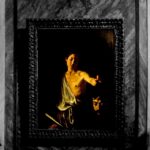
- the Contarelli Chapel, with three paintings by Caravaggio
Here’s the practical note: the church offers free entrance during the day, and your schedule may be modified based on religious holidays, national/bank holidays, or road closures. That doesn’t mean the experience falls apart. It usually means you get a sensible swap so you’re not left outside a closed door.
Why I like this stop for you: it’s not just famous-for-fame’s-sake. You’re shown concrete reasons it’s important—façade, chapel design, and then the specific Caravaggio trio.
Sant’Ignazio di Loyola: illusion ceiling, then a second look that most people miss
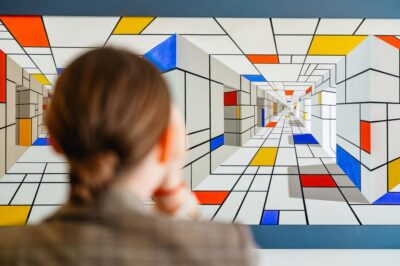
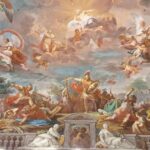
If there’s a ceiling in Rome that can change your mood, it’s this one. At Chiesa di Sant’Ignazio di Loyola, you’ll spend about 20 minutes focused on a famous effect: the “false perspective” illusion on the ceiling.
The guide’s promise is that you won’t just stop at the first part. The plan is to keep going so you can notice something not everybody notices.
This is a smart stop for a golf-cart route because it rewards attention, not stamina. You don’t need to climb for a view. You need to look up, pause, and let the design do the work.
Tradeoff: if your group hates visual tricks or wants only straightforward landmarks, this might feel more “art moment” than “must-see church.” Still, the illusion is exactly the kind of Rome weirdness that makes a short stop feel bigger.
The Pantheon: pagan past, Catholic present, and a sacred place layered over time
You end up at the Pantheon with about 20 minutes set aside, but there’s an important money note: Pantheon admission is not included.
The storytelling angle here is time stacking:
- you’re told it was an ancient Roman pagan temple
- it’s also a Catholic Church
- and the area hosted an Egyptian sacred complex even before that
That matters because it changes how you see the building. Most people arrive thinking it’s just impressive. Here, you’re encouraged to notice the structure while keeping an eye on what the site used to mean.
Because you only have a short window, arrive ready to look quickly. I’d rather spend 20 minutes truly seeing one place than two hours skimming five.
Piazza Navona: stadium geometry, baroque spectacle, and ruins you can still feel
Piazza Navona is one of those Rome squares that everyone recognizes, but not everyone understands. You get 20 minutes here with a guide who points out how the square’s shape connects to its older life.
The big detail:
- if you could see it from above, the square’s shape makes sense
- it was originally built as the Stadium of Domitians
- and parts of the old ruins are still visible
Why this stop works after churches: it shifts you from interior art to exterior form. You start thinking like an urban archaeologist—how cities reuse space instead of starting over.
Practical tip: keep an eye on where you’re standing. The geometry is the lesson, and the lesson sticks better when you’re shown exactly what to look for.
How the pacing keeps you from feeling rushed
The tour is built around a pattern: drive, park, quick entry, focused viewing, then move on. Each stop is listed at around 20 minutes, and that rhythm can be perfect in Rome.
The private side matters because you’re not trapped behind a crowd. One review specifically notes that the guide can take you “literally anywhere” and still bring you back to your hotel area, and another mentions a guide adjusting the original agenda so they could see another major basilica. That flexibility is one of the reasons a private tour feels better than a rigid itinerary.
Also, the cart itself can change how you experience churches. You arrive less exhausted, so you stand longer, look more closely, and don’t spend the day counting steps.
The only pacing risk is simple: you might want longer than 20 minutes at one stop. If that happens, tell your guide early which site you want to slow down in. Private tours are meant for those little course corrections.
Guides you might meet: driving skill plus real storytelling
In the reviews, several names come up repeatedly. You can reasonably expect a guide who combines driving know-how with storytelling, which is what turns a “ride” into a tour.
Examples from the guide roster include:
- Luisa, praised for going above and beyond and making sure people found both churches and views worth savoring
- Antonio, highlighted for knowledgeable church-and-history narration and even modifying the agenda for added value
- Marco, noted for making the experience engaging and for handling narrow streets well
- Carlos, recognized for sharing church knowledge and the beauty behind the building craftsmanship
- Yashar, singled out for taking people to all sites and more
- Gianluca, mentioned for on-time pickup and a very positive day
Here’s why this is practical for you: if the guide knows the area, you waste less time and get smoother transitions between stops. And if the guide can explain what you’re seeing, you’ll remember details later—even if your photos aren’t perfect.
Price and value: is $204.70 a good deal?
At $204.70 per person for about 3 hours, you’re paying for three things at once:
1) private transport in central Rome
2) direct guiding during each stop
3) a route that hits six churches/basilicas without you doing logistics
Is it cheap? No. But it’s not trying to be. This is for people who want a high-efficiency day and don’t want to spend that time walking between sites.
It’s also meaningful that most stops are free to enter (and one church is listed as free during the day), with the Pantheon ticket handled separately. That structure matters because you’re not stacking lots of admission fees across the whole loop.
If you’re two or more people, a private cart usually starts to feel more reasonable than you’d expect, because the cart cost is shared.
Who should book this golf-cart church tour
This tour is a strong match if:
- you want to see many major sites without turning your trip into a long-distance march
- your group includes someone who benefits from fewer steps (a review calls out help for an amputee)
- you’d rather spend your energy looking and listening than navigating
- you’re interested in art and architecture with specific prompts (Caravaggio, Michelangelo, chapel design, illusion ceilings)
It may be less ideal if:
- you want a slow, deep church-only day with minimal driving
- you hate the idea of a short stop count and would rather linger for long museum time at just one or two places
- you don’t want any schedule flexibility due to possible holiday/closure changes at one church
Should you book? My quick call
Book it if you want an efficient, high-comfort way to hit Rome’s church highlights while getting explanations you can actually use. The private setup, the focused 20-minute stops, and the guide names coming up with consistent praise point to a service designed to keep your day smooth.
Skip it if you’re planning to spend your best walking hours elsewhere or if you only care about the Pantheon and don’t want the rest of the church route.
If you book, do one simple thing: decide in advance which stop matters most to you. Tell your guide early, and you’ll get the kind of private pacing that makes the whole day feel tailored.
FAQ
How long is the Rome golf-cart church tour?
It lasts about 3 hours and includes six stops, each scheduled for around 20 minutes.
Is the tour private?
Yes. This is a private tour/activity, meaning only your group participates.
Do you offer hotel pickup?
Pickup is offered if your hotel is within the golf cart range. The tour meets at Piazzale delle Canestre, 00197 Roma RM and ends back at the meeting point.
Which stops have free admission?
Most listed stops have free admission. The Pantheon ticket is not included, and the Church of St. Louis of the French is listed as offering free entrance during the day.
Can the itinerary change?
Yes. The stop at the Church of St. Louis of the French may be modified based on religious holidays, national/bank holidays, and/or road closures.
What is the cancellation policy?
You can cancel for a full refund if you cancel up to 24 hours in advance of the experience start time.