REVIEW · LONDON
The Original London Street Art Tour (French)
Book on GetYourGuide →Operated by Alternative London · Bookable on GetYourGuide
Street art feels like London’s handwriting. This tour takes you from Old Spitalfields Market into East London’s graffiti world, with stops tied to famous names and changing walls. You get a structured walk that explains what you’re seeing and why it matters, without turning it into an art-history lecture.
I especially like the focus on 40+ acclaimed street artists and the way the route links major areas like Shoreditch and Brick Lane. I also like that the guide is French, with explanations that (in real-world reviews) are clear, passionate, and often served with humour—Laura and Gabriel both come up as examples of guides who keep it lively.
One thing to consider: at 90 minutes (1.5 hours), you’ll cover a lot of ground, so it’s more about orientation and great spotting than lingering for long, slow photo sessions at every wall. If you want to stare at a single mural for 45 minutes, this might feel a bit brisk.
In This Review
- Key highlights you’ll care about
- Finding the white-goat statue at Old Spitalfields Market
- East End street art reading: tags, styles, and what to look for
- Shoreditch and Brick Lane on foot: a route that makes sense
- The artists you’ll actually hear about (Banksy, ROA, Invader, and more)
- What the French-speaking guides do best (Laura and Gabriel as examples)
- Duration and walking reality: what 1.5 hours feels like
- Price and value: why $26 can be a smart deal for art lovers
- Where this tour fits best (and where it doesn’t)
- Should you book this street art tour in French?
- FAQ
- What is the duration of the Original London Street Art Tour (French)?
- Where is the meeting point?
- What language is the tour guide?
- What areas of London does the tour cover?
- How many street artists are featured?
- Which famous street artists are mentioned during the tour?
- Is the tour wheelchair accessible?
- What is the price?
- Can I cancel for a refund, and can I book without paying right away?
Key highlights you’ll care about
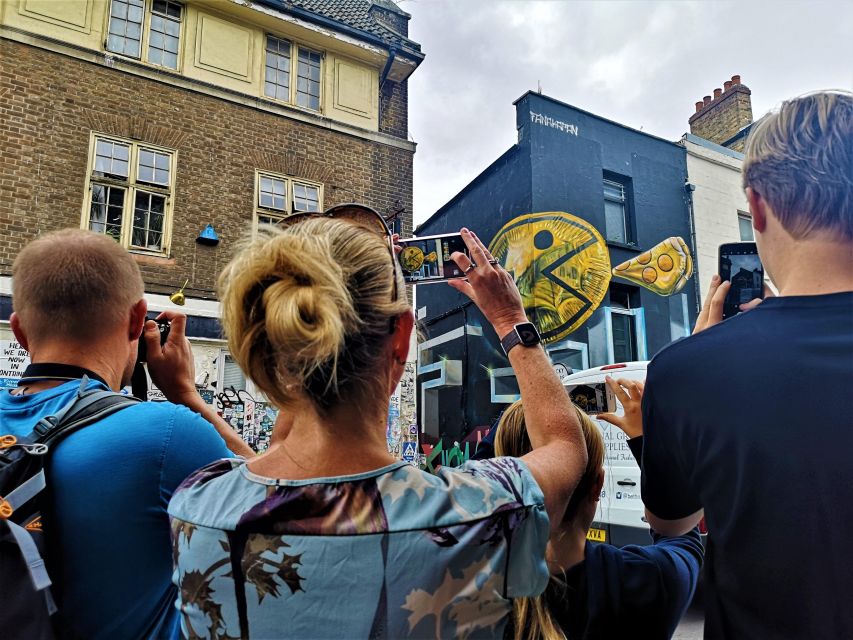
- Old Spitalfields Market meeting point near the white-goat statue on top
- Shoreditch + Brick Lane street scenes focused on street art and tags
- 40+ artists featured, including Banksy, ROA, Invader, Shepherd Fairey, and Eine
- French-language live guide with engaging, story-driven explanations
- Artwork changes over time, so the route stays fresh even when you return
Finding the white-goat statue at Old Spitalfields Market
Your tour starts in the area where the City of London’s old money energy meets East London’s street-level creativity. The meeting point is at Old Spitalfields Market, and the direction you’ll want is simple: go to the statue with the white goat at the top. That’s specific enough to save you from that classic London scavenger hunt where everyone looks equally lost.
This start location matters. Spitalfields is close to transit and easy to reach before you head into Shoreditch and Brick Lane. More importantly, it sets the tone: you’re not just walking past art. You’re walking through neighbourhood layers—places that have shifted economically and culturally, and that shows up on the walls.
If you arrive early, take a minute to orient yourself. Look around the market area so you know which streets you’ll be turning onto next. Then you’ll get more out of the first explanations, because the guide can point out how the art fits into the street grid and local vibe.
A few more London tours and experiences worth a look


East End street art reading: tags, styles, and what to look for
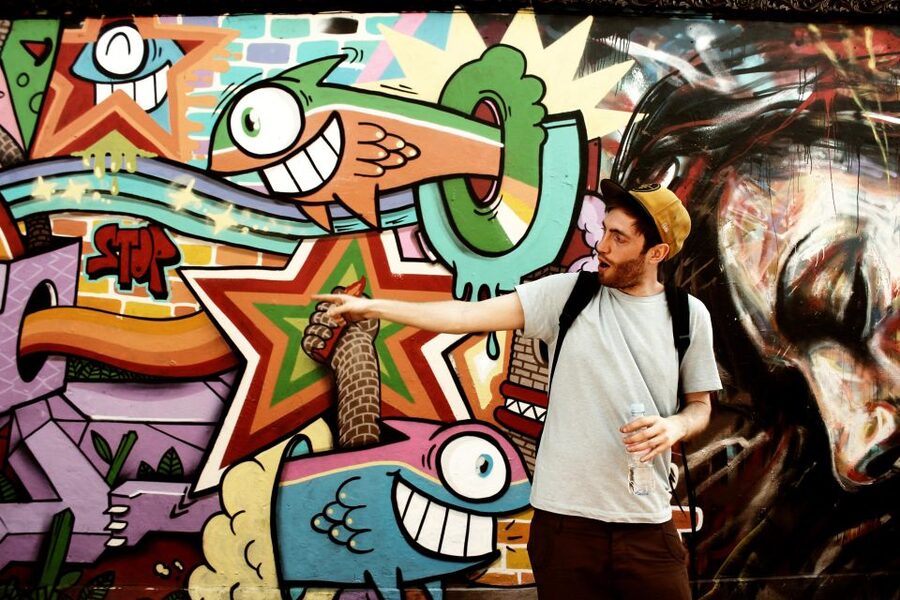
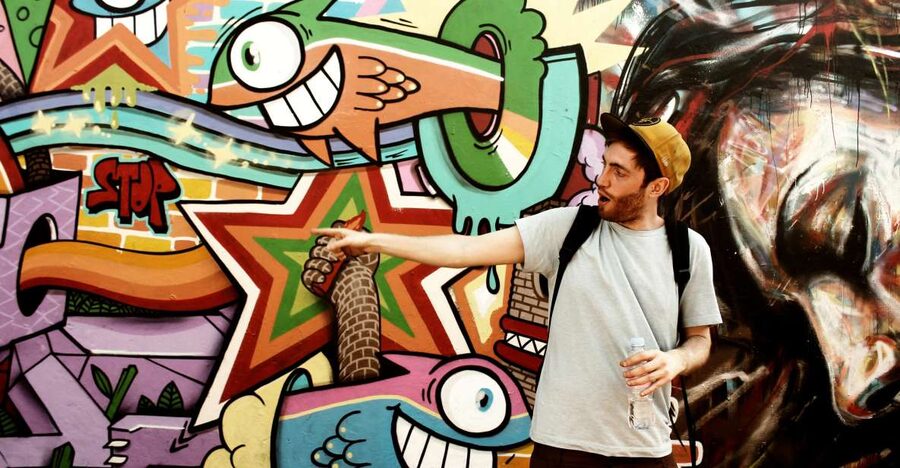
Once you’re moving, the tour’s core strength becomes clear: it helps you read street art like a language. The walk is built around graffiti culture and urban art history, with the guide explaining both the artwork and the signals behind it—tags, styles, and why certain pieces show up in certain kinds of spots.
Street art can look random at first. But with the right context, you start noticing patterns. You’ll be watching for recurring visual traits, layers on top of earlier work, and how artists use placement—on shop shutters, underpasses, blank-looking walls that aren’t really blank once you start looking. The guide’s job is to slow down your eyes so you see more than just colour.
You’ll also hear how quickly this world changes. Street art isn’t museum-stable. That’s why tours like this are described as evolving on a regular basis: walls get painted over, pieces shift locations, and new work appears. In practice, that means you’re learning a way of looking, not just collecting a checklist of photos.
Shoreditch and Brick Lane on foot: a route that makes sense
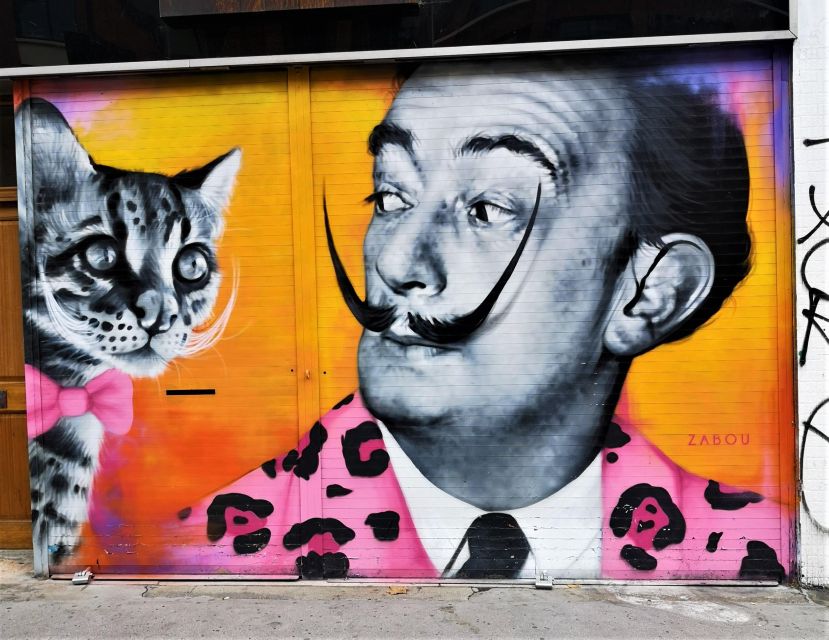
From Spitalfields you head toward Brick Lane and then the Shoreditch area. That choice isn’t random. Brick Lane and Shoreditch have a long connection to street culture, and the streets themselves help explain the art. When you walk through these neighbourhoods, you get the sense that the walls are part of the public conversation.
What makes this route useful for you is the pacing. It’s a walking tour designed for one lesson at a time: you learn a bit, you see it in the next stretch of street, then you connect names and styles as you go. That’s how you end up spotting more quickly later on your own.
Now, the trade-off: because you’re covering multiple areas in 1.5 hours, the emphasis is on seeing a lot and understanding enough to keep your eyes sharp. You won’t have an entire afternoon to track every alleyway. If that sounds like you—if you love long wandering and stopping for snacks mid-wall—plan to keep walking after the tour ends.
The artists you’ll actually hear about (Banksy, ROA, Invader, and more)
This is where the tour becomes extra fun, because it’s not just about art in general. It’s built around recognition—learning what to look for in pieces connected to big names and influential styles.
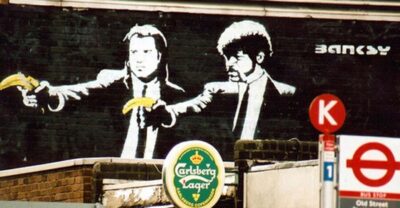
Expect to learn about street art associated with Banksy, ROA, Invader, Shepherd Fairey, and Eine. Along the way, the tour also references other acclaimed artists such as Stik, Borondo, and Cranio. Even when you don’t know an artist before you arrive, the guide’s explanations help you connect a style to a signature approach—how certain motifs show up, how artists build mood, and how reputations travel through the city.
One value here is that the guide doesn’t treat those names like trivia. In good street art conversations, the name is the doorway, not the destination. You’ll get context on how the culture works: why pieces earn attention, how tags and graffiti differ in intent, and how the East End became a place where street artists could be both political and personal.
And because street art changes constantly, don’t think of this as seeing one “final” version of a famous work. Think of it as learning how to recognize the thinking behind the art, so you can keep enjoying what you find next.
What the French-speaking guides do best (Laura and Gabriel as examples)
A big reason this tour scores so high is the human factor. Reviews highlight guides who are passionate, organised, and able to explain complex ideas in plain language. You’ll hear French throughout, so it’s a strong pick if you want your explanations in your comfort zone.
Two names show up repeatedly: Laura and Gabriel. Laura is described as telling details with passion and humour, and Gabriel is praised for clear explanations with historical context. There’s also a note that guides here may be young artists themselves, which can add a fresh angle. Instead of talking from a textbook, the guide can talk from direct creative culture—how street artists think about technique and how they see the neighbourhood.
For you, the practical benefit is simple: you’ll leave with a better eye. You’ll know what questions to ask as you walk. And you’ll also know how to enjoy street art respectfully—looking closely, not blocking paths, and treating it as public expression rather than random vandalism.
The one caution is group-fit. At least one review notes it can feel almost too short, which is a polite way of saying the content packs a lot into a tight time box. If your group tends to wander and ask extra questions, you might want to arrive ready and attentive so you don’t miss the best moments.



Duration and walking reality: what 1.5 hours feels like
The tour is listed at 1.5 hours, and you should treat it as a focused sprint on foot. You’ll move from Spitalfields through streets associated with Brick Lane and Shoreditch, stopping along the way for explanations and observations.
What I like about this timing for you is that it works even on a packed London day. You can pair it with nearby sightseeing and still have energy left. At the same time, this duration is short enough that the guide has to keep the pace moving, which means you’re not going to cover everything.
So here’s how to get the most value: wear comfortable walking shoes and take only a light bag. If you want photos, do a quick shot when the guide points something out, then let yourself get back to listening. That mix is the whole point of a guided street art tour.
Price and value: why $26 can be a smart deal for art lovers
At about $26 per person for a live French walking tour, the value comes from specialisation. You’re not paying for transportation or a ticket to a fixed monument. You’re paying for a guide who can point out details you’d miss on your own—and connect what you see to artists and street culture.
What makes that worthwhile here is the promise of a lot of artist references—40+ acclaimed street artists plus major names like Banksy, ROA, Invader, Shepherd Fairey, and Eine. In 90 minutes, that adds up to a high density of learning. If you’ve ever tried to research street art in East London from scratch, you know how easy it is to get lost in half-answers and random photos. A guide compresses that work into a simple route.
Also, street art changes. That means you’re not locking yourself into a single view that might already be painted over when you arrive. The tour’s premise is that it evolves with what’s on the walls, so your experience stays relevant.
If you’re an absolute beginner who wants the fastest route to understanding, this pricing can feel fair. If you’re a hardcore street art historian and want long technical discussions at each site, you might feel like it’s too short for the cost. Most people, though, will find it a good first layer of insight.
Where this tour fits best (and where it doesn’t)
This tour makes the most sense for you if:
- You want East London street art explained in French.
- You like walking tours that teach you how to spot details.
- You’re curious about both famous names and lesser-known artists.
- You want a manageable 90-minute plan that still feels substantial.
It might not be ideal if:
- You need long stops to photograph every wall.
- You only want museum-style explanations with fixed objects and dates.
- You prefer art content that’s heavy on facts and light on street-level atmosphere.
A neat plus: one review mentions kids also enjoyed it. That suggests the guide’s delivery is friendly enough to keep younger eyes engaged, as long as everyone in your group can handle the walking pace.
Should you book this street art tour in French?
I’d book it if you want an efficient, guided way to understand East London street art, especially around Spitalfields, Brick Lane, and Shoreditch. The high rating makes sense for a reason: the tour is built around seeing a lot, learning who’s behind the work, and leaving with a sharper eye for what’s really happening on the walls.
Skip it if you want hours of free-form exploring with no structure, or if you’re expecting long pauses at each major piece. In 1.5 hours, this tour is about direction and context, not total immersion.
FAQ
What is the duration of the Original London Street Art Tour (French)?
The tour duration is 1.5 hours.
Where is the meeting point?
Meet by the statue with the white goat on top, at Old Spitalfields Market.
What language is the tour guide?
The live guide speaks French.
What areas of London does the tour cover?
You’ll walk through East London, including the areas around Spitalfields, Brick Lane, and Shoreditch.
How many street artists are featured?
The tour includes street art by more than 40 acclaimed street artists.
Which famous street artists are mentioned during the tour?
You’ll learn about urban art by Banksy, ROA, Invader, Shepherd Fairey, and Eine. The tour also references other artists such as Stik, Borondo, and Cranio.
Is the tour wheelchair accessible?
Yes, the tour is wheelchair accessible.
What is the price?
The price is listed as $26 per person.
Can I cancel for a refund, and can I book without paying right away?
You can cancel up to 24 hours in advance for a full refund, and you can reserve now & pay later.