REVIEW · LONDON
National Gallery with Art Historian Guided Tour in London
Book on Viator →Bookable on Viator
London’s art hits fast when someone explains it. This National Gallery guided tour is built for people who want key works and real context without wandering for hours. You’ll follow an art historian’s path through the museum’s rehang and new displays, with attention to how bold artists changed the rules of painting and how they learned from the past.
I especially like the way the tour connects eras. You’re not just seeing names like Michelangelo, Titian, Turner, Rembrandt, and Caravaggio—you’re getting the why behind the style shift, including the big influence of 17th-century Dutch art. Another highlight is the small-group format (max 10), which makes it feel more like a focused walk-and-talk than a crowded stamp-collecting route.
One thing to consider: timing can be real-life messy. A previous guide cancellation due to train issues shows that public transport can affect the start. If you’re on a tight schedule, build in a little flexibility and don’t wait until the last second to plan your museum day.
In This Review
- Key things to know before you go
- National Gallery in Two Hours: The Walk-and-Talk Approach
- The National Gallery’s 200th Anniversary Rehang and Why It Changes What You See
- From Controversial Light to Influences: How the Tour Links Eras
- Old Masters You’ll Actually Want to Stop for: Holbein, Michelangelo, Canaletto, Moroni
- Women Artists on Display: What You Can See and How the Guide Frames It
- Comfort, Photos, and Timing: What Helps the Day Run Smoothly
- When Transport Disrupts the Plan: A Reality Check
- Price and Value: Why $125.01 Can Be Worth It
- Should You Book This National Gallery Art Historian Tour?
- FAQ
- How long is the National Gallery with an Art Historian guided tour?
- What is included in the tour price?
- Is photography allowed?
- Is the tour offered in English?
- How big is the group?
- Where does the tour start and end?
Key things to know before you go
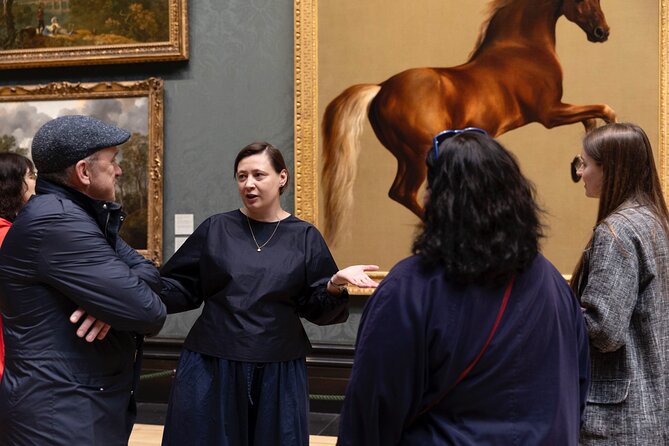
- Small group, expert art historian: Max 10 people keeps the pace human and the questions welcome.
- A museum relifted for its 200th anniversary: The collection has been rehung, plus 400 paintings added to the display.
- Old Masters connect to Impressionism: You’ll see the bridge between Turner/Rembrandt/Caravaggio and artists like Monet and Cézanne.
- Focused spotlight on women artists: Only four pieces are on display now, but the guide puts them in context.
- Works you’ll recognize in person: Stops include famous names such as Holbein, Michelangelo, Canaletto, and Moroni.
- Photo-friendly rules: Photography is allowed, just no flash.
National Gallery in Two Hours: The Walk-and-Talk Approach
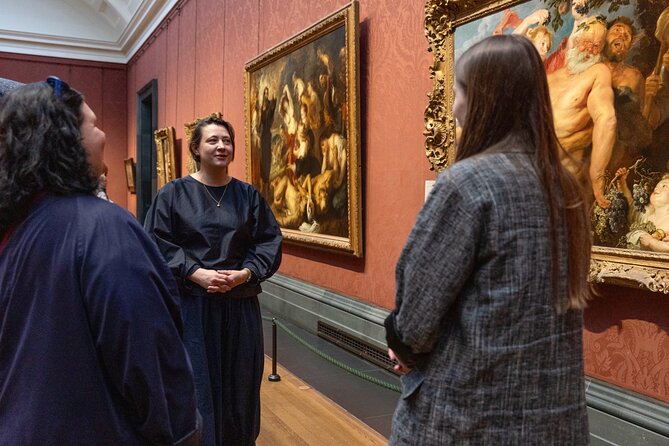
This tour is short on paper—about 2 hours—but it’s designed like a smart strategy. The National Gallery is big, and it can swallow a whole afternoon if you let it. With an art historian leading the route, you get a guided order of operations: what to see first, what to notice, and how different artists responded to the same questions about light, form, and subject.
The group is no more than 10, so you’re not shouting over a crowd. That matters in a museum, because you’ll get more useful answers when you can hear the guide and ask follow-ups. The pacing also supports the tour’s core promise: leaving with an appreciation that feels earned, not just memorized.
You’ll get free admission to the permanent collection as part of the experience, plus an official museum tour with an expert guide. Also, photography is permitted, but the rule is no flash. If you’re the type who likes to take photos for later study, this is workable. If you prefer to soak it all in without a camera, you still get plenty of structure to keep you moving.
Photo tip: If you plan to photograph, do it intentionally. Take one or two images per artwork, then look with your eyes for the rest. Flash-free is the rule, but your attention is the real tool.
You can also read our reviews of more guided tours in London

The National Gallery’s 200th Anniversary Rehang and Why It Changes What You See
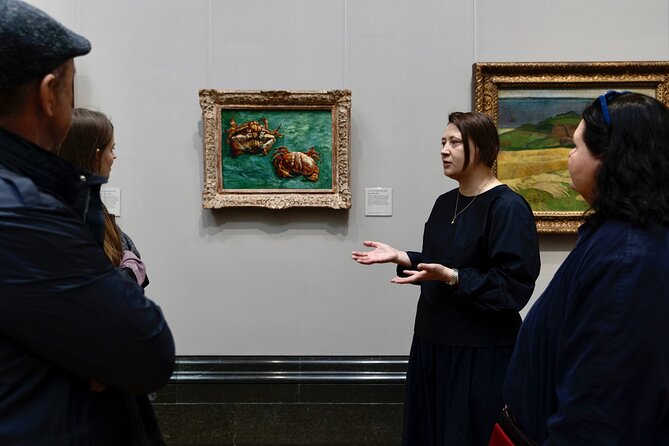
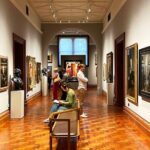
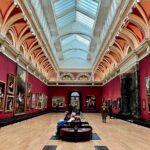
The National Gallery just marked its 200th anniversary with a full rehung of the collection, and 400 paintings were added for display. In a normal museum day, the layout is basically the invisible guide telling you what matters most. When the museum reshapes that layout, your viewing experience changes too.
That’s the value of coming now with a guide rather than going with a general plan. A rehung collection can make connections easier to spot—or harder—depending on how you approach it. With the tour’s timeline-style emphasis, you’re less likely to feel lost in galleries full of masterpieces.
You also get a useful reality check: the “story” of art isn’t one straight line. Style changes can look sudden, but the tour frames them as conversations. Artists respond to earlier work, react to what critics wanted, and borrow techniques—even while claiming they’re doing something completely new.
In plain terms, this rehung moment means you’re seeing the gallery at a fresh angle. A guide helps you read that angle instead of just walking through it.
From Controversial Light to Influences: How the Tour Links Eras
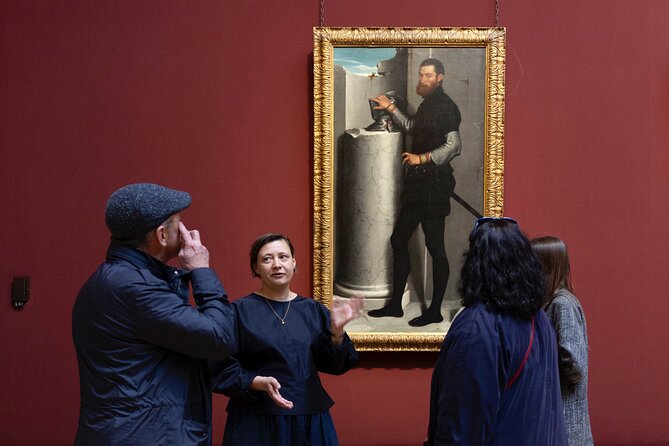
One of the most satisfying parts of this experience is how it handles the big art revolution without turning it into a slogan. The tour highlights work by artists who were considered dramatically controversial at the time for pushing away from traditional styles. You’ll be introduced to names tied to changing how painters saw light and everyday reality: Claude Monet, Auguste Renoir, Edgar Degas, Berthe Morisot, Camille Pissarro, Alfred Sisley, and Paul Cézanne.
But the guide doesn’t stop at the “new vs old” split. You’ll also connect those forward-looking artists to the artists who helped make the future possible. The route includes discussion of how older giants shaped later breakthroughs—think J.M.W. Turner, Rembrandt, Caravaggio, plus the importance of 17th-century Dutch art.
This matters for your enjoyment because it helps you watch the logic in the brushwork. If you only learn that Impressionism was rebellious, it can feel like style for style’s sake. If you learn what each painter absorbed from earlier art, the rebellion makes sense. You start noticing why certain colors, compositions, or handling of light feel familiar even when the technique looks different.
What I like about this approach: it gives you a mental map for why art changes. You’re not just collecting highlights—you’re building a cause-and-effect chain.
Old Masters You’ll Actually Want to Stop for: Holbein, Michelangelo, Canaletto, Moroni
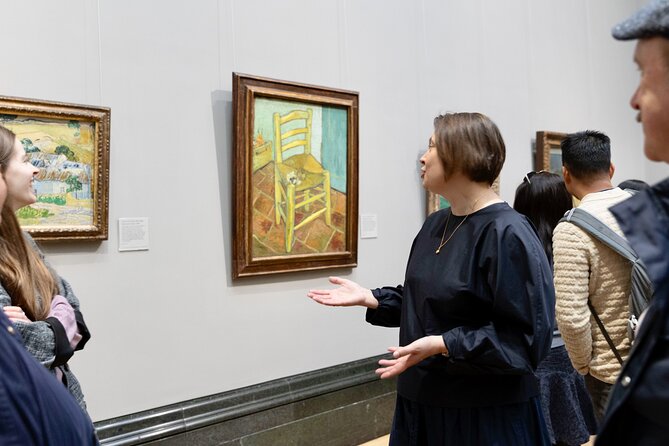
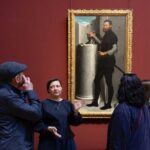
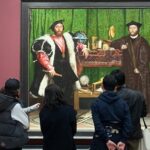
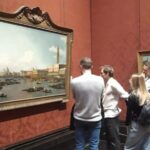
Even with modern art movements in the mix, the tour makes time for recognizable “jewel” moments. You’ll be guided to works associated with famous names such as Holbein, Michelangelo, Canaletto, and Moroni.
Here’s the practical value: these are anchor artists. When you stand in front of a major figure in painting, your brain keeps trying to answer a question like, What makes this one special? A good art historian doesn’t reduce the answer to one sentence. They point you to the details you’d otherwise miss: how the artist staged the scene, how they handled anatomy and expression, or how a particular compositional choice steers your eye.
If you’re someone who worries you’ll “not get it,” these stops are a confidence boost. You’ll get cues for how to look. And once you learn one good way to look, it starts working on the next painting too.
Also, the highlights include Michelangelo in the set of masters you’ll hear about. Even if you can’t name every sculpture or fresco-related detail, you’ll have enough context to recognize why the gallery places works like that where it does.
Women Artists on Display: What You Can See and How the Guide Frames It
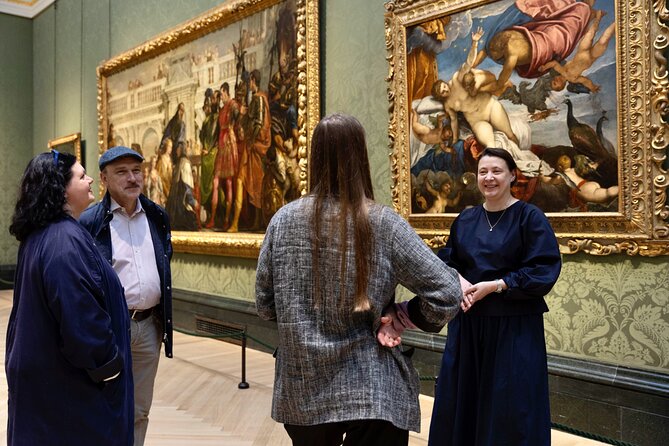
A fair question comes up fast: what about women painters?
Right now, only four pieces by women artists are on display for this tour’s focus. The tour handles that carefully, using what’s available to talk about the broader history of female painters and how opportunity, recognition, and collecting patterns shaped what survives and what gets shown.
This is useful even if you know very little. The guide’s job here isn’t to pretend the museum has equal representation in this moment. It’s to explain what you’re seeing and why it’s shaped the way it is—so your takeaway isn’t just a list of names, but an understanding of the art world’s constraints.
And because the tour invites questions, you can ask where you want more context. If you’re curious about what’s missing, you’ll have room to ask—and you can walk away with a better sense of the full picture rather than a partial one.
You can also read our reviews of more museum experiences in London

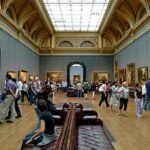
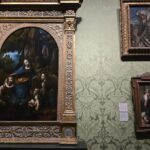
Comfort, Photos, and Timing: What Helps the Day Run Smoothly
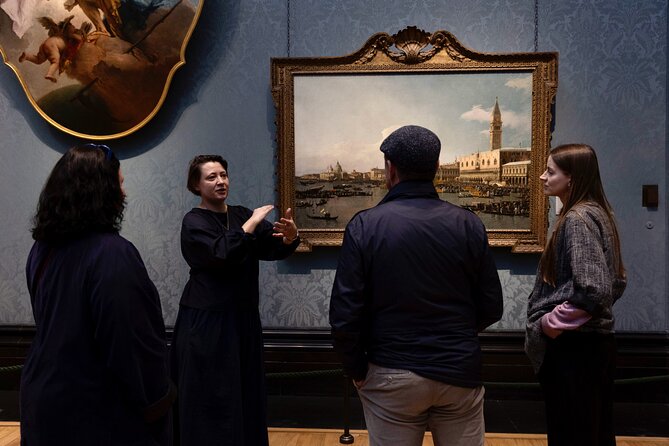
This experience is designed to be easy to fit in. It’s near public transportation, and the walking requirement is described as moderate physical fitness. That doesn’t mean “no walking,” but it does mean you’re not signing up for an all-day hike across London streets.
A few practical details help you plan:
- You’ll use a mobile ticket.
- You should expect confirmation within 48 hours, subject to availability.
- The tour allows photography without flash.
- Temporary exhibitions aren’t included.
- Cloakroom fees and refreshments aren’t included.
If you hate being caught without a place for your bag or coat, plan to travel light. You don’t want your museum time eaten by logistics. And since refreshments aren’t included, it’s smart to have a plan outside the tour window—especially if you’re building this into a larger day around Trafalgar Square.
Start point reminder: The tour starts at The National Gallery, Trafalgar Square, London WC2N 5DN and ends back at the meeting point. That makes it simpler to connect to the rest of your day.
When Transport Disrupts the Plan: A Reality Check
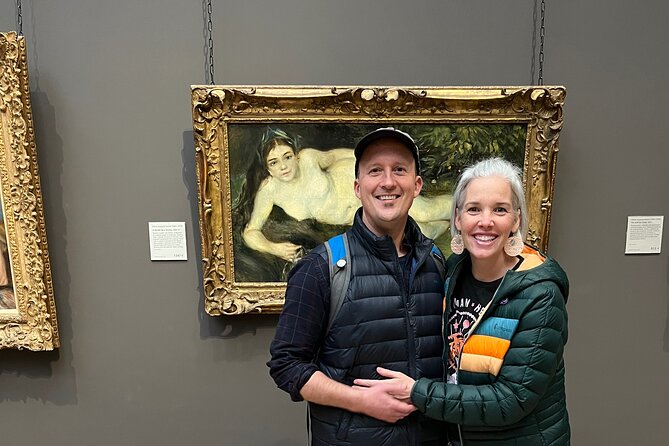
Art tours are usually steady. But London transport can be unpredictable. One prior experience included a guide cancellation about an hour before start because of train problems. The end result was still positive because the person went self-guided with headphones and enjoyed the collection highlights.
Your takeaway isn’t fear. It’s readiness. If you book this, treat it like a museum experience with a small risk window around start time. If you’re traveling on a schedule where you absolutely cannot lose time, build in slack. London is worth the buffer.
Price and Value: Why $125.01 Can Be Worth It
At $125.01 per person for about two hours, this isn’t a cheap museum add-on. So you should ask one honest question: what are you paying for?
You’re paying for three things that self-guided visits rarely deliver in the same package:
- A fast, focused route through a huge museum.
- Interpretation—the connections between painters and why their work was controversial or influential.
- A small-group setting where you can ask questions instead of just listening to general audio.
Also, the tour includes free admission to the permanent collection. That helps your math, because you’re not paying double just to enter. Temporary exhibitions still cost extra, but the bulk of the National Gallery’s permanent collection is where your money and time usually pay off in an afternoon.
If you’re the type who enjoys museums but hates feeling aimless, this price can look fair fast. If you’re a casual passerby who just wants photos and broad impressions, you might decide a self-guided visit is enough. For me, the value hinges on whether you want guidance on what to notice—not just what to see.
Should You Book This National Gallery Art Historian Tour?
Book it if you want an organized way to see major works in a short window—plus you care about the story behind the brushwork. The combination of the 200th anniversary rehung, the bridge from Old Masters to Impressionism, and the small-group Q-and-A setup is a strong match for people who like understanding what they’re looking at.
Pass or consider self-guided if you have a flexible schedule and you’re comfortable building your own route through the permanent collection. Also, if public transport reliability would stress you out, add time buffers on either side of your tour start.
If you’re visiting London for the first time and you want your National Gallery afternoon to feel like a real learning moment without turning into a full-day project, this is a smart way to do it.
FAQ
How long is the National Gallery with an Art Historian guided tour?
It runs for about 2 hours.
What is included in the tour price?
You get free admission to the National Gallery’s permanent collection and an official guided tour with an expert guide.
Is photography allowed?
Yes, photography is permitted, but flash is not allowed.
Is the tour offered in English?
Yes, the tour is offered in English.
How big is the group?
The tour has a maximum of 10 travelers.
Where does the tour start and end?
It starts at The National Gallery, Trafalgar Square, London WC2N 5DN and ends back at the meeting point.