REVIEW · PORTLAND
Viator Exclusive: Street Art of Portland 2-Hour Bike Tour
Book on Viator →Operated by Around Portland Tours · Bookable on Viator
Portland murals look better at bike speed. This 2-hour street art bike tour rolls you through the Central Eastside and Hawthorne areas with a professional guide, plus bicycles and helmets ready to go. You get that easy “move through the city” feel while still making time for the art.
I also like the way the route targets big, story-heavy stops—like the Taylor Electric Building and the Burnside Skatepark—without turning the ride into a sprint. Bottled water is included, and the pace stays slow enough for photos. One drawback to consider: you really do need to be comfortable riding, because the tour is built around actual biking through city streets and bike lanes.
In This Review
- Key things I’d plan around
- Entering Portland Street Art Mode on Two Wheels
- Getting Fitted at 833 SE Main St (and why that matters)
- Central Eastside to Hawthorne: the art-and-neighborhood blend
- Taylor Electric Building: a changing canvas you’ll want to see up close
- The import shop on rainy days: when Portland weather shifts the route
- More inner-eastside murals: how the ride keeps you moving and noticing
- Burnside Skatepark: street art with real street culture context
- Under Burnside Bridge: installations at the bridgehead
- Guides are the difference: from Kelly and Austin to Sarah and Everett
- How hard is the ride, really? (Bring the right mindset)
- Price and value: $45 with bike, helmet, and water
- Should you book this Portland street art bike tour?
- FAQ
- How long is the Portland Street Art 2-Hour Bike Tour?
- Where does the tour start, and when does it begin?
- What’s included in the $45 ticket price?
- Do I need to know how to ride a bike?
- How large is the group?
- What happens if the weather is poor?
- What’s the cancellation policy for a full refund?
Key things I’d plan around
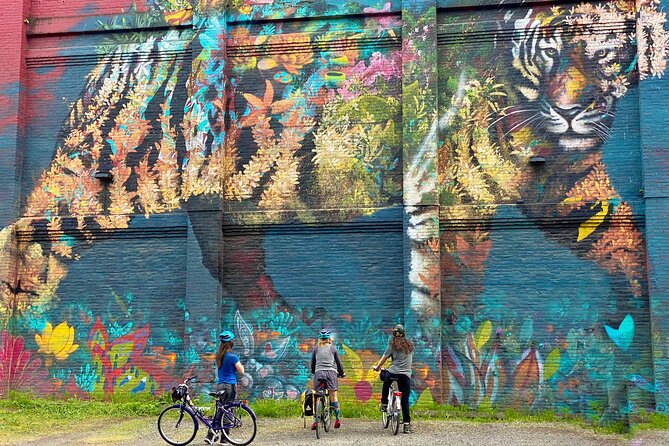
- Helmet and bike are included so you start riding fast and keep the focus on the street art.
- Central Eastside + Hawthorne stops give you the industrial-to-cooler-neighborhood mix Portland is known for.
- Taylor Electric Building is a main character on this route, known for changing street art.
- Burnside Skatepark adds street-culture context beyond just murals on walls.
- Small group size (max 16) makes it easier for guides to keep a steady, safer pace.
- Rain changes the plan with a possible visit to an artist-focused shop on rainy days.
Entering Portland Street Art Mode on Two Wheels
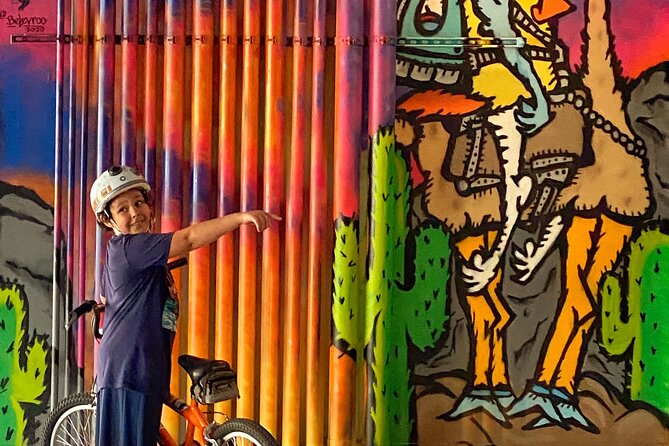
Portland street art is at its best when you experience it where it lives—on real buildings, on real blocks, with real foot traffic and bike traffic moving around it. This tour leans into that. Instead of just pointing out murals from the sidewalk, you ride the corridor that makes the art scene make sense.
The format also helps you see more without feeling like you’re “touring.” You’re not stuck in one neighborhood for hours. You travel through a stretch of the city where large walls, smaller tags, and whole artist communities overlap. If you like taking photos but also want the why behind what you’re seeing, this style works.
And yes, the included gear matters. When helmets and bikes are handled for you, you don’t burn time figuring out rentals or fitting gear. That time gets reinvested into stops.
Getting Fitted at 833 SE Main St (and why that matters)
You meet at 833 SE Main St, Portland, OR 97214, at the Around Portland Tours shop (suite #124). The tour start time is 2:30 pm, and it returns you back to the same meeting point.
This matters more than it sounds. A bike that feels “almost okay” can become annoying fast, especially during city riding. One review described an uncomfortable seat area and an early stop due to safety concerns after the ride started. The lesson is simple: tell the guide right away if something feels wrong when you’re getting fitted.
In practice, you’re likely to get help getting settled. Reviews mention guides giving extra support for riders who needed practice time, including one case where the group practiced until everyone felt comfortable. That kind of patience is a real quality-of-life factor on a bike tour.
Central Eastside to Hawthorne: the art-and-neighborhood blend
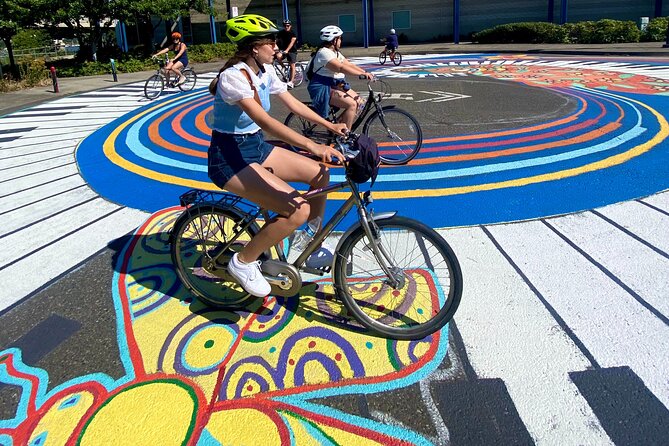
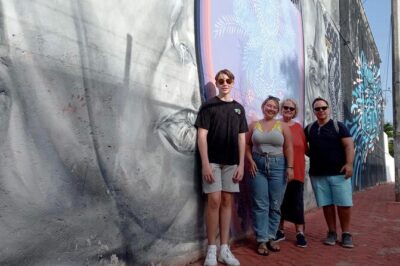
After fitting for your bike and helmet, the ride eases into the Central Eastside industrial district. This is a great starting choice. Industrial areas have long been where street art finds room to grow—large blank walls, warehouses, and lots of surface area. When you arrive by bike, you also get the “in-between” views: alley vibes, building edges, and the way the art sits in the everyday flow.
Then the route carries you into the Hawthorne District. The point isn’t to turn this into a food crawl, but Hawthorne’s reputation shows up in the background—coffee roasters, breweries, and the laid-back Portland energy that contrasts with the industrial blocks. That contrast helps you remember the art isn’t floating in a vacuum; it’s part of a living neighborhood ecosystem.
The ride stays slow-paced, which is a big deal if your goal is street art photography. Stops aren’t just quick glances. You’re given time to look closely and take photos before moving on.
Taylor Electric Building: a changing canvas you’ll want to see up close
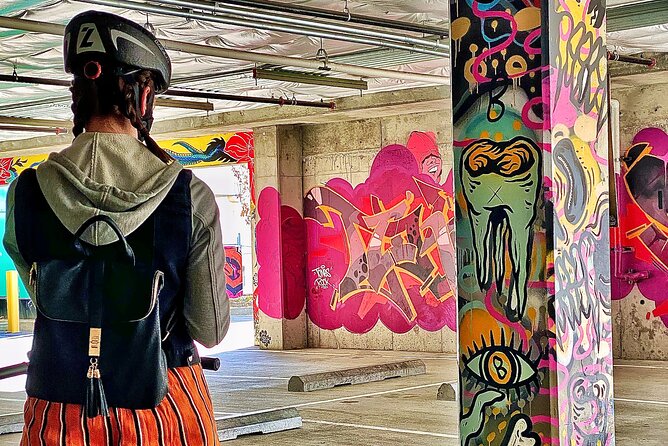
One stop centers on the Taylor Electric Building, described as a rich and ever-changing street art canvas. That’s exactly the kind of attraction that benefits from a guided format. A guide can help you understand what you’re seeing and why it works—without you needing a street art encyclopedia in your pocket.
The “ever-changing” part is key for return value. Even if you’ve seen Portland street art in photos online, a building like this can look different when you visit. A tour like this is useful because it gives you a curated route to places that are actively part of the city’s current art cycle, not just museum-style static walls.
You’ll also want to be ready to look a bit longer here than at typical quick stops. Reviews often mention the photo-friendly timing and the way guides help you notice details you’d otherwise miss.
The import shop on rainy days: when Portland weather shifts the route
Street art tours in Portland have one enemy: rain. The good news is this tour builds in a “weather-aware” option. On rainy days, there’s a chance you’ll head into an import shop that’s described as a haven for artists and a place where a famous colorful artwork has long been hosted.
Even if you don’t get the rainy-day detour, this idea is worth highlighting. It means the tour isn’t totally dependent on perfect outdoor conditions. You still get an art-focused experience even when the city turns wet and gray.
If you’re the type who likes understanding both the public walls and the places where artists gather, this kind of stop can add texture. Portland street art isn’t only what’s painted on buildings—it’s also the culture that supports making and sharing.
More inner-eastside murals: how the ride keeps you moving and noticing
A major chunk of the tour focuses on the inner eastside industrial corridor, where nearly every building can feel like a canvas—authorized or not. That’s a big part of the appeal. Portland doesn’t try to pretend street art is one uniform category. It ranges from big murals to smaller pieces, and guides help you read that variety.
Here’s what I find practical about this section: you don’t just get a list of impressive walls. You get multiple stops so you can compare styles and scales. That makes street art feel less random. It starts to look like a conversation across different artists and different moments.
You’ll also get to photograph several favorites. Reviews repeatedly mention time to stop, discuss, and take pictures without feeling rushed. If you care about capturing art without blocking other people on the sidewalk, this paced setup is easier.
Burnside Skatepark: street art with real street culture context
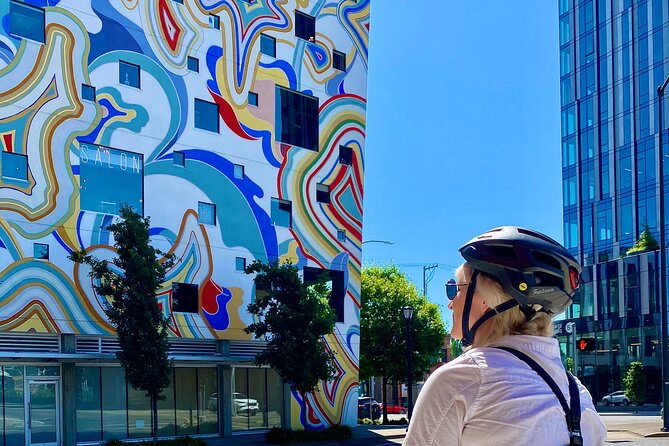
The route then hits Burnside Skatepark, a place framed as both a host for amazing street art and a user-created canvas too. This stop is valuable because it pulls you beyond mural fandom into street culture. Skateparks are communities with their own language—so the art here tends to feel lived-in, not staged.
There’s also a human element. The tour describes time to meet some locals who are part of the skate community. That’s the kind of added value that can turn street art from something you view into something you understand.
If your travel style is “show me the scenes,” this is where the tour can start feeling less like sightseeing and more like Portland sociology—minus the lecture tone.
Under Burnside Bridge: installations at the bridgehead
You’ll also pass under Burnside Bridge and see art installations on the Eastside bridgehead. Bridge art is a clever move on an itinerary because you’re exposed to scale—pieces that relate to movement, infrastructure, and how people flow through the city.
This is typically a shorter moment in the tour, but it helps you connect the mural world to Portland’s larger public-space character. The art isn’t only stuck to building fronts. It’s also designed to show up in the way you move through the city.
Guides are the difference: from Kelly and Austin to Sarah and Everett
The strongest praise across guides is about pace and storytelling. Names that come up include Kelly, Austin, Sarah, Eli, Dustin, and Everett—and you can feel how guide personality shapes the experience.
Many reviews describe Kelly as funny, kind, and patient, with a pace that can match different comfort levels on a bike. Others specifically call out Austin as an ambassador for the art and Portland. Sarah is mentioned for friendly, approachable guidance and for making sure the ride works for different family needs, including riders who needed extra bike follow-along time.
Eli gets praise for being friendly and informative in a fun way. Everett is noted for a sunny disposition and broad Portland context around street art. Even the less positive feedback focused more on mismatch in the depth of street art passion than on logistics, which tells you the company’s “baseline” execution is solid.
One practical takeaway: when a guide explains how to look—what details matter, how artists connect their work, why certain pieces fit the neighborhood—you’ll get more from every stop. Street art changes quickly, and a guide helps you stay oriented in real time.
How hard is the ride, really? (Bring the right mindset)
This tour is for people who must be able to ride a bike. So if you’re rusty, don’t pretend you’ll magically be fine once you’re rolling. Plan to arrive with the confidence to start and stop smoothly, steer safely, and keep balance in busy areas.
The ride is described as slow-paced, and multiple reviews mention bikes in good condition and brakes that work well. That said, city biking always includes risk if you’re not comfortable. One unhappy review described feeling unsafe soon after the start and stopping the tour early. The guide was offering a possible walking swap, but the main point for you is to check your comfort before you commit.
What to bring:
- Warm layers, especially in late-day Portland weather. One review mentions a guide providing gloves when it was freezing.
- Close-toed shoes you trust for pedaling.
- If you get cold easily, pack accordingly since it’s an outdoor ride with multiple stops.
Price and value: $45 with bike, helmet, and water
At $45 per person for about 2 hours, you’re paying for three things:
1) a route curated around street art stops,
2) a professional guide to give context, and
3) the practical extras that remove friction—bike use, helmet use, and bottled water.
That’s the value formula. If you’d otherwise rent a bike and figure out where to go on your own, this ticket can be easier and not much more expensive once you factor in time and gear.
It also helps that the group is limited to a maximum of 16. Smaller groups tend to mean more attention at stops, fewer long waits, and easier photo moments.
Also worth noting: it’s booked around 20 days in advance on average, so if you’re traveling in a popular stretch, don’t treat this like a last-minute maybe.
Should you book this Portland street art bike tour?
Book it if you want a straightforward way to see Portland’s street art scene with real structure: multiple major stops, a slow pace, and guide-led context. It’s a smart fit for first-timers who want the neighborhoods and not just a single mural list. It’s also good for people who like photos but don’t want to spend your whole trip hunting.
Skip or approach carefully if:
- you’re not confident riding a bike,
- you have limited experience biking in the street environment, or
- you want a purely walking-style experience (this one is built around biking).
If you do book, I’d take one extra step: when you meet up, get fully fitted and speak up immediately if anything feels off. The difference between a great art walk and an uncomfortable bike ride often comes down to that first few minutes.
FAQ
How long is the Portland Street Art 2-Hour Bike Tour?
It runs for about 2 hours.
Where does the tour start, and when does it begin?
You meet at 833 SE Main St, Portland, OR 97214, and it starts at 2:30 pm. The tour ends back at the meeting point.
What’s included in the $45 ticket price?
Your ticket includes a bicycle, a helmet, and bottled water.
Do I need to know how to ride a bike?
Yes. The tour requires that you must be able to ride a bike.
How large is the group?
The tour has a maximum of 16 travelers.
What happens if the weather is poor?
The experience requires good weather. If it’s canceled due to poor weather, you’ll be offered a different date or a full refund.
What’s the cancellation policy for a full refund?
You can cancel for a full refund up to 24 hours in advance of the experience start time. Canceling less than 24 hours before start time isn’t refunded.