REVIEW · WASHINGTON DC
Curated Tour – National Gallery of Art with French Art Historian
Book on Viator →Operated by Art with Tosca · Bookable on Viator
A great museum visit starts with a plan. This tour saves you from aimless wandering and turns the National Gallery into a clear story. I especially love the small-group feel with art historian Tosca, and the fact that admission is included, so you’re not juggling tickets while you learn. One possible drawback: this is an art-history guided experience, so if you want a total free-roam museum stroll, the structured pacing may feel a bit focused.
This is built for people who want context, not just labels. You’ll trace how major European artists thought, worked, and earned their reputations—using famous names like Raphael, Da Vinci, Rubens, Rembrandt, Monet, and Degas as your anchor points. If you’re visiting for the first time, it’s also a smart way to understand what you’re looking at before you wander on your own afterward.
Finally, keep weather in mind. The activity notes a good-weather requirement, and if it gets canceled for poor weather, you’ll be offered a different date or a full refund.
In This Review
- Key Highlights You’ll Actually Feel During the Tour
- Why a Semi-Private Group at the National Gallery Makes Sense
- Getting Oriented at the National Gallery Entrance (and Why It Matters)
- Stop 1: National Gallery of Art With a European Art History Storyline
- Museum History You Can Use Immediately
- Masterpieces Tied Together by Artist and Style
- How the Tour Avoids the Usual Museum Trap
- Da Vinci to Monet: What You Gain From the Timeline Flow
- Group Size, Time, and Your Day Plan
- Value for Money: What You Get That Self-Guiding Often Misses
- Who This Tour Is Best For (and Who Might Prefer Something Else)
- Weather and Flexibility: One Practical Reality
- Should You Book This National Gallery of Art Tour?
- FAQ
- How long is the National Gallery of Art tour?
- Is museum admission included?
- What group size should I expect?
- What language is the tour offered in?
- Where does the tour start and end?
- Do I need to arrange transportation?
- Is gratuity included in the price?
- What if the weather is poor?
- What is the cancellation policy?
Key Highlights You’ll Actually Feel During the Tour
- Semi-private group limit (max six, with a maximum of eight guests), so questions don’t get lost
- Art historian Tosca brings a European art-history lens from time spent between Paris, Italy, and London
- Masterworks with a timeline feel, moving from Da Vinci to Monet instead of random stops
- Museum history plus masterpieces, so the National Gallery makes more sense as a whole
- English tour with a guided structure that works well for first-time visitors
Why a Semi-Private Group at the National Gallery Makes Sense
If you’ve ever walked into a big museum and felt your brain hit overload, you already know the problem. The National Gallery of Art is outstanding—but it can also tempt you into drifting from room to room with no sense of how it all connects.
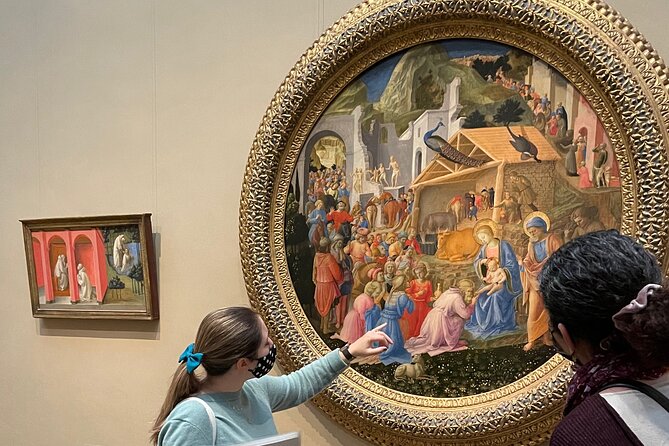
That’s where this tour helps. With a small group, you get the advantage of a guide who can respond to what you’re noticing rather than reading a script to a crowd. The tour is also described as semi-private, meaning it’s kept tightly sized (the operator notes there’s never more than eight guests maximum). In practice, this kind of group size makes it easier to ask follow-up questions, and you’re more likely to remember what you saw because you’re seeing it with purpose.
I also like that the experience is designed to be efficient. You spend about 2 hours 30 minutes inside, which is long enough to make real connections between artists and styles, but short enough that you can still continue exploring after the tour with better direction.
The key consideration is matching your expectations. This isn’t just a walk-by tour. It’s aimed at helping you understand why these artists matter, and how their styles changed over time. If you’re craving pure casual browsing, you might find the structure a little less flexible than you’d like.
You can also read our reviews of more museum experiences in Washington DC


Getting Oriented at the National Gallery Entrance (and Why It Matters)
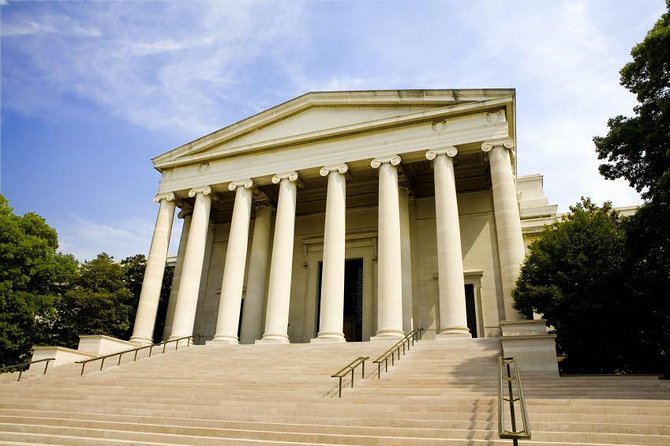
The tour starts at the National Gallery of Art on Constitution Ave NW in Washington, DC, and it ends back at the meeting point. It’s a straightforward setup, which is good because you can focus on the art instead of spending your energy figuring out where to go.
Because the tour is in English and led by an art historian, you’ll usually get more than a list of artists. You’ll get the framing—what to look for, what questions to ask, and how to connect one work to the next. That framing pays off fast in a museum like this, where one painting can look simple at first glance and then become much richer once you know what was going on when it was made.
One practical tip from the logistics: the activity is near public transportation. If you’re coming by rideshare or taxi, you can aim for the area around Archives and use the Metro from there. It makes the museum day easier if you’re also planning to see other parts of Washington nearby.
Stop 1: National Gallery of Art With a European Art History Storyline
This is the only stop, and it’s the one that counts. Instead of leaving you to wander, the guide leads an in-depth visit of the museum’s history and its major works. The promise here is clear: you’ll walk out with a stronger sense of the National Gallery itself and a better grasp of the painters behind the masterpieces you recognize by name.
Museum History You Can Use Immediately
A museum history tour can sometimes feel like trivia. Here, the history matters because it helps you understand how these collections are presented and why certain works feel so “central.” When you grasp how the gallery organizes masterpieces and why certain artists are highlighted, you stop treating the rooms like a random set of artworks and start experiencing them as a coherent visit.
That coherence is what helps you remember things later. You’re not just seeing paintings; you’re building a mental map.
Masterpieces Tied Together by Artist and Style
The tour is designed to answer a simple question: you’ve heard the names—Raphael, Da Vinci, Rubens, Rembrandt, Monet, Degas—but do you know what made them geniuses?
The guide is bringing extensive European art knowledge shaped by time between Paris, Italy, and London. That matters because it’s not just gallery facts. It’s the kind of context that connects technique, subject matter, and historical moment.
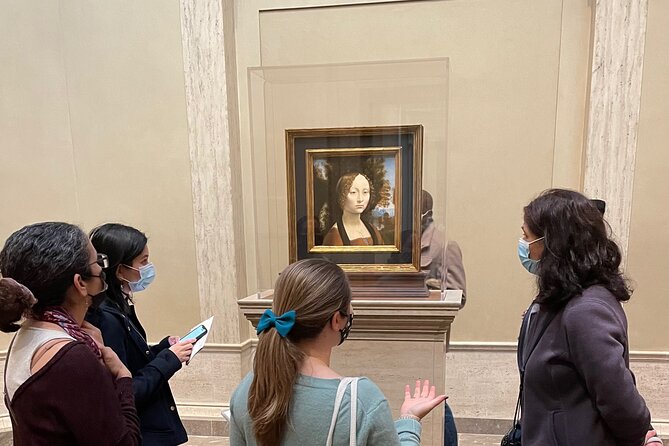
And you’ll see the evolution of styles across centuries instead of one era at a time in isolation. The tour itinerary includes specific works as anchor points, such as Da Vinci’s Portrait of Ginevra de’ Benci and then a jump forward to Monet’s Japanese Footbridge. That kind of pairing is smart for two reasons:
- You’ll spot how artistic goals change over time
- You’ll learn how to compare styles without needing to be an art expert



How the Tour Avoids the Usual Museum Trap
One common issue in museums is that you end up looking for what you already know. You focus on famous names, take a photo, and move on—without realizing you missed the rest of the story.
This tour works the other way around. It uses famous names as entry points, then adds life details, motivations, and artistic reasons behind the work. That’s a big part of why the experience is rated so highly.
In the reviews, guide Tosca is repeatedly praised for her depth of knowledge and for making it feel worth the money you pay. One reviewer specifically mentioned that Tosca gave extra attention to Italian Renaissance art. That’s the real value of a small-group tour: the guide can tailor emphasis when you share what you’re most interested in.
Da Vinci to Monet: What You Gain From the Timeline Flow
The itinerary is built around the idea that art history isn’t separate boxes. It’s a chain reaction. Styles evolve. Techniques spread and change. Artistic ideas respond to what came before.
So when you go from a work associated with the Renaissance world—like Da Vinci’s Portrait of Ginevra de’ Benci—to something like Monet’s Japanese Footbridge, you’re not just seeing two famous paintings. You’re seeing how a visual language shifts with time.
Here’s what this kind of tour does for you as a visitor:
- You start noticing what’s different, not only what’s famous
- You learn how to describe what you’re seeing without getting stuck
- You understand why a work feels like a turning point, not just a pretty image
Even if you don’t know much beforehand, you’re given a guide who can translate the signals—composition, technique, and the bigger reasons the painting exists. That translation is especially useful when you’re standing in front of a masterpiece and wondering why it matters beyond the surface.
Group Size, Time, and Your Day Plan
The tour runs about 2 hours 30 minutes. For most visitors, that’s a sweet spot. It’s long enough to get meaningful guidance, but short enough to keep the day flexible.
Because it’s focused and structured, I recommend planning a bit of breathing room after the tour. You’ll likely want to go back into galleries with fresh eyes. The best outcome is that the guided visit gives you a foundation, and then you choose a few rooms to revisit on your own.
Also, the tour includes museum admission. That’s not just convenient. It’s good value in a practical sense: you don’t waste time or mental energy buying entry while you’re trying to enjoy the art.
Value for Money: What You Get That Self-Guiding Often Misses
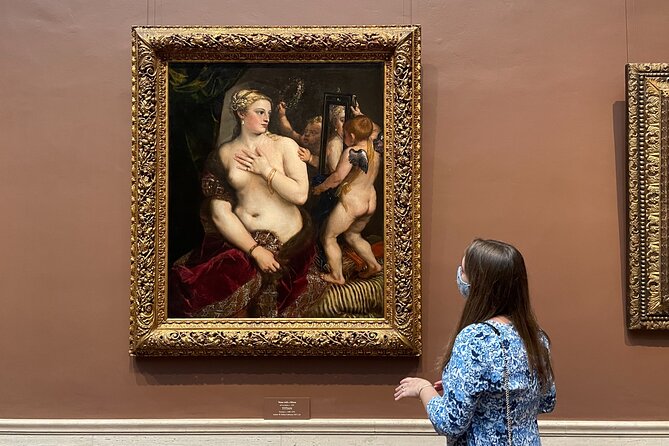
Even without seeing the exact price, you can still judge value based on what’s included:
- Admission Ticket Included
- Professional Guided Tour led by an Art Historian
- A semi-private group setup with a maximum of six in the curated concept, while the operator caps it at eight guests maximum
- Offered in English
Most self-guided museum visits are efficient for hitting highlights, but they don’t explain why those highlights became highlights. This tour pays for itself when you want interpretation. An art historian can connect dots that you won’t find just by reading labels, especially when you want a storyline across centuries.
The reviews back that up. A recurring theme is that the guide makes the material clear and memorable—so you feel like you learned something real, not just heard generic commentary.
One more value note: the tour includes group discounts. If you’re visiting as a small party, you may get a better deal than booking separate individual experiences.
Who This Tour Is Best For (and Who Might Prefer Something Else)
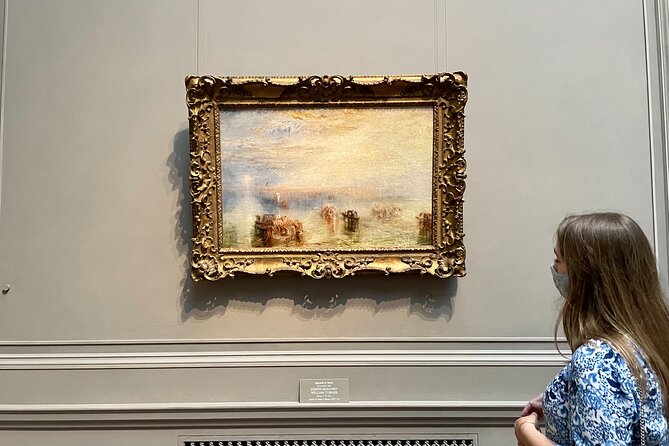
This tour is a great match if you fall into one of these categories:
- You’re visiting the National Gallery for the first time and want your bearings fast
- You love European art names but want real context and story behind them
- You want a guide who can answer questions about art history and artist lives
- You prefer small groups so you don’t feel invisible
It may be less ideal if:
- You hate structured pacing and want to move at your own speed
- You’re looking for a quick photo-and-go museum pass
- You already know a lot and mainly want a specific, narrow specialty track (the tour is designed broadly across major eras)
Weather and Flexibility: One Practical Reality
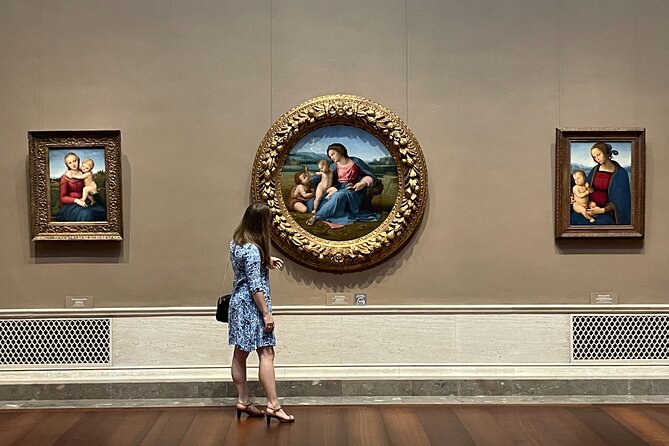
The experience requires good weather. If it gets canceled due to poor weather, you’ll be offered a different date or a full refund. That’s unusual for an indoor museum activity, but it’s what the listing notes—so it’s worth keeping an eye on forecasts if your trip is tight.
Also, the booking is non-refundable and cannot be changed for any reason. If your schedule is fragile, plan carefully.
Should You Book This National Gallery of Art Tour?
Yes, if you want an organized, meaningful visit that helps you understand the masterpieces instead of just passing by them. The biggest strengths are the small-group size, the art historian framing, and the way the tour uses major works—like Da Vinci and Monet—to show how European art evolved.
I’d book it especially if you’re the kind of visitor who likes to come home with more than photos. With this tour, you should leave with a clearer sense of the National Gallery’s story and a better understanding of why those famous artists earned their reputations.
If you’re the type who loves reading slowly and exploring solo without any structure, you might consider a self-guided plan. But if you want value through expert context and a tighter group experience, this is a very solid pick.
FAQ
How long is the National Gallery of Art tour?
It runs about 2 hours 30 minutes.
Is museum admission included?
Yes. Entrance to the National Gallery of Art is included.
What group size should I expect?
The tour is described as a small-group experience with a maximum of six. It is also labeled semi-private, with a maximum of eight guests.
What language is the tour offered in?
The tour is offered in English.
Where does the tour start and end?
It starts at the National Gallery of Art, Constitution Ave NW, Washington, DC 20565, and ends back at the meeting point.
Do I need to arrange transportation?
Transportation is not included. The guidance is to use Uber, Taxi, or Metro, with a Metro stop at Archives.
Is gratuity included in the price?
No. Gratuities are not included and are optional.
What if the weather is poor?
The activity requires good weather. If it’s canceled due to poor weather, you’ll be offered a different date or a full refund.
What is the cancellation policy?
The experience is non-refundable and cannot be changed for any reason. If it’s canceled because the minimum number of travelers isn’t met, you’ll be offered a different experience/date or a full refund.