REVIEW · WASHINGTON DC
DC National Gallery of Art Guided Tour Semi-Private 8ppl Max
Book on Viator →Operated by Babylon Tours DC · Bookable on Viator
Small groups make art feel personal. This guided experience at Washington DC’s National Gallery of Art gives you a planned route through major works, with your guide explaining technique, context, and the museum’s growth from a near-empty building into a world-class collection.
I especially like the 8-person maximum. You’re not lost in a crowd, and you can actually ask follow-up questions while still covering key highlights. I also like that the tour threads eras together, so you’re not just staring at famous names; you’re learning how Renaissance painters, French Impressionists, and American modern artists connect through style and choices.
One thing to consider: the tour clocks in at about 2.5 hours, and that pace can feel tight if you need extra time at each work or you want a planned break. One guest even called out no restroom break as a point to plan around.
In This Review
- Key things to know before you go
- Meeting at the National Gallery of Art: fast start, clear plan
- A semi-private 8-person pace that still hits the big masters
- Your guided route: a museum history lesson in how you look
- Renaissance to sacred art: da Vinci and Raphael in context
- Titian and the art of attention: when beauty has a story
- Degas’ Little Dancer plus the George Washington portrait
- Impressionists: Monet’s light and van Gogh’s self-view
- Modern art stops: Picasso, Pollock, Warhol, and O’Keeffe
- What happens at the quieter rooms and why rules can affect your visit
- After the tour: keep exploring at your own speed
- Price and value: when $89.67 makes sense
- Who this tour fits best (and who might want something else)
- Should you book this National Gallery of Art semi-private tour?
- FAQ
- How long is the National Gallery of Art guided tour?
- How many people are in the group?
- What is the price per person?
- Is museum admission included?
- Can I choose a morning or afternoon start time?
- Where do I meet for the tour?
- Is the tour wheelchair accessible?
- Are there bag rules for entering the museum?
- Do I need to provide a mobile phone number?
- Can I cancel for a full refund?
Key things to know before you go
- 8 guests max keeps the focus on the art instead of the logistics of big groups
- A guided route with context helps you see big masterpieces in the right setting, not just as stand-alone famous images
- Technique + story are built into the stops, from Renaissance brushwork to Impressionist effects of light
- Major works you’ll likely see include Ginevra de’Benci, Alba Madonna, Venus with a Mirror, Little Dancer, Self Portrait, and Woman with a Parasol
- Museum rules matter: security limits large bags, and some quieter spaces restrict speaking
- It ends where you started, so you can keep exploring at your own speed after the tour wraps
Meeting at the National Gallery of Art: fast start, clear plan
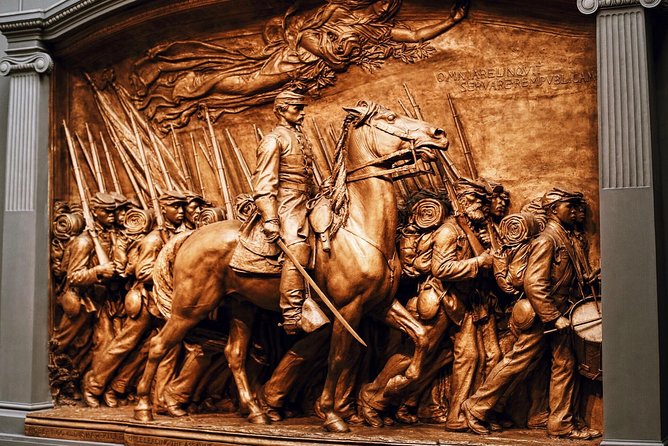
This tour begins at the National Gallery of Art on Constitution Ave NW. The experience is designed to start on time, so aim to arrive a bit early to settle in and pass through security without stress.
You’ll also want to be ready for day-to-day museum constraints. The notes say the museum and other DC attractions can face occasional closures, and if opening is delayed by more than an hour, they’ll offer an appropriate alternative. Also, security is real: no large bags or suitcases, only handbags or small thin bag packs are allowed inside. If you’re traveling with a bigger bag, plan to keep it light.
One small but important practical detail: you must provide a mobile phone number with country code. That’s how they can coordinate day-of updates.
You can also read our reviews of more guided tours in Washington DC


A semi-private 8-person pace that still hits the big masters
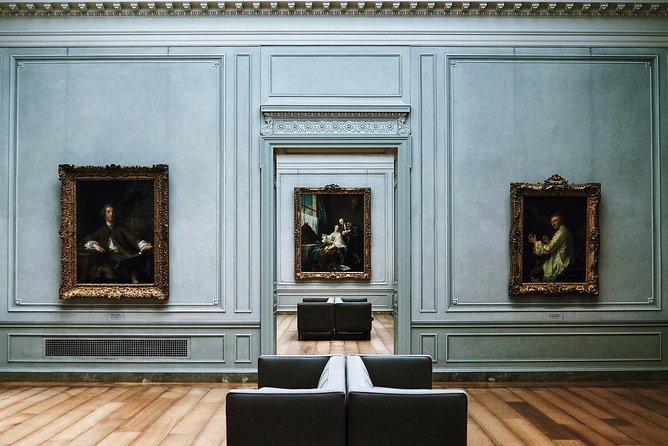
The core value here is the size. With a maximum of 8 travelers, your guide can slow down when the group asks questions, and you’re more likely to get answers than you would on a bigger coach-style tour.
At the same time, this is not a long-form gallery marathon. It’s about 2 hours 30 minutes, and the route is built to cover a lot of ground. That’s great if you want a smart highlights path. If you prefer to linger for 10 minutes per artwork, you might feel slightly rushed—one review called out a pacing that could move fast for guests who wanted more time with certain arts.
Your guide’s job is to create a “through-line” as you move across rooms: what you’re seeing, why it was made, and what the artist was trying to communicate. The result is less wandering and more learning-by-seeing.
Your guided route: a museum history lesson in how you look
The National Gallery of Art isn’t just a building with famous pieces. Your tour is also set up as a short lesson in how the museum itself became what it is today—growing from a near-empty site into a world-class collection in fewer than 100 years.
That matters because the museum’s layout and collection strengths can feel random if you walk in cold. A guided route helps you interpret the space. Instead of asking, Which wing is most important?, you’re handed a sequence that makes the collection feel organized: Renaissance foundation, then European painting strengths, then American and modern art.
And your guide ties in technique while you stand in front of the work. Expect discussion of how paintings and sculptures were made, what details mean, and what can get lost when you only look at the surface.
Renaissance to sacred art: da Vinci and Raphael in context
If you care about Renaissance art, this tour gives it a strong start. You’ll see works connected to some of the biggest names in Western art—starting with Leonardo da Vinci’s Ginevra de’Benci.
What I like about placing da Vinci early is that it trains your eye. You learn to look for choices the artist made—composition, detail, and how realism is constructed. Even if you’re not a technical art person, your guide helps you translate the visual cues into something you can actually understand in minutes.
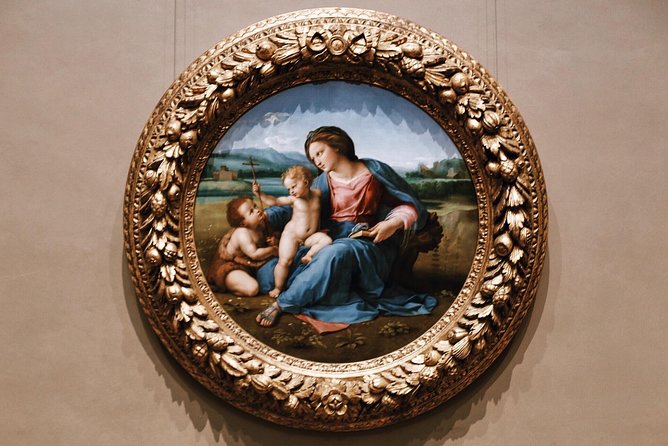
From there, you’ll connect to Raphael’s Alba Madonna. The focus shifts from one style to another, but the point is the same: art as communication. Sacred art isn’t only religious; it’s also crafted to deliver emotion, symbolism, and authority through form and arrangement. That’s the kind of context that makes the artwork feel less like a postcard and more like a decision made by a real human.
Titian and the art of attention: when beauty has a story
You’ll also encounter Titian’s Venus with a Mirror. This is a useful stop because it’s not only about famous faces—it’s about what an artwork is doing with light, pose, and viewer attention.
A guide helps you notice how the “mirror” idea changes the mood. It creates distance and invites questions: who is looking, and what does the scene ask you to consider? Without context, a piece like this can feel like just another myth scene. With context, you start to see how the painting guides your eye.
That’s the bigger win of this tour: it slows your viewing down just enough to turn passive looking into active looking.
You can also read our reviews of more private tours in Washington DC


Degas’ Little Dancer plus the George Washington portrait
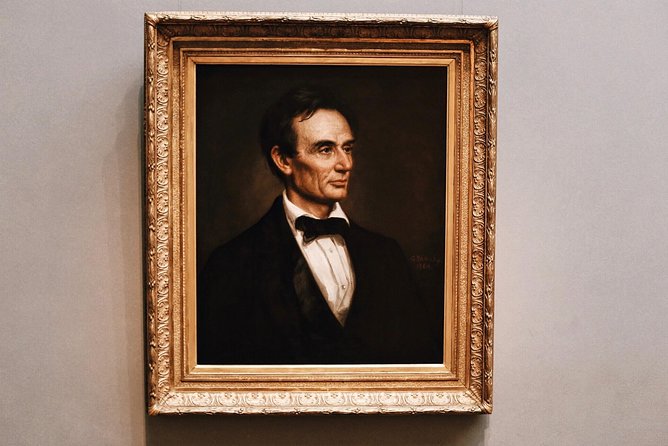
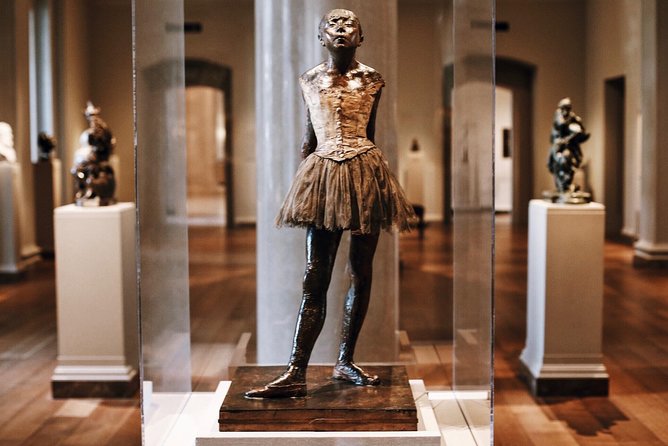
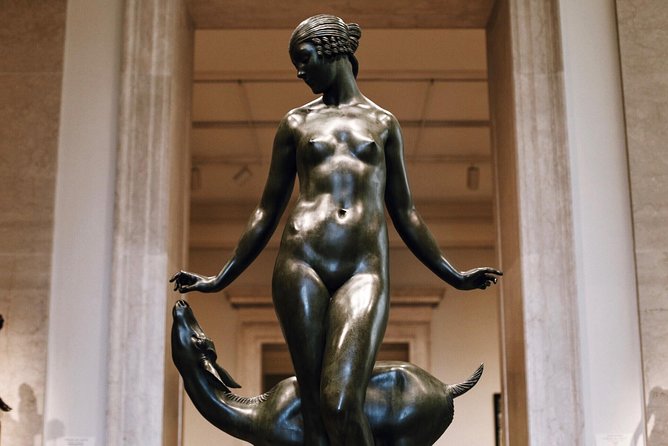
The tour highlights include Edgar Degas’ Little Dancer. One reason this sculpture is often a favorite is that it feels intimate even when you’re viewing it under museum conditions. Your guide’s job is to explain what makes it stand out—how sculpture can carry attitude, movement, and character.
Next, you’ll examine Gilbert Stuart’s portrait of George Washington. This is a smart placement, because it broadens the idea of “masterpiece” beyond painting. Portraiture brings its own questions: What does the sitter need to project? What does the artist emphasize? How does style become politics, status, and national identity?
Seeing these works as part of one guided route helps you realize that the museum isn’t just showing famous art; it’s showing how different kinds of art were used to communicate power, personality, and culture.
Impressionists: Monet’s light and van Gogh’s self-view
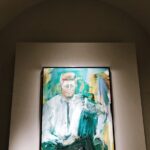
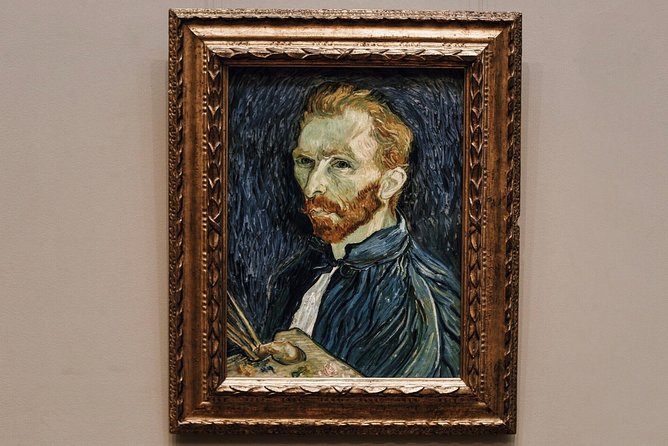
French Impressionism is a big reason people love the National Gallery of Art, and this tour doesn’t treat it as an optional detour. You’ll see Claude Monet’s Woman with a Parasol and Vincent van Gogh’s Self Portrait.
Monet is one of those artists where technique is the whole point. Your guide walks you through what the painting is doing with light and atmosphere, so you don’t just see pretty color—you see why the color choices matter.
Then van Gogh flips the script. Self Portrait is a different kind of intensity. Instead of focusing on natural light and its effects, you’re pushed toward the artist’s viewpoint and emotional charge. In this guided format, those two pieces work well together: they show two approaches to “seeing,” one built from observation of the world and one built from expression of the self.
Modern art stops: Picasso, Pollock, Warhol, and O’Keeffe
One nice thing here is that the tour doesn’t stop at the art that everyone already knows. You’ll also see modern artists such as Picasso, Pollock, Warhol, and O’Keeffe.
This is where the guided storytelling helps the most. Modern art can feel “harder” if you expect realism or clear narratives. A good guide doesn’t erase that challenge; they give you entry points—materials, style decisions, and what the artist was responding to in their time.
Also, the tour is designed as a “see it in context” experience. That means modern works aren’t presented as random famous names. They’re framed as part of a bigger evolution in art-making.
If you’ve only got a couple of hours in DC and you want both classical and modern highlights, this is a strong way to cover them without spending your whole day inside a museum map app.
What happens at the quieter rooms and why rules can affect your visit
Museums can be strict about sound levels, and the National Gallery has certain areas where speaking is very quiet or restricted. Your guide will provide the information before you enter those rooms, so you can follow along without feeling like you’re doing something wrong.
This matters because you’re paying for a guided experience. If a room limits talking, you don’t want to be surprised mid-lecture. Here, you should be prepared for a more hushed pace in those spaces.
After the tour: keep exploring at your own speed
When the tour ends, it wraps back at the starting area so you can continue exploring on your own. That’s a smart design for a museum like this. A guided route gives you a high-impact overview, and then you can return for your favorites.
If you loved a certain artist during the tour—say you got hooked on Monet’s light or you were drawn to how sculpture works at human scale—you’ll have an easier time finding your way back. The tour helps you build a short list of what to see next.
Price and value: when $89.67 makes sense
The price is $89.67 per person for about 2.5 hours, and the museum admission is free (the admission ticket is listed as free). So what you’re really paying for is your guide and the guided route.
That can feel like a lot if you’re the type who already studies museums on your own. For some people, the value is mainly in the guidance: someone deciding what matters, what details to notice, and how to connect artworks across time. If you’d rather roam freely and you know the collection well, you could skip a tour and still have a great day.
But if you want an efficient, story-driven way to see major works—especially when you only have a few hours—this price is easier to justify. The small group size helps, because you’re paying for time and attention, not just movement through galleries.
One review did criticize the cost as overpriced for what was received. That’s a fair warning: if you expect a private, slow, museum-by-museum experience, this is semi-private. If you want a smart highlights framework, it’s a good deal for the time.
Who this tour fits best (and who might want something else)
This is best for you if:
- you want a highly focused highlights route instead of a full-day self-guided wander
- you like learning how techniques and choices shape what you see
- you’re curious about both European painting and American modern art
- you appreciate a guide who can explain with humor and keep the group moving
You might want to look for a different style if:
- you need frequent restroom breaks or a slower pace built around your own timing
- you use a wheelchair or need accommodations not supported for this tour
- you already know the collection and would rather go at your own speed without a structured path
Also, it’s offered in English, and your physical fitness should be moderate.
Should you book this National Gallery of Art semi-private tour?
I’d book it if you want a strong overview of the National Gallery of Art with real context and a manageable group size. The 8-person cap and the guide-led thread across Renaissance, Impressionism, and modern art make it a good choice for time-strapped visitors who still want more than “look at that painting” tourism.
I’d pause if you’re very sensitive to pacing. At 2.5 hours, this tour is structured to cover lots of ground, and at least one guest flagged that there wasn’t a planned restroom stop and that some topics might move quickly.
If you’re deciding on value, remember: museum admission is free, so your money goes into the guide and the route. If that’s what you want, this is an efficient way to get meaning out of famous artworks without spending your whole day charting the museum alone.
FAQ
How long is the National Gallery of Art guided tour?
It lasts about 2 hours 30 minutes.
How many people are in the group?
The tour is semi-private with a maximum of 8 guests.
What is the price per person?
The price is $89.67 per person.
Is museum admission included?
Admission is listed as free, and the tour includes the guided experience.
Can I choose a morning or afternoon start time?
Yes, you can choose between morning or afternoon start times.
Where do I meet for the tour?
Meet at the National Gallery of Art, Constitution Ave. NW, Washington, DC 20565, USA. The activity ends back at the meeting point.
Is the tour wheelchair accessible?
No. The tour is not available for those with walking disabilities or for anyone using a wheelchair.
Are there bag rules for entering the museum?
Yes. No large bags or suitcases are allowed inside; only handbags or small thin bag packs can go through security.
Do I need to provide a mobile phone number?
Yes. You must provide a mobile phone number (including country code).
Can I cancel for a full refund?
You can cancel up to 24 hours in advance for a full refund. Canceling within 24 hours does not receive a refund.