REVIEW · WASHINGTON DC
DC Monuments Day or Night American History Electric Cart Tour
Book on Viator →Operated by American Capital Tours · Bookable on Viator
Washington DC hits different when it’s lit up. This DC monuments day or night electric cart tour gives you a fast, comfortable loop of the big National Mall sights with a guide telling the story behind what you’re seeing. I love that the route packs in major landmarks in about 2 hours, and you’re not stuck fighting traffic or parking.
Second, I really like the human side: guides like Fernando and Elmira bring the facts with humor and patience, and they’ll help your group get photos in the right spots. The one thing to keep in mind is that most stops are short, so you’ll see plenty from the sidewalk and viewpoints, but you should not expect long, in-depth time inside every memorial.
In This Review
- Quick highlights before you go
- Why an electric cart tour works so well in DC
- Day or night: pick your mood, then pick your route
- The starting point and what to do with your first 10 minutes
- Capitol Hill and the government landmarks stop: why it matters
- National Gallery of Art and the art-and-science vibe near the Mall
- U.S. Botanic Garden: the calm break in a fast loop
- National Museum of African American History and Culture: impact in a short time
- Washington Monument and the Lincoln-to-Jefferson story arc
- Thomas Jefferson Memorial: the short viewpoint stop
- Franklin Delano Roosevelt Memorial: plan for outside viewing
- Martin Luther King Jr. Memorial and Lincoln Memorial: two stops that anchor the loop
- Vietnam Veterans Memorial and Korean War Veterans Memorial: expect emotional weight
- White House area and Chinatown: the culture-and-politics pairing
- Photo expectations: what you’ll get, what you won’t
- Comfort tips that make a real difference
- Value check: is $59 worth it?
- Should you book this electric cart monument tour?
- FAQ
- How long is the DC Monuments Day or Night electric cart tour?
- How much does the tour cost?
- Is the tour offered during the day, at night, or both?
- Where does the tour start?
- What’s included in the price?
- How many people are on the tour?
- Is the tour in English?
- Are admission fees included for the attractions?
- What should I wear since it’s an open-air cart?
- How does booking work?
Quick highlights before you go
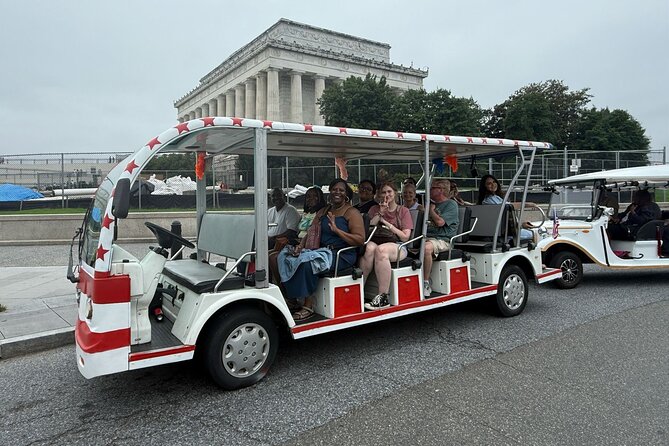
- Electric cart, open-air views: you can see the monuments clearly while you ride.
- Guide-led American history: stories connect the Capitol, memorials, and presidents into one timeline.
- Big sights in a tight window: you’ll hit many National Mall landmarks without spending your whole day commuting.
- Photo-focused stops: you get enough time to get a couple shots at key points.
- Night option is a game-changer: expect a calmer atmosphere and a very different mood after dark.
- Small group size: the max is 20 people, which helps the whole experience feel less chaotic.
Why an electric cart tour works so well in DC
Washington DC is built for walking, but not every day of your trip is built for stamina. This tour is designed for people who want the highlights fast and want to understand what they’re looking at while they go.
The electric cart matters more than it sounds. You cover ground quickly, sit comfortably, and get a guided route through the National Mall area. Reviews also hint at a practical perk: the narration and onboard sound are a big part of the value, though if you sit toward the back, the volume may be harder to hear.
If you’re short on time, this is a strong way to get your bearings. You’ll come away knowing where the major monuments sit relative to each other, which makes the rest of your DC day (or next day) easier.
You can also read our reviews of more historical tours in Washington DC
Day or night: pick your mood, then pick your route
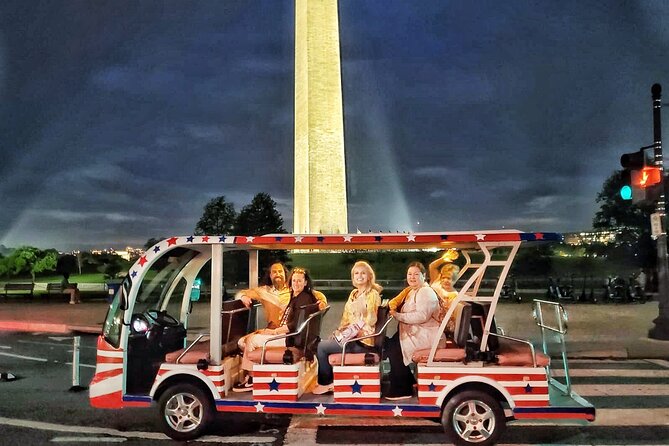
This tour runs day or night, and that choice is not just about the lighting. At night, monuments feel more dramatic, and the pace often feels calmer. Several guides also seem to lean into the storytelling more when it’s dark, because you can watch the city change as you move.
If you’re choosing the night version, dress like it’s going to be colder than you expect. The open sides mean wind finds you. One common suggestion is to bring layers (and if you’re the kind of person who gets chilly easily, plan for it). If audio matters to you, try to sit where you can hear clearly during narration.
If you prefer daylight, you’ll have more natural light for photos and it can be easier to spot details. Either way, the cart keeps things comfortable while you bounce between stops.
The starting point and what to do with your first 10 minutes
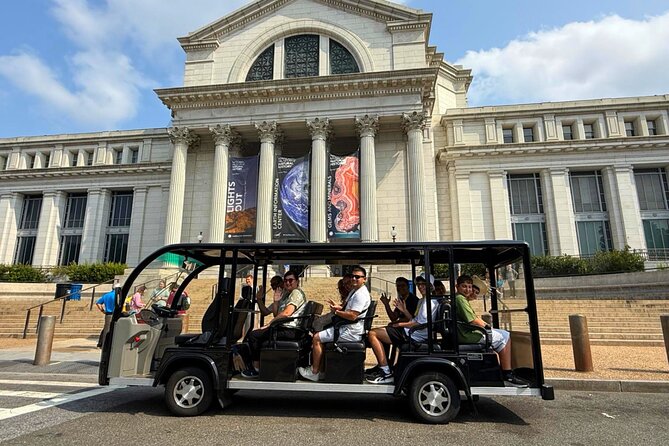
You meet at 333 G St NW, Washington, DC 20001. That’s a convenient location because it’s in the central DC area and described as near public transportation.
When you arrive, think like a day-trip planner:
- Use a restroom before you board if you need one. There’s even a practical tip to consider a nearby restaurant for a quick bathroom stop before the tour starts.
- Dress for wind exposure since you’ll be outside most of the ride.
- If you care about hearing the guide, aim for a spot where sound is easiest for your seat position.
Once you’re rolling, the guide sets the theme: the tour is American history told through the monuments and memorials you see in sequence.
Capitol Hill and the government landmarks stop: why it matters
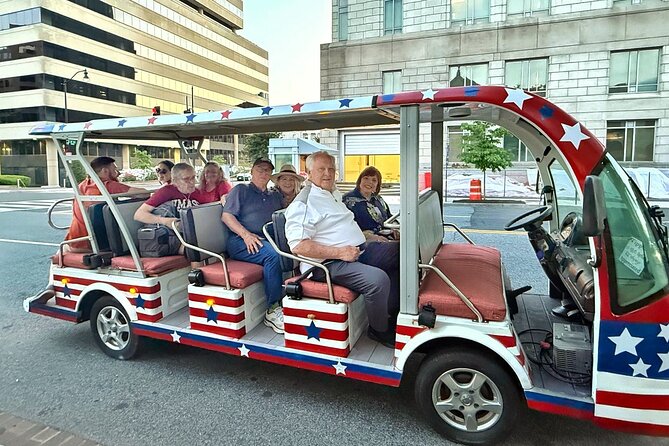
One of the earliest stops is Capitol Hill, which puts you in the orbit of the U.S. Capitol, Supreme Court, and Library of Congress area. This part of the tour is about more than architecture. It’s where the tour’s idea of American history gets grounded: how the government is built, how it’s represented, and why DC’s most famous buildings still shape daily life in the country.
You typically get a short window here (around 5 minutes). That means you’re not going to do a slow photo walk or an extended museum visit on this tour. But it works if your goal is orientation: you’ll see the Capitol area and understand why it’s such a central anchor for everything else on the National Mall.
If you want extra time inside, this is the kind of stop where you can build a separate plan afterward. This tour is great for the overview—then you choose what to expand.
National Gallery of Art and the art-and-science vibe near the Mall
Next up is the National Gallery of Art. Admission is listed as free in the tour info, which makes it an easier add-on for your longer-term DC plans. Even though your cart stop is brief, the point is simple: DC isn’t only monuments and presidents. It’s also art, and the Mall area connects government power to culture.
This is also where a guided cart tour shines. Without a guide, you might know it’s a big museum but not know how it fits into the larger story of the city’s public spaces. With a guide, the stop feels like part of a chapter, not a random detour.
If you’re the type who could spend hours in galleries, you’ll likely want to come back on your own. But for a two-hour tour, it gives you a meaningful taste.




U.S. Botanic Garden: the calm break in a fast loop
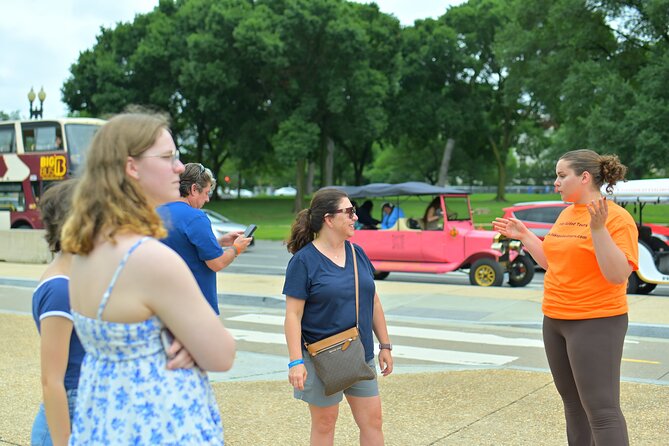
The U.S. Botanic Garden stop is a welcome contrast after the government buildings and museums. The idea here is a quick reset: plants, themed gardens, and a quieter atmosphere close to the Capitol area.
Because you’re on a cart and the schedule is time tight, don’t expect a long stroll through multiple garden sections. Think of it as a visual palate cleanser—enough to make you aware of the garden’s role in the DC experience, then you can decide if you want to return later.
If your trip includes kids or anyone who gets tired of monuments fast, this kind of stop is a smart inclusion.
National Museum of African American History and Culture: impact in a short time
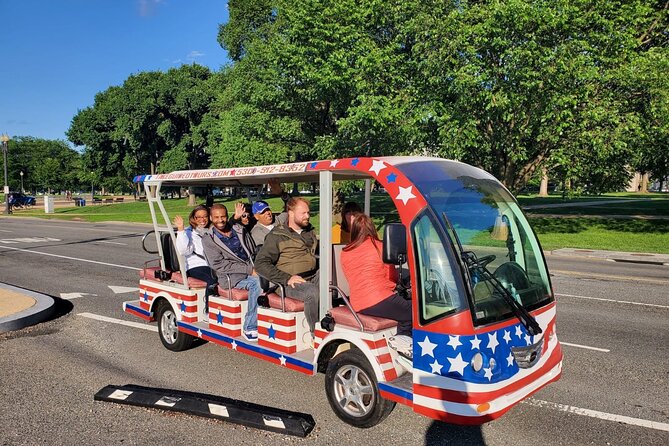
The tour includes a stop at the National Museum of African American History and Culture, which is one of the most powerful museum experiences in DC. Even with limited time, it matters that the tour places it on the same route as the national monuments.
The key value isn’t a full museum visit. It’s knowing where the museum sits and why it’s important. If you have only one day, that alone helps you plan where to spend your deeper time.
If your group wants to do the museum properly, treat this tour as the intro and then schedule the museum for later. For many people, that’s the best way to balance emotion and time.
Washington Monument and the Lincoln-to-Jefferson story arc
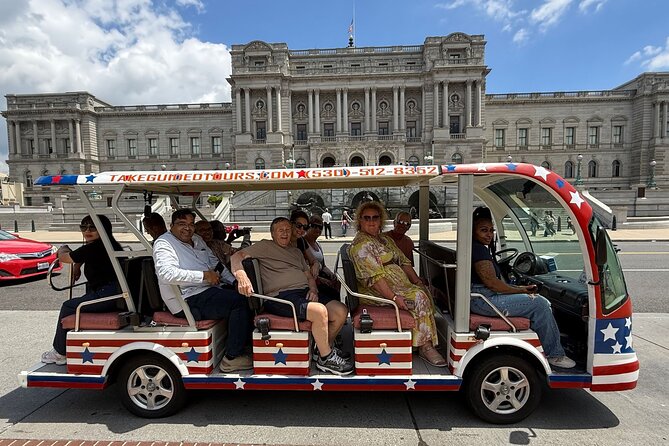
The Washington Monument stop is quick (about 5 minutes) and admission is listed as free. From here, you get a sense of scale. It also helps you understand how the Mall aligns so the major memorials feel connected rather than random.
Shortly after, the tour moves into the memorial area where presidents and civil rights leaders are represented. This is where narration really earns its keep. You’re not just seeing names on stone—you’re getting the context that makes the space feel like a timeline.
Thomas Jefferson Memorial: the short viewpoint stop
The Thomas Jefferson Memorial is listed with admission not included. That doesn’t mean the stop is useless; it means you should go in expecting a brief exterior and viewpoint experience.
It’s a good place to connect Jefferson’s role in American independence to the later story told by the rest of the monuments you’ll see.
Franklin Delano Roosevelt Memorial: plan for outside viewing
The Franklin Delano Roosevelt Memorial is also listed as admission not included. Again, treat it as a photo-and-context stop rather than an all-access walkthrough.
The tour’s value is the link between Roosevelt’s legacy and the Great Depression and World War II era themes referenced along the way.
Martin Luther King Jr. Memorial and Lincoln Memorial: two stops that anchor the loop
The Martin Luther King, Jr. Memorial gets about 10 minutes, and admission is listed as free. This longer window compared to some others is helpful because the memorial’s messages land best when you’re not rushing.
The Lincoln Memorial also gets about 10 minutes, with admission listed as free. Lincoln is the other half of the big-political story. Seeing these memorials back-to-back (King then Lincoln) gives your mental map a clearer moral and political arc.
If you’re the kind of visitor who likes to read inscriptions, this is one of the stops where you’ll likely wish you had a few more minutes. Still, for a cart tour, it’s enough time to absorb the atmosphere and get solid photos.
Vietnam Veterans Memorial and Korean War Veterans Memorial: expect emotional weight
The tour includes stops at both the Vietnam Veterans Memorial and the Korean War Veterans Memorial. These are not places designed for quick sightseeing. Even with short time, you’ll feel the shift in tone.
This is where a guided approach helps most. The narration keeps you oriented, and it helps you understand the purpose of the memorials beyond the visible names and statues.
If you’re traveling with someone who gets emotional easily, plan extra quiet time for this part of the route after the cart rolls away. Even a brief stop can stick with you longer than expected.
White House area and Chinatown: the culture-and-politics pairing
The tour includes a stop at the White House, with admission listed as free, and it’s typically a short photo moment (around 5 minutes). You might not get very close to everything, but you do get clear views and a sense of how the White House fits into the Mall corridor.
Then there’s a stop for Chinatown. That adds a practical benefit: you’re placed near a neighborhood known for food and walking, so you can continue your DC day with dinner ideas nearby.
Chinatown isn’t a monument stop, but it’s useful on a tour like this because you finish with options. You’ll already know where you are, and you can head out without needing a whole new orientation session.
Photo expectations: what you’ll get, what you won’t
This is a photo-friendly tour, but it’s still a two-hour electric cart experience. You should expect:
- Multiple short get-off-and-shoot moments
- Good views from sidewalks and viewpoints
- Some monuments you’ll see more clearly than you’ll get close to
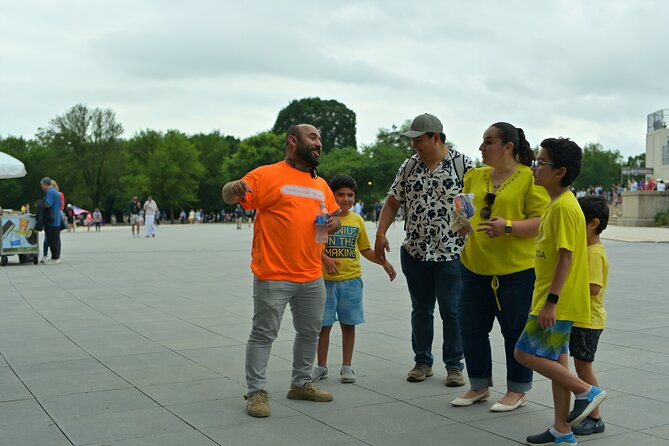
The good news: you’re not stuck with one awkward angle or one lonely spot. Several guides also help with photos for couples and families, and there’s at least one firsthand example in the tour feedback of a guide taking pictures for someone in front of multiple monuments.
If you’re planning a shot list, pick your top 3 must-photograph moments. Save energy. You’ll feel rushed if you treat every stop like a dedicated photo mission.
Comfort tips that make a real difference
A few practical things can improve your experience fast:
- Bring layers. Open-air carts mean wind stays in play, especially at night.
- If you’re sensitive to sound, sit where you can hear best. One piece of feedback suggested rear-seat audio can be harder to hear.
- Bring a camera that doesn’t depend on perfect lighting settings. Night shots look great, but only if your camera is ready.
- Plan for quick stops. Some sites list admissions not included, so you’ll likely stay with the exterior and viewpoint experience during this tour.
Also keep in mind that routing can change. One route interruption example involved a parade blocking parts of the city, and the driver adjusted. That’s normal in DC, and it’s good to know the tour doesn’t completely fall apart when something unexpected happens.
Value check: is $59 worth it?
At $59 per person for about 2 hours, the value depends on your goal. If you’re trying to do the whole DC monument circuit on your own with limited time, the cost can feel reasonable because you’re paying for three things:
- Guided explanation that connects landmarks into a story
- Transport by electric cart to reduce walking and backtracking
- Photo stops that let you actually capture the trip without turning it into a full-day grind
If you’re the type who wants long museum time, deep memorial reading, or lots of entry tickets, you’ll still need separate plans. But as an introduction, orientation, and hit-the-highlights experience, the pricing makes sense.
For first-time visitors, this can also prevent spending your only day in DC just getting oriented. Instead, you leave the tour with a map in your head and can choose where to go next.
Should you book this electric cart monument tour?
Book it if:
- You want a fast, guided National Mall highlights loop.
- You’re traveling with kids, older relatives, or anyone who gets tired with long walking.
- You’d rather spend money on a guided ride than on multiple transit headaches.
- Night monuments are on your wishlist and you want a comfortable way to do it.
Skip it (or pair it differently) if:
- You want long time inside major sites or you’re planning a full memorial reading marathon.
- You hate short stops and prefer slow, solitary museum visits.
- You need easy wheelchair-style access details beyond the general note that most people can participate. (The info here doesn’t spell out specific vehicle access features, so confirm if that’s a must.)
If your schedule is tight, this tour is a smart “get your bearings fast” move. It’s exactly the kind of DC experience that turns a pile of famous names into a place you can actually picture.
FAQ
How long is the DC Monuments Day or Night electric cart tour?
The tour runs about 2 hours (approx.).
How much does the tour cost?
The price is $59.00 per person.
Is the tour offered during the day, at night, or both?
It’s offered day or night, depending on the time slot you book.
Where does the tour start?
You meet at 333 G St NW, Washington, DC 20001.
What’s included in the price?
The tour includes a guided e-cart tour and a professional tour guide. It’s also mobile-ticketed.
How many people are on the tour?
The group size has a maximum of 20 travelers.
Is the tour in English?
Yes, it’s offered in English.
Are admission fees included for the attractions?
Some stops are listed as free in the tour info (for example, Capitol Hill, Washington Monument, MLK Memorial, Lincoln Memorial, and the White House). Thomas Jefferson Memorial and Franklin Delano Roosevelt Memorial are listed as admission not included. For stops where admission info isn’t stated, you should check before you go.
What should I wear since it’s an open-air cart?
The cart is described as having open sides, so dress for weather. Bring layers for wind and cold, especially at night.
How does booking work?
You receive confirmation at the time of booking, and the tour is near public transportation.