REVIEW · WASHINGTON DC
America’s 250th VIP Tour: Archives, Portraits & History 6 ppl Max
Book on Viator →Operated by Unscripted Tours · Bookable on Viator
Three hours, and you see the power of paper. This America’s 250th VIP Tour stitches together National Portrait Gallery portraits and the National Archives so you understand what the documents and faces shaped.
I like that it’s truly small (max 6), so your guide can point out details without rushing your questions. I also like the “highlights with meaning” approach—especially the interpretation tied to core documents you’ve heard of but probably never studied closely.
One thing to consider: the final stop at the National Museum of American History is very short on the schedule, so think of it as a fast preview, not a full museum day.
In This Review
- Key highlights
- VIP pace in Washington DC: small group, real access
- National Portrait Gallery: presidents, plus the building’s earlier life
- National Archives Museum: guaranteed entry and how to read America’s documents
- American History Museum stop: quick highlights, then keep going
- Guides who point to the right details (Dash and Meg effect)
- Price and value: what $200 buys in a 6-person VIP format
- Practical tips for your 2:00 pm start
- Should you book this America’s 250th VIP tour?
- FAQ
- What is the duration of the tour?
- How much does it cost?
- How large is the group?
- What’s included in the tour?
- Is admission included for the stops?
- Where does the tour start and end?
- What time does the tour start?
- Is bottled water provided?
- Is free cancellation available?
Key highlights
- Max 6 people for a calmer, more personal pace
- Reserved entry to the National Archives so you don’t waste time chasing access
- Portrait Gallery focus on presidents with context you can actually use
- Guides who call out what matters (including document and mural details from Dash and Meg)
- Tour ends inside the Smithsonian so you can keep exploring on your own
VIP pace in Washington DC: small group, real access
This is the kind of Washington tour that works because it refuses to be huge. With a maximum of 6 people, you get a guide who can slow down when a question lands. In a city where lines and crowds can steamroll your plans, that small size is a quiet kind of luxury.
The tour runs about 3 hours and starts at 2:00 pm. You’ll meet at Unscripted by Guided Tours DC at 400 7th St NW #102 and finish at the National Museum of American History. That ending matters. You’re not shuffled back out to the street at the first “wrap-up” moment—you’re dropped where you can keep going if something catches your eye.
The biggest practical win is that you get reserved entry to the National Archives. The archives are popular, and access can be a headache if you’re winging it. Here, you’re set up to walk in and spend your energy on the exhibits instead of logistics.
One more detail to plan for: there’s a note about moderate physical fitness. This isn’t an all-day walking challenge, but expect typical museum-and-city movement: stairs in places, walking between stops, and standing while you take in exhibits.
You can also read our reviews of more tours and experiences in Washington DC.

National Portrait Gallery: presidents, plus the building’s earlier life
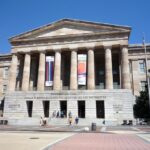
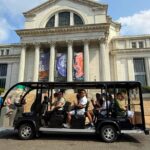
Your first stop is the National Portrait Gallery, housed in a former home of the US Patent Office. That backstory is more than trivia. It helps you notice how the building itself carries civic ambition—this was a place for ideas, records, and innovation, long before it became one of the best places in DC to focus on faces and political power.
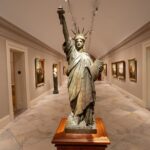
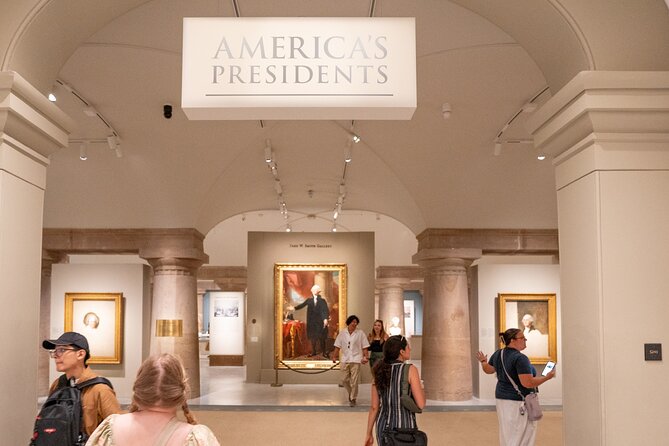
The schedule includes about one hour, which is enough time to see what the portrait galleries do well: connect people to the story. You’ll spend time on famous presidential portraits and related context. For me, the value here is that portraits aren’t just visual decoration. They’re a shortcut to understanding who mattered, how they wanted to be seen, and how presidential imagery has been shaped across time.
Since the tour is guided, you’re not left trying to interpret every name and date like a pop quiz. You’ll get help with what to look at and why certain portraits and displays connect to broader American history.
Possible drawback: the National Portrait Gallery can grow on you. One hour is a “hit the keys, not every note” amount of time. If you love political history and portraiture, you might want to plan extra time later on a different day.
National Archives Museum: guaranteed entry and how to read America’s documents
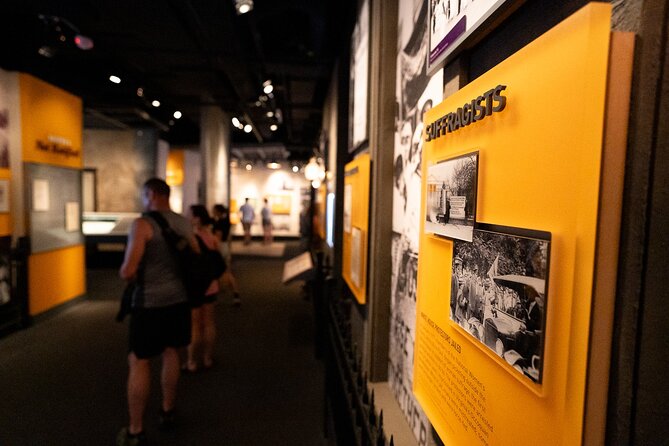
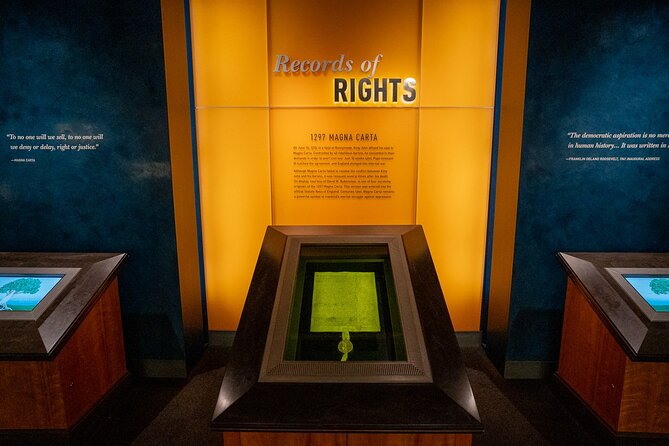
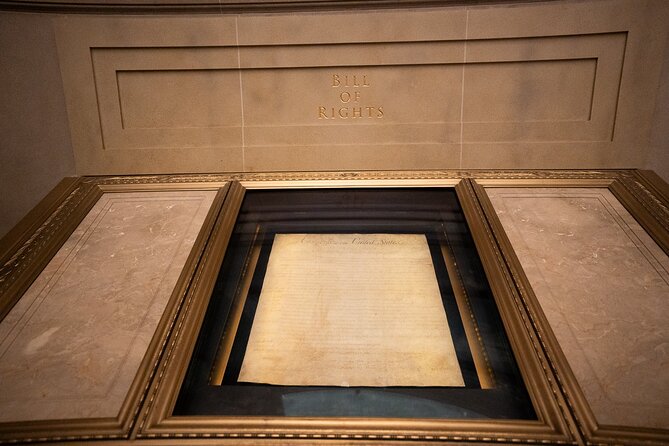
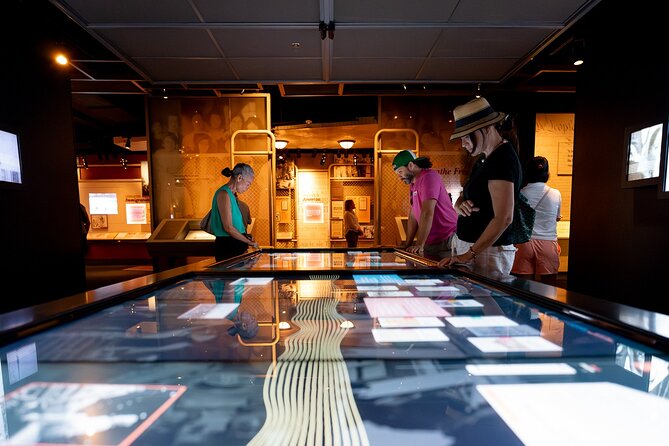
Next up is the National Archives Museum with guaranteed entry. This is the heart of the tour for anyone who likes history that has receipts—ink, paper, signatures, and the real-world stakes of the founding.
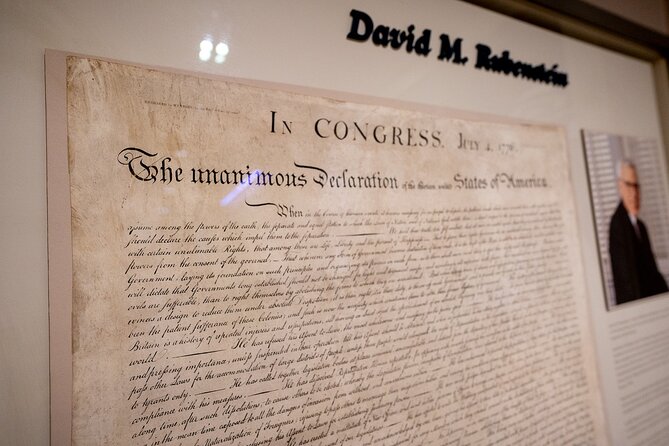
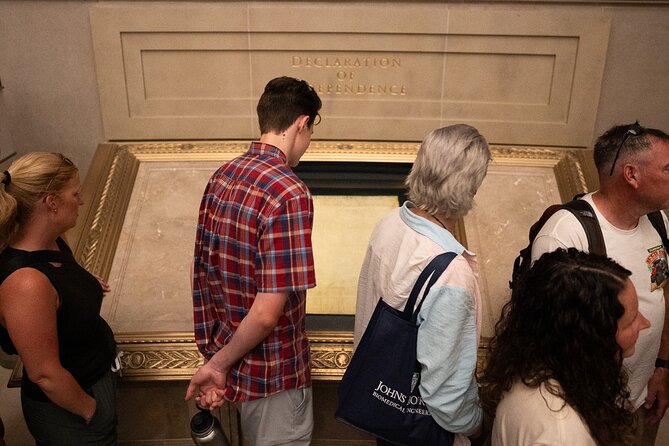
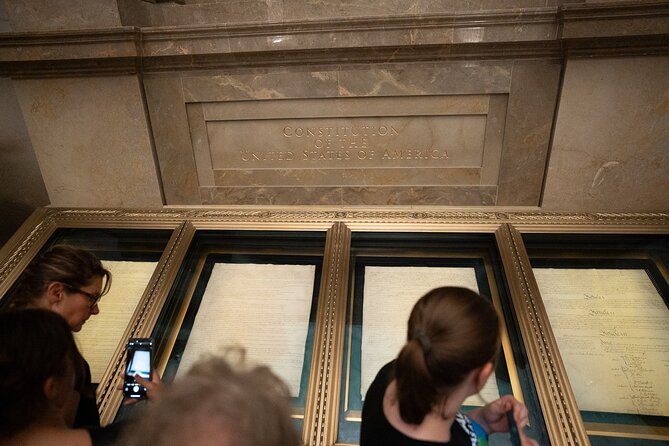
You’ll spend about 45 minutes here, with interpretation focused on America’s historic documents. The highlights are the foundational items you’ve heard about before: the Declaration of Independence and the Constitution. But the point isn’t just seeing them. The tour is designed to help you understand what you’re looking at so the time feels worthwhile rather than rushed sightseeing.
In the guide approach, there’s a clear theme from the feedback: guides point out the key things—sometimes even details you would miss if you just followed signage. One guide (Meg) was praised for explaining written-document details and for calling attention to story elements in murals. Another (Dash) was noted for being friendly and very information-heavy in a good way, sharing lots of insight without turning the tour into a lecture.
What you should do with that 45-minute window:
- Go in ready to look slowly at the document displays when the guide pauses.
- Treat the exhibits like “how to read history,” not like a checklist.
If you’re a museum “speed reader,” this stop may feel structured in the best way. You don’t have to decide what matters—you’re guided to the parts that create the big picture.
American History Museum stop: quick highlights, then keep going
The last stop is the National Museum of American History, where you’ll get highlights connected to presidents, inventors, civil rights, and democracy. The schedule shows a very brief slot here, so I treat it as a sampler platter: enough time for a guided orientation and a few meaningful objects, then you’re on your own for a longer browse.
Here’s why that can be a good plan. Finishing inside the Smithsonian means you can slow down after the tour if something pulls you in. Maybe you’re energized by what you learned at the archives and want more context. Or maybe you just needed a guided jumpstart before you tackle the museum hall-by-hall.
This stop is also practical for planning. You end at 1300 Constitution Ave NW, which puts you in one of the most convenient Smithsonian zones. If you’re pairing this with other DC sights, you’ve already arrived at a hub.
If your goal is to fully explore every gallery, you’ll need more time than this tour gives. But if your goal is to get smart, guided context in a tight window, this works well.
Guides who point to the right details (Dash and Meg effect)
A good DC museum guide is like a translator. Without that help, you can stand in front of important objects and still feel like you missed the punchline. The guide feedback for this experience points to a very specific strength: guides actively select the key things to notice.
Dash and Meg both came up in the feedback, and their style seems to match what many people want in a short tour:
- They’re friendly and approachable.
- They explain enough to make the displays click.
- They show you how to read written documents and related story elements, not just where to stand.
That matters because these museums are full of text and symbolism. If you don’t know what to hunt for, you can end up doing a lot of looking and not much understanding. A strong guide fixes that fast—especially at the archives, where every minute counts.
Also, small-group pacing helps. With fewer people, your guide can tailor explanations to your level of interest, or at least slow down when eyes get stuck on a display.




Price and value: what $200 buys in a 6-person VIP format
At $200 per person for about 3 hours, this isn’t a cheap bargain tour. It’s priced like a VIP-style guided experience—and for it to feel like value, you want the included components to matter to you.
Here’s the value math that makes sense:
- Reserved entry to the National Archives (a big deal in a place people queue for)
- A small group size that reduces delays and boosts interaction
- Guided interpretation at multiple major museums, so you’re not spending your whole time figuring out what to focus on
If you were doing this on your own, you’d still be paying for time and planning. You’d likely spend time managing entry for the archives, then sorting out which portrait galleries and exhibits are worth your limited attention. This tour compresses that planning into a single afternoon.
Where the price may feel less justified: if you already know exactly what you want to see, and you’re comfortable building your own archives-and-portraits plan quickly. In that case, you might prefer a self-guided route. But if you want “guided clarity” without giving up the flexibility to keep exploring at the end, the price starts to look fair.
Practical tips for your 2:00 pm start
This tour starts at 2:00 pm, which is a sweet spot for many DC visits: late enough that morning crowds are easing, but early enough that you still have daylight and energy for museum time after.
A few practical moves that will help you get more from the highlights:
- Bring your own water, since bottled water isn’t included.
- Wear shoes that handle lots of museum floors. Even with a short schedule, you’ll do steady walking between stops.
- Have your confirmation and mobile ticket ready on your phone. The experience is designed around that.
- If you’re sensitive to crowds, the max-6 group helps, but DC museums can still get busy—arrive early enough at the meeting point to settle in.
Also, if you care about the National Archives most, you’ll want to enter with curiosity. This tour gives you guided interpretation, but you’ll get extra value if you’re willing to look closely at the displays while the guide stops.
Should you book this America’s 250th VIP tour?
I’d book it if you want a short, guided “greatest hits” route that still includes real context. The best reason is the combo of small group size plus reserved Archives entry, which is the sort of practical advantage that’s hard to replicate if you’re planning solo.
I’d skip it if you’re hoping for a full-day museum immersion, because the final Smithsonian stop is brief and your time will be focused on highlights, not deep study. And if you already have a firm plan for what you want to see in each museum, you may find this tour less necessary.
If you’re trying to make the most of one afternoon in DC and you’d rather let a guide point out what matters, this tour is a solid bet—especially if documents, portraits, and the evolution of democracy are your thing.
FAQ
What is the duration of the tour?
The tour lasts about 3 hours (approx.).
How much does it cost?
It’s $200.00 per person.
How large is the group?
The maximum group size is 6 travelers.
What’s included in the tour?
Reserved entry to the National Archives is included.
Is admission included for the stops?
Admission tickets for the stops listed are marked as free on the tour summary.
Where does the tour start and end?
It starts at Unscripted by Guided Tours DC400 at 7th St NW #102, Washington, DC, and ends at the Smithsonian National Museum of American History at 1300 Constitution Ave. NW.
What time does the tour start?
The start time is 2:00 pm.
Is bottled water provided?
No, bottled water is not included.
Is free cancellation available?
Yes. You can cancel up to 24 hours in advance for a full refund.