REVIEW · FLORENCE
Combo Florence: Walking Tour with the the Accademia Gallery Tour
Book on Viator →Operated by Towns of Italy · Bookable on Viator
Florence hits different when you get the story with the scenery. This 3-hour combo blends a guided walk through the city center with skip-the-line access to the Accademia Gallery, so you spend less time stuck and more time understanding what you’re seeing. You’ll hear how Roman roots, medieval Florence, and especially the Medici shaped the art and ideas that still drive the city today.
I especially like how the walking part is paced like a real tour—Duomo Square, Piazza della Signoria, Oltrarno’s quieter stops, and the Arno river crossing—so you get variety without sprinting. I also love that the Accademia segment includes a guided look at Michelangelo’s David, not just a ticket.
One thing to consider: this is rain or shine, and you’ll be on your feet for the full walking portion. If your ideal Florence day is mostly indoor and slow, this may feel a bit brisk.
In This Review
- Key highlights you’ll care about
- A 3-Hour Florence Mix: Duomo to Ponte Vecchio, then Accademia
- Price and time value: what $78.98 buys you in real terms
- Where you start (and how the day flows)
- Stop 1: Piazza del Duomo and the cathedral-square feeling
- Stop 2: Piazza della Signoria, Palazzo Vecchio, and the David replica
- Stop 3: Palazzo Pitti from the outside—Medici power without the ticket
- Stop 4: Piazza Santo Spirito and Oltrarno’s calmer pace
- Stop 5: Ponte Vecchio—historic bridge, shop-lined sides
- Stop 6: Accademia Gallery—how to see David with guidance
- Guide quality, earphones, and pacing (the small things that matter)
- What you’ll learn: Medici power and Florence’s layered past
- Who this tour fits best (and who might want something else)
- Should you book Combo Florence with Towns of Italy?
- FAQ
- How long is the Combo Florence tour?
- Where does the tour start and end?
- Is the Accademia Gallery ticket included?
- How much does it cost?
- Is the walking tour part included?
- Do I need earphones?
- Does the tour run in bad weather?
- Are there any limits on group size?
- Can children join?
Key highlights you’ll care about
- Skip-the-line Accademia tickets so you can get to David faster
- Licensed English-speaking guide for both the street walk and the gallery time
- Earphones for groups over five, which helps you hear directions and explanations clearly
- 25-person maximum, which usually keeps the tour from feeling like a herd
- A smart “story route” that connects Medici power with the major landmarks you see in front of you
- Mobile ticket for smoother check-in on the day
A 3-Hour Florence Mix: Duomo to Ponte Vecchio, then Accademia
This is the kind of tour that helps you get your bearings fast. In just about three hours, you’ll move from Florence’s signature religious landmark area to major political art locations, cross the Arno, and then finish at the Accademia for the biggest name in sculpture.
The structure matters. The walk focuses on the places that shaped Florence’s identity—cathedral square, civic power at Palazzo Vecchio, Medici influence, and local life across the river—before you hit the museum highlight. That order helps the art make more sense once you’re inside.
You should also know what you’re committing to: a timed walk with set stops (about 30 minutes each at the main squares), plus roughly 1 hour inside the Accademia with a guided presentation of David and other works. It’s not an all-day museum crawl, so if you want time for wandering, you’ll need to plan that for afterward.
You can also read our reviews of more walking tours in Florence

Price and time value: what $78.98 buys you in real terms
At $78.98 per person, the big value isn’t just paying for access. It’s paying for two things that are hard to replicate on your own without added hassle: a guided street route that gives context and the skip-the-line Accademia entry that saves time when lines are long.
You also get several practical inclusions:
- A 1.5-hour guided Accademia Gallery tour with tickets included
- A licensed English-speaking guide for the walk and the gallery
- Earphones when the group is larger than five (useful for hearing details without craning your neck)
- The convenience of a mobile ticket
Meanwhile, some common costs are not included—there’s no mention of hotel pickup/drop-off, and admission at Palazzo Pitti is not included. So think of this as a well-paced “best-of with guidance” package, not a museum pass for every stop.
Where you start (and how the day flows)
Your tour begins at the Accademia Gallery: Via Ricasoli, 58/60, 50129 Firenze, right in the area where you’ll finish too. That’s a neat setup. You don’t have to figure out trains, taxis, or a complicated second meeting point after the walking portion.
The flow is straightforward:
1) You start near the gallery area, then go out on foot for the classic Florence landmarks.
2) You come back for the Accademia time slot, with skip-the-line help built in.
The tour caps at 25 people, which affects comfort. In a smaller group, you’ll usually have an easier time staying with the guide and hearing directions, especially during the tighter spaces around the squares and streets.
Stop 1: Piazza del Duomo and the cathedral-square feeling
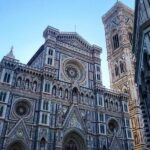
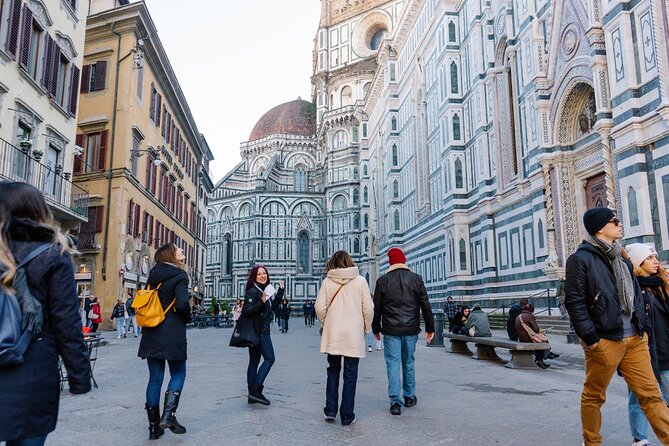
You’ll spend about 30 minutes at Piazza del Duomo. This is Florence’s central “you’re here” moment. The square sits right in the heart of the city, and it’s dominated by the Florence Cathedral area—so you’re surrounded by the architectural drama the city is famous for.
What makes this stop useful on a guided combo is that it’s not just a photo break. Your guide’s job is to connect what you see here—cathedral-centered design—with Florence’s larger historical arc, including the city’s medieval legacy and the Renaissance response to it. Even if you don’t go inside during this specific stop (admission ticket is marked as free for the stop itself), being in the right place helps the later art discussion click.
A small practical note: this area is busy by nature. Wear comfortable shoes and plan on moving at a steady pace rather than stopping for long lingering conversations.
Stop 2: Piazza della Signoria, Palazzo Vecchio, and the David replica
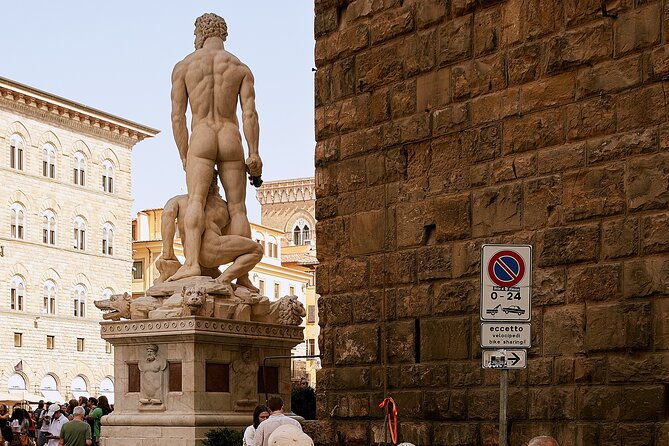
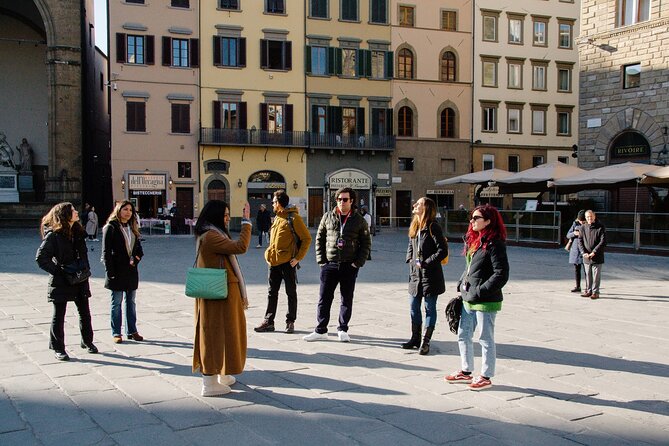
Next comes Piazza della Signoria for about 30 minutes. This is the civic brain of old Florence. You’ll have Palazzo Vecchio towering over the square—originally built as a fortress-turned town hall—so the energy is political even when you’re just walking through.
This stop works well because it mixes landmark sight lines with art history you can actually point to. The square includes the Loggia dei Lanzi, an open-air gallery with famous sculpture groups such as Cellini’s Perseus with the Head of Medusa and Giambologna’s Rape of the Sabine Women. Even if you’re not a sculpture specialist, having that list said out loud while you look around helps you notice details you might miss wandering alone.
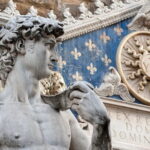
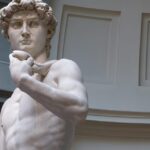
Also pay attention to the detail that matters for your later museum visit: there’s a replica of Michelangelo’s David marking the spot where the original once stood. It’s a clever setup. You see the David concept here in public memory, then later you get the real thing in the gallery.
You can also read our reviews of more museum experiences in Florence


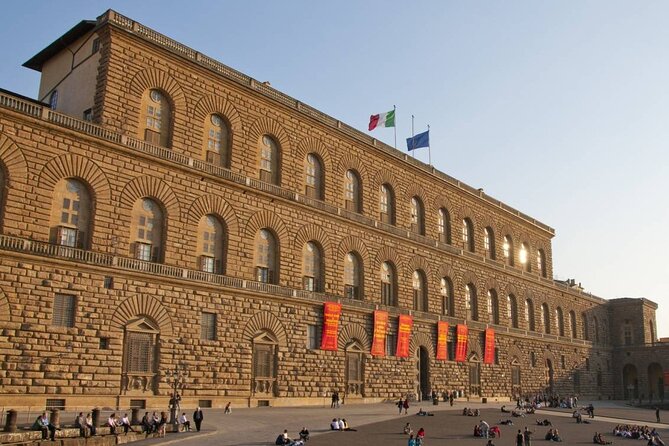
Stop 3: Palazzo Pitti from the outside—Medici power without the ticket
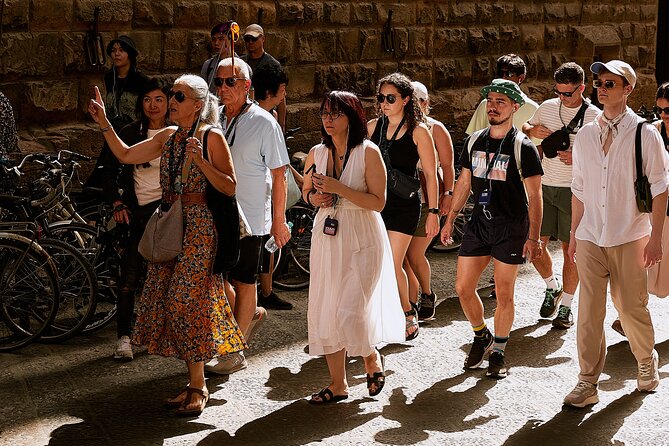
At around 20 minutes, you’ll stop at Palazzo Pitti on the south side of the Arno. This is where the story shifts from civic Florence to ruling-family influence. Palazzo Pitti began as a Renaissance palace for banker Luca Pitti, then became a major residence for the Medici family—one of the clearest examples of how money, patronage, and politics tied together.
One key consideration: admission isn’t included for this stop. So you’re getting the exterior and the historical framing, not a full interior visit. If you want to go inside, you’ll need a separate plan and ticket.
That said, the outside view is still worthwhile because it helps you understand why the Medici had both the wealth and the motivation to fund the art you’ll spend time seeing at the Accademia.
Stop 4: Piazza Santo Spirito and Oltrarno’s calmer pace
You’ll spend about 20 minutes at Piazza Santo Spirito in the Oltrarno district. This stop is the tour’s breathing room. The cathedral-area big sights and civic squares pull you in one direction; Santo Spirito shifts you into a more relaxed Florentine rhythm.
The value here is contrast. When your day includes major landmarks back-to-back, a quieter neighborhood square helps your brain reset. It’s also a chance to see Florence beyond the postcard front.
No ticket is required for this stop, so it’s a low-effort way to add texture to your day. If you want a little local-walk energy before the museum, this is where you get it.
Stop 5: Ponte Vecchio—historic bridge, shop-lined sides
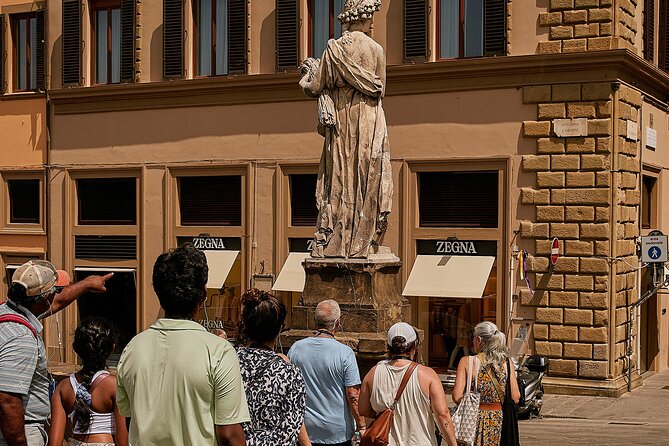
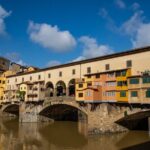
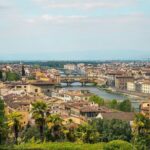
Then you cross over at Ponte Vecchio for about 20 minutes. This is one of Florence’s most iconic bridges, known for its medieval arches and the shop rows built along the sides.
Why this stop matters on a guided combo is simple: the bridge isn’t just scenery. It’s a reminder of how Florence shaped everyday life around its geography. You’re literally moving between districts, and the guide’s historical framing helps you read the city as connected spaces rather than isolated attractions.
If you’re hoping for perfect quiet photos, plan for crowds. This is a must-see spot for most people, so timing and patience matter.
Stop 6: Accademia Gallery—how to see David with guidance
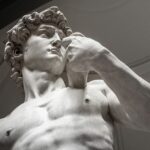
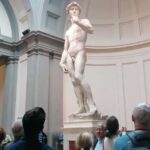
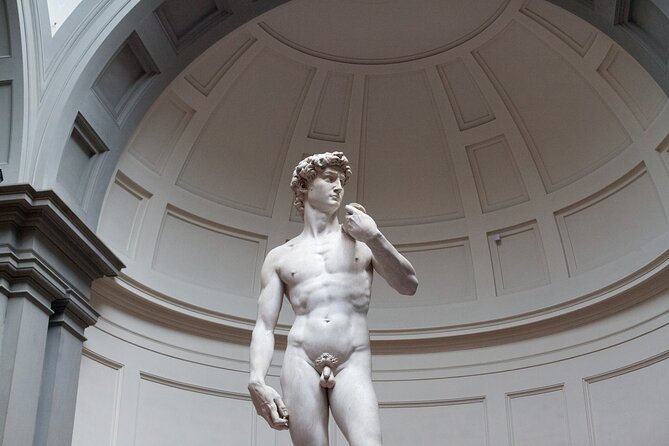
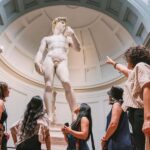
Your Accademia segment runs for about 1 hour, with the David of Michelangelo as the headline. Tickets are included and you get skip-the-line access, which is usually the difference between an enjoyable museum visit and an “I spent my time waiting” museum visit.
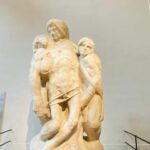
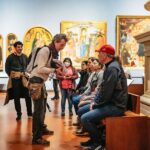
This isn’t just a self-guided ticket. You’ll have a guided tour inside the gallery where the focus includes David plus other masterpieces. Having someone explain what you’re looking at can change how you experience sculpture. Without guidance, you might only notice the obvious. With guidance, you also start seeing the smaller design choices—proportions, expression, and the kind of choices Michelangelo made to create impact.
One detail worth noting from the experience feedback: people highlight how fast and smooth the entry to see David feels when you have the skip-the-line setup. That means you can spend your energy inside, not outside.
Guide quality, earphones, and pacing (the small things that matter)
The tour runs with a licensed English-speaking guide on both the walking portion and the gallery. When a tour is split across street and museum time, communication quality becomes a big deal. You need clear directions outside, and you need explanations inside.
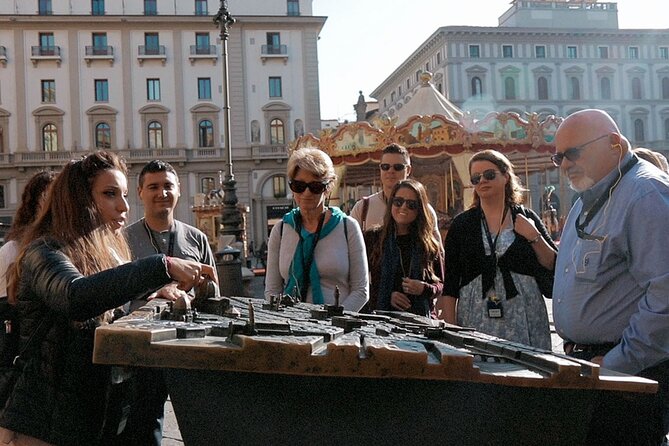
Earphones are included for groups larger than five. That may sound like a minor tech detail, but it can dramatically improve how much you absorb, especially at crowded squares where voices carry poorly.
You may also get a guide like Marta, who’s specifically mentioned as excellent—passionate about Florentine history and good at keeping the David visit moving efficiently. Even if your guide is someone else, the point stands: the guide isn’t an afterthought here.
Pacing-wise, the stops are set (Duomo and Signoria each about 30 minutes; the rest about 20), so you get structure. The downside of that structure is you can’t slow down and wander as freely as you might like. If you prefer open-ended exploration, treat this tour as your “guided anchor,” then give yourself extra free time after.
What you’ll learn: Medici power and Florence’s layered past
The guide’s storytelling connects the city’s big themes: Roman origins, medieval legacy, and the Medici rise to power through banking and patronage of arts and sciences. That theme isn’t a lecture for its own sake. It’s designed to help you connect what you see—squares, palaces, sculptures, and museum masterpieces—to how Florence became a machine for art and ideas.
This matters because Florence can feel like a list of famous sites if you don’t have the thread connecting them. When the walk and gallery are tied to the same storyline, you stop seeing attractions and start seeing causes and effects.
It’s also a good reminder that Florence wasn’t just Renaissance brilliance. The city’s earlier layers set the stage, and the later artists built on that ground.
Who this tour fits best (and who might want something else)
This combo is a strong fit if you:
- Want major sights plus real context in a tight time window
- Like walking tours with a guide instead of wandering solo from stop to stop
- Care most about Michelangelo’s David and want it handled efficiently
- Prefer small-group comfort (up to 25 people)
It might be less ideal if you:
- Want lots of free time at each stop
- Don’t do well with extended walking in any weather
- Are looking for museum time beyond Accademia (since Palazzo Pitti admission is not included)
If you’re visiting for a first time and want a clean, high-impact “Florence overview + David,” this is exactly that.
Should you book Combo Florence with Towns of Italy?
Book it if you want a smart, time-saving Florence plan that combines the city’s landmarks with the one museum stop that truly anchors your Renaissance focus. The skip-the-line Accademia piece is the practical win, and the guided route is what turns the photos into understanding.
Skip or consider alternatives if you want lots of unstructured time, or if you strongly dislike weather-dependent walking days. Otherwise, this is a solid value buy for people who want to see the essentials with explanations and not lose hours in queues.
FAQ
How long is the Combo Florence tour?
It runs for about 3 hours in total, including a guided tour inside the Accademia Gallery.
Where does the tour start and end?
Both the start and end point are at the Accademia Gallery, Via Ricasoli, 58/60, 50129 Firenze FI, Italy.
Is the Accademia Gallery ticket included?
Yes. The Accademia Gallery skip-the-line tickets and the guided gallery tour are included.
How much does it cost?
The price is $78.98 per person.
Is the walking tour part included?
Yes. It includes a 1.5-hour guided walking tour of Florence, plus the Accademia time.
Do I need earphones?
Earphones are provided for groups of more than five people, to help everyone hear the guide.
Does the tour run in bad weather?
The tour runs on rain or shine.
Are there any limits on group size?
Yes. The tour has a maximum of 25 travelers.
Can children join?
Children and teens under 18 must be accompanied by at least one adult, or they may be excluded with no refund if the requirement isn’t met.