REVIEW · ROME
Rome Art Walking Tour Who Killed Caravaggio
Book on Viator →Operated by What About Tours · Bookable on Viator
Caravaggio leaves clues all over Rome. This 2-hour Baroque art walking tour turns the city into a mystery board, with a licensed local guide explaining Caravaggio’s dramatic story as you walk from site to site. I especially like the street-to-church storytelling, where the art connects to the places tied to his life and legends. You’ll also get a gentle, curiosity-driven pace that makes heavy art history feel readable, even if you’re not the type to read museum labels all day.
One thing to consider: this is a tip-based tour, so the ticket price is only part of the equation. If you want long, quiet time inside churches (or deep museum-style looking), you may find the stops feel brisk—because the guide keeps the story moving.
In This Review
- Key things to know before you go
- Starting at Piazza della Minerva: the easy meetup and smart kickoff
- Pantheon and Raphael’s tomb: ancient engineering with immediate art payoff
- Piazza Navona area churches: where Caravaggio’s drama becomes a physical experience
- Church of St. Louis of the French (San Luigi dei Francesi)
- Sant’Agostino
- Palazzo Madama: politics, power, and the Baroque world Caravaggio lived in
- The streets of the story: Tomassoni, Lena, and Caravaggio’s own house sites
- Via di Pallacorda: the murder scene
- Vicolo del Divino Amore: Lena and the painter himself
- Palazzo Borghese and Il Circolo della Caccia: ending with power and exclusivity
- Price and logistics: what $4.83 really buys you in Rome
- What makes the tour feel special: the story structure (and why it works)
- Who this Caravaggio walk is for (and who should choose differently)
- Should you book Who Killed Caravaggio in Rome?
- FAQ
- How long is the Who Killed Caravaggio walking tour?
- How much does the tour cost?
- Where do you meet, and where does the tour end?
- What time does the tour start?
- Is the tour in English, and how big is the group?
- Do I get a mobile ticket?
- Is admission required for the stops?
- What Caravaggio-related art will I see?
- Are tips included in the price?
- Cancellation policy (quick note)
Key things to know before you go
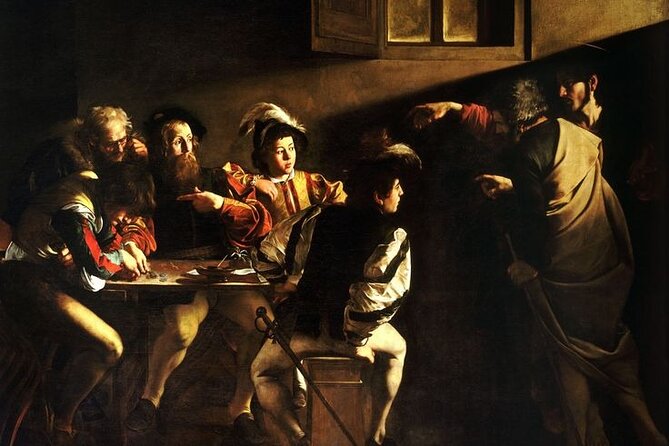
- A murder-mystery theme that actually teaches: you connect Caravaggio’s works to the people and events his paintings were wrapped around.
- Churches with major Caravaggio works: you’ll focus on places where his originals are still displayed.
- A small group cap (max 25): you should be able to hear the guide without sprinting across Rome.
- Guides with real Caravaggio energy: on past departures, guides like Simone, Ivan, and Jacopo have brought strong storytelling and calm pacing.
- A route that pairs Rome’s ancient bones with Baroque drama: you’re not only in the 1600s—you’re walking through the layers that made Caravaggio’s world.
Starting at Piazza della Minerva: the easy meetup and smart kickoff
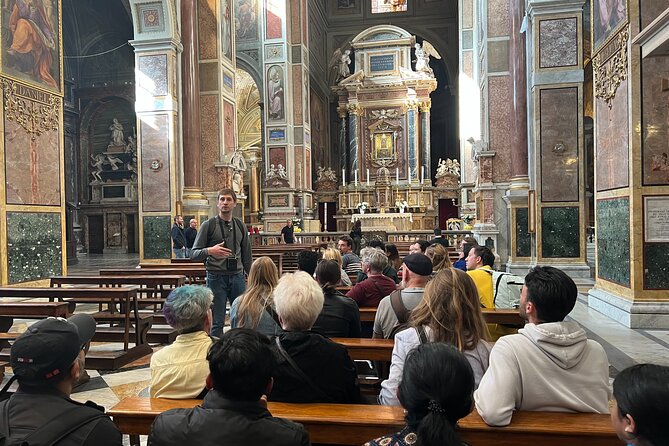
The tour starts in Piazza della Minerva, near the Pantheon area, and that location is handy. You get a clean, recognizable meeting point before heading deeper into the Baroque side of the center. The tour is timed for a 5:00 pm start, so you’re walking in late-day light rather than the noontime crush.
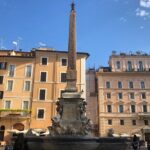
Piazza della Minerva is compact, which matters on a walking tour. You’ll take in Bernini’s Elephant and Obelisk and the nearby Santa Maria sopra Minerva—built over an ancient temple linked to Minerva. That sets up a good mental trick: you learn to see Rome as a city that keeps rebuilding the same ideas in different styles.
I also like how the opening stop prepares you for the tour’s tone. The guide doesn’t treat Caravaggio like a distant name on a plaque; you feel like you’re being led through a living story set in real streets.
You can also read our reviews of more walking tours in Rome
Pantheon and Raphael’s tomb: ancient engineering with immediate art payoff
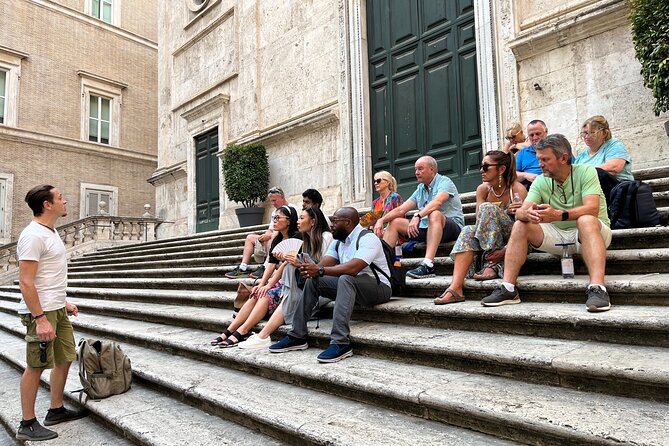
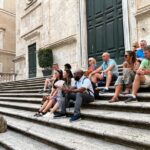
From Minerva, you head to the Pantheon, one of the best places in Rome to start thinking about art as engineering. The building wraps you in its giant domed roof and that central oculus, where daylight pours in from above. It’s not just impressive to look at—it’s a reminder that artists in Caravaggio’s era were living in a city full of technical feats.
You’ll also hear about Raphael’s connection here, since he’s resting in the Pantheon. That’s useful for the tour because it places Caravaggio in a wider Renaissance-to-Baroque continuum. You stop seeing Caravaggio as a lone rebel and start understanding him as part of an art world that was already changing fast.
If you’ve only seen the Pantheon once and it felt like a quick photo stop, this tour gives it context. You get to look again, with the story in your head this time.
Piazza Navona area churches: where Caravaggio’s drama becomes a physical experience
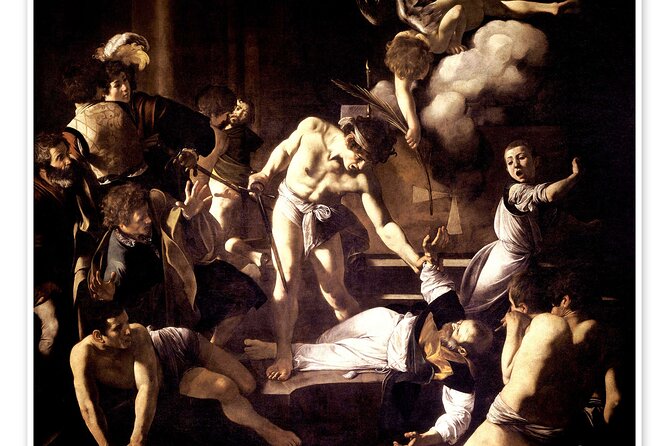
The “main event” energy really begins around the churches near Piazza Navona. This is where the tour’s theme pays off, because you’re not just hearing about Caravaggio—you’re seeing major works.
Church of St. Louis of the French (San Luigi dei Francesi)
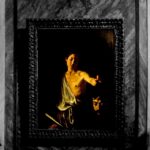
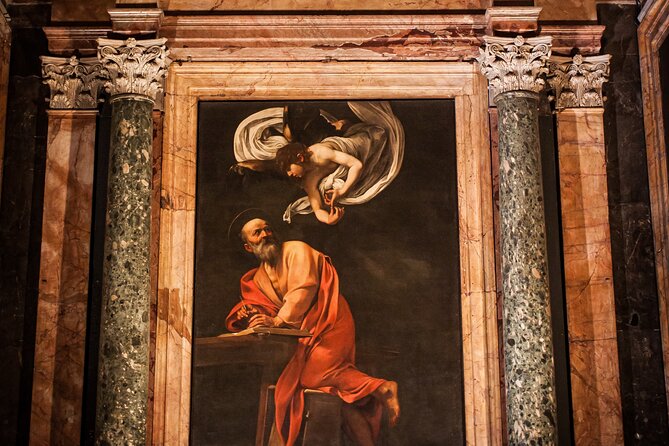
At San Luigi dei Francesi, you focus on the Contarelli Chapel, home to three Caravaggio masterpieces depicting the life of St. Matthew. This is classic Caravaggio: strong emotion, dramatic light, and scenes that feel like they’re happening in front of you rather than in the distant past.
Even if you only know Caravaggio from general reputation, this stop makes his style tangible. You’ll see how his figures carry tension—body language does the storytelling, not just the paint. And because it’s in a church that’s still in use, it feels less like a study collection and more like religious art meant to hit you in the gut.
Sant’Agostino
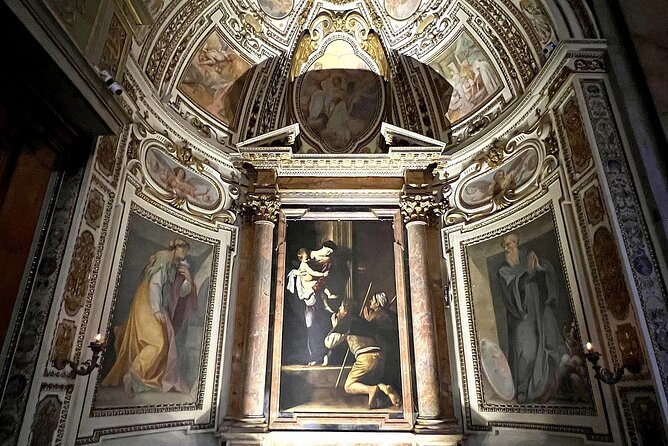
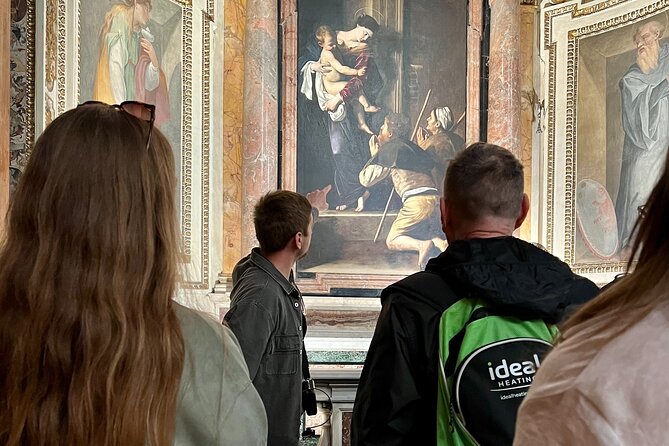
Next is Sant’Agostino, another church where Caravaggio’s work stays on display. You’ll see Caravaggio’s Madonna di Loreto, plus a fresco by Raphael of Isaiah. That pairing is a smart move for your understanding: it helps you notice how Baroque intensity and Renaissance clarity sit side by side in the same city space.
One practical note: these churches can have different lighting and visitor flow at different times. If you want to see details, stand where the guide tells you, then shift your position slightly rather than craning from one spot. It’s an easy way to get the art without turning your neck into a bargaining chip.
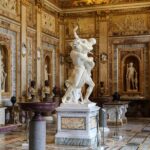
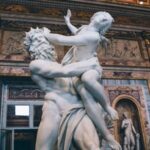
Palazzo Madama: politics, power, and the Baroque world Caravaggio lived in
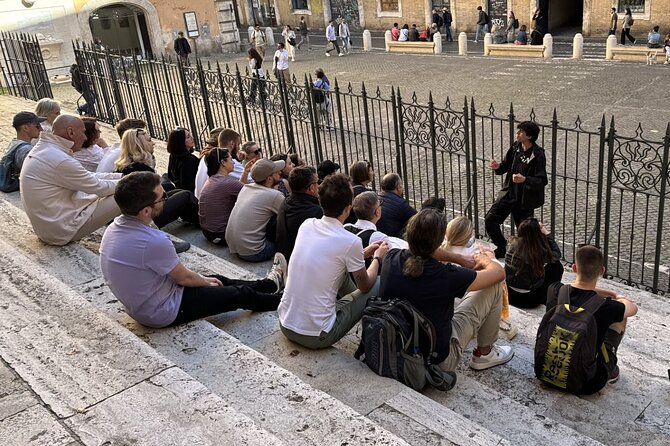
You also pass by Palazzo Madama, a Baroque palace originally built in the 16th century and now home to the Italian Senate. The guide’s focus here is less about architecture trivia and more about the social world behind the art.
You’ll look at the elegant design and grand courtyard, and hear how this kind of Roman aristocratic space connects to influence—money, status, and patronage. That matters because Caravaggio’s career wasn’t built in a vacuum. His dramatic style met real institutions and real patrons who had opinions about what art should do.
This stop can be a good breather, too. Churches are intense; palaces give your eyes a different kind of information—lines, scale, and power expressed through stone.
The streets of the story: Tomassoni, Lena, and Caravaggio’s own house sites
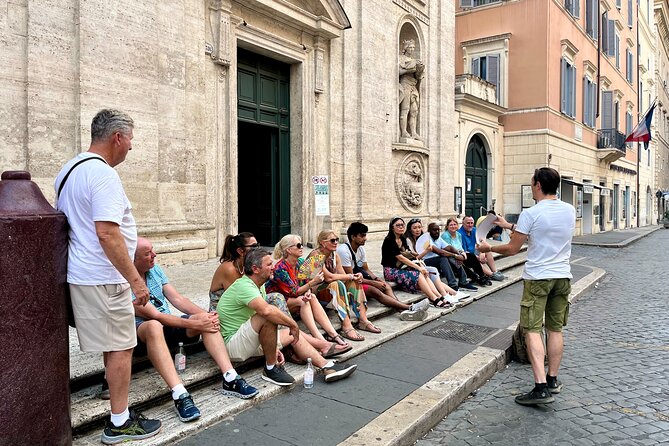
Not all the tour is about churches. A meaningful chunk is tied to specific street locations connected to Caravaggio’s life, turning Rome into a set you can walk through.
Via di Pallacorda: the murder scene
At Via di Pallacorda, you’ll hear about the murder of Tomassoni, Caravaggio’s victim. This is where the title theme starts to feel more than marketing, because the route connects a dramatic episode to real street geography.
This part works best if you treat it like a “guided map” in your head. Don’t just listen for facts—watch how the streets connect, because Rome’s layout is part of how old stories survive.
Vicolo del Divino Amore: Lena and the painter himself
Then you reach Vicolo del Divino Amore, where the guide points to two linked ideas: the house of Caravaggio’s model, Lena, and the house tied to Caravaggio himself. The tour frames these as part of the same human story: people, relationships, reputation, and scandal.
This is also one reason the walk feels so engaging. You’re not only learning about what he painted; you’re learning how a person in early modern Rome could become a headline through real-world connections.
A quick realism check: narrow lanes mean sound carries and space gets tight. If you’re someone who likes personal space, hang slightly behind the guide during the tightest moments, then step closer when you stop moving.
Palazzo Borghese and Il Circolo della Caccia: ending with power and exclusivity
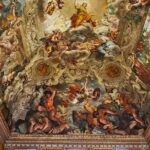
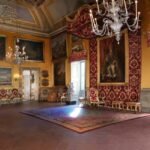
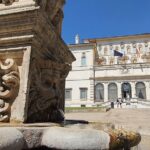
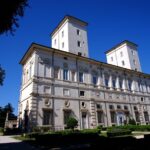
The tour finishes at Palazzo Borghese near the Spanish Steps area. Palazzo Borghese is tied to the influential Borghese family, and the story here zooms out from Caravaggio to patron networks and elite culture.
You’ll learn about Il Circolo della Caccia, a 17th-century secretive, elite club established by the Borghese family. It was a gathering place for noblemen and intellectuals, used for art exhibitions and discussions, along with private hunting activities. The point of this stop is to show the surrounding ecosystem—who could fund art, who could spread reputation, and who could control access.
This ending lands well because it explains why Caravaggio’s dramatic style mattered to the people with influence. It also helps you leave with a clearer picture of how art, politics, and social standing overlapped.
Price and logistics: what $4.83 really buys you in Rome
At $4.83 per person, this tour is priced extremely low for a 2-hour walk that includes a licensed local guide and a concentration of art stops. That means your money is going to storytelling and route planning rather than heavy-ticket museum entry.
The trade-off is that tips aren’t included. Expect to tip if you enjoyed the guide’s pacing and explanations, since guides work for tips alone. If you’re budgeting, treat the ticket as the baseline and plan a tip amount you feel good about.
You’ll also get a mobile ticket, and the tour is offered in English. Group size is capped at 25, which matters because it helps keep the guide from shouting over a crowd while you’re trying to see art.
As a final practical point: the tour is often booked about 33 days in advance on average. If you’re traveling in peak season, don’t wait until the last minute to lock in a spot.
What makes the tour feel special: the story structure (and why it works)
The best part of this experience is the way it turns art history into cause-and-effect. Instead of walking past paintings like background scenery, the guide builds a chain of “why this happened” as you move between scenes.
I like that the tour is playful without becoming silly. The murder mystery framing keeps you curious, but the guide keeps the focus on what’s actually in front of you: the works and the people tied to them.
And the guides’ energy tends to be a consistent theme. I’ve seen people mention Simone, Ivan, and Jacopo as standouts for being enthusiastic, informed, and respectful with the pacing. What you should expect in your own experience is a guide who listens, then adjusts the story to your interest without cutting it short.
One small trade-off to watch: during the walking segments, the guide may answer questions while moving. If you want every detail, it helps to stay near the guide rather than hanging to the side where you lose the words. When you reach the stops, that’s when you’ll get the clearest art-focused explanation.
Who this Caravaggio walk is for (and who should choose differently)
This tour is a great fit if you want Rome art history that moves at a human speed. You’ll enjoy it most if you like narratives, if you appreciate Baroque drama, and if you’re curious about the real-life tension around Caravaggio’s career.
It’s also a good match if you’re squeezing art into a busy itinerary. A 2-hour format, plus free admission at key stops as listed, makes it a manageable activity even on a packed day.
If you want a slow, silent, museum-like experience—long periods staring at brushwork with no interruptions—this might feel too story-driven and too time-focused. You’ll get plenty of art, but not the kind of deep solo study you might prefer.
Should you book Who Killed Caravaggio in Rome?
Yes—if your idea of a great Rome day includes art with a plot. The route is built around places where the art still exists in front of you, and the mystery theme gives you a reason to pay attention. With Caravaggio works at San Luigi dei Francesi and Sant’Agostino, plus Raphael’s connection at the Pantheon, you’re stacking major visual payoff into a short walk.
Book it sooner if your dates are fixed. With an average advance booking window around a month, you can avoid the stress of last-minute availability.
And when you go, do one simple thing: plan to ask yourself a question at every stop. Who is this person, and why does this scene matter? By the end, you’ll feel like you solved something—not just learned it.
FAQ
How long is the Who Killed Caravaggio walking tour?
It lasts about 2 hours.
How much does the tour cost?
The price is $4.83 per person.
Where do you meet, and where does the tour end?
You meet at Piazza della Minerva, and the tour ends at Palazzo Borghese (Piazza Borghese).
What time does the tour start?
It starts at 5:00 pm.
Is the tour in English, and how big is the group?
The tour is offered in English, and it has a maximum of 25 travelers.
Do I get a mobile ticket?
Yes, it includes a mobile ticket.
Is admission required for the stops?
The listed stops are marked as admission ticket free, so you generally do not need to buy entry tickets for those specific locations.
What Caravaggio-related art will I see?
You’ll see Caravaggio works at San Luigi dei Francesi (the Contarelli Chapel, including three works about St. Matthew) and at Sant’Agostino (including Madonna di Loreto). You’ll also hear about Caravaggio-related story locations in nearby lanes.
Are tips included in the price?
No. This is a tip-based tour, and the guides work for tips alone.
Cancellation policy (quick note)
Free cancellation is available up to 24 hours before the start time for a full refund.