REVIEW · ROME
Rome Private Golf Cart Tour
Book on Viator →Operated by Imperio tours · Bookable on Viator
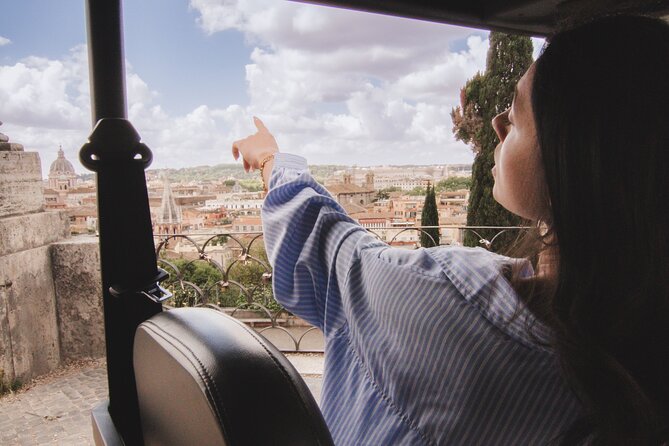
Three hours in Rome, minus the road rage. This private golf cart tour is built for comfort and flow, letting you slip along streets that buses and cars can’t. You get a guide who tells the story in plain English, with quick photo breaks at major sights.
I especially like two things: the hotel pickup makes the start painless, and the cart keeps you moving even when the city feels hot, crowded, or chaotic. And if you want more or less time at a specific spot, the guide adjusts in real time—something you’ll feel most on a tight 3-hour schedule.
One thing to consider: the big monuments are mostly short stops, and several require separate tickets (including the Colosseum and Pantheon). So if you’re the kind of person who likes a long, slow visit inside, this may feel more like a highlights ride than a full deep-dive day.
In This Review
- Key things that make this Rome golf cart tour work
- Why a golf cart is such a smart way to see Rome
- The pickup setup and where you start (Piazza Santa Maria Maggiore)
- The route’s story: Trajan’s Market to Piazza Venezia
- Colosseum up close: photos, stories, and a tight timing window
- Circus Maximus and the Orange Garden viewpoints
- Bocca della Verità and Teatro di Marcello: quick looks from outside
- Campo de’ Fiori’s street life, then the Pantheon and Trevi
- How the tour stays flexible (so you don’t feel boxed in)
- Tickets, what’s included, and why it affects your value
- When 3 hours is the right length (and when it isn’t)
- Price and planning: how far ahead to book
- Should you book this Rome private golf cart tour?
- FAQ
- How long is the Rome private golf cart tour?
- What does the tour cost?
- Is this tour private?
- Where do we meet, and does the tour end nearby?
- What language is the guide?
- Are monument admission tickets included?
- Are snacks included?
- Can I cancel for a full refund?
- How far in advance should I book?
Key things that make this Rome golf cart tour work
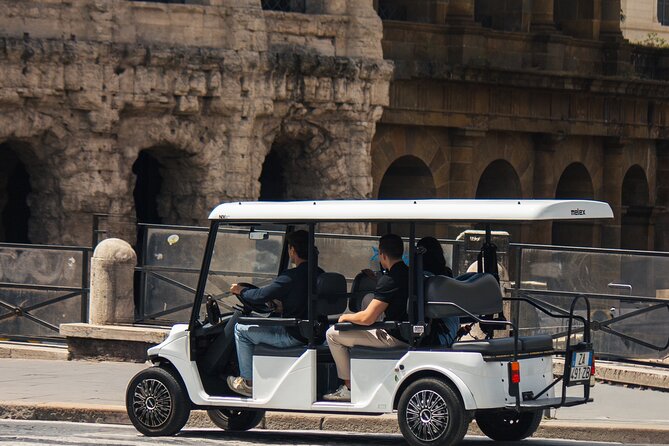
- Private golf carts with pickup so you’re not stuck waiting on strangers or wrestling public transit.
- English-guided storytelling at each stop, with guides like Matteo and Val showing serious enthusiasm.
- Short, efficient sight windows that still leave time for photos and a bit of wandering on your own.
- Side-street access that helps you dodge a lot of Roman traffic friction.
- Customizable pacing so you can lean more toward ancient ruins, viewpoints, or movie-famous sights.
- Mixed ticket situation: Giardino degli Aranci is included, while places like the Colosseum and Pantheon are not.
Why a golf cart is such a smart way to see Rome
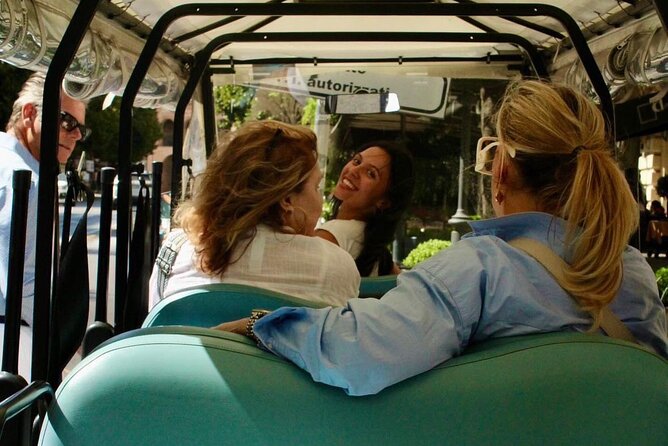
Rome can be a lot even for seasoned travelers. Streets are narrow, crowds spill out at peak times, and walking between sights can eat up your day faster than you expect.
That’s where a golf cart changes the vibe. You still get to step out at the highlights, but you spend far less time stalled in traffic or planning the next crosswalk. The cart also gives your guide flexibility to get you closer to areas that are hard to reach with regular vehicles—so you keep your momentum.
And because this is private, you can move at a pace that fits your group. If someone needs a slower rhythm, or you want an extra minute for a photo, it’s easier for the guide to adapt than in a fixed-group bus tour.
You can also read our reviews of more private tours in Rome

The pickup setup and where you start (Piazza Santa Maria Maggiore)
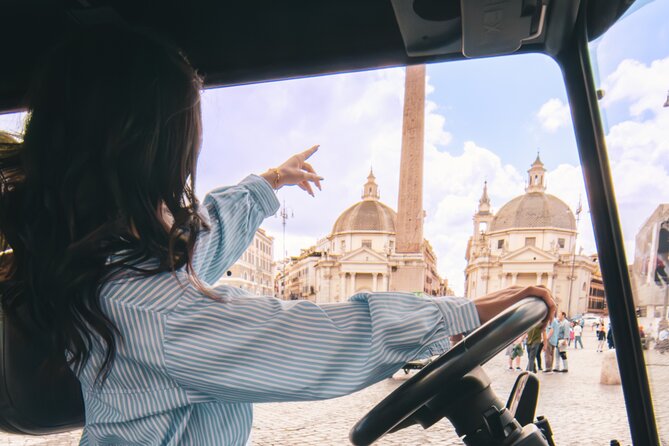
The tour begins at P.za di Santa Maria Maggiore, 7a, 00186 Roma RM and ends back at the meeting point. Pickup is offered, and it’s one of the main reasons this tour feels low-stress, especially if you’re staying near major hubs.
I like that the meeting point is a real square area rather than a vague “meet here” point that forces you to guess. Still, give yourself a little buffer so you can find the group without rushing—Rome has a knack for making you do extra turns before you notice the street you need.
Also note the tour is offered in English, so you won’t feel like you’re piecing together the story from signs. Your guide’s job here is to connect what you’re seeing to what it meant in ancient Rome, and the cart makes that easier because you’re not away from the guide for long stretches.
The route’s story: Trajan’s Market to Piazza Venezia
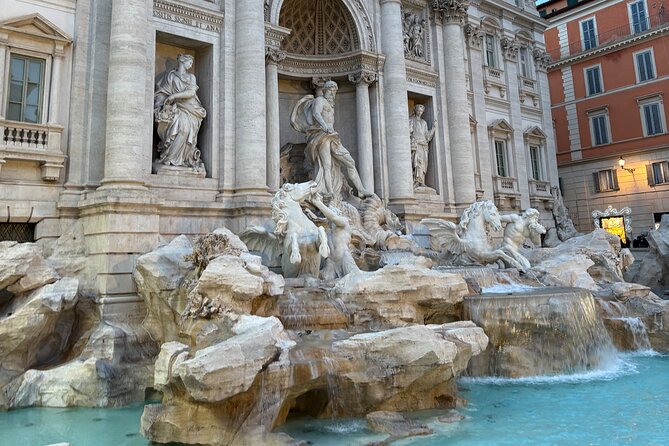
This tour doesn’t feel like a random checklist. It reads more like a guided walk through Rome’s layers, starting with big commercial energy and moving toward the city’s most photogenic icons.
You pass Trajan’s Market, which the guide frames as an ancient commercial hub. Even from the cart, it’s the kind of stop where you start noticing details you’d miss at full speed—ruins aren’t just leftover stone; they were once part of how people lived, traded, and worked.
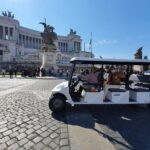
Then you roll toward Piazza Venezia, with views of Altare della Patria and Palazzo Venezia, including the famous speeches linked to Mussolini. This is one of those “Rome is never just one era” moments. You’re not only looking at ancient structures; you’re also seeing how later history claimed the stage.
If you like understanding how the city’s past and present overlap, this portion sets the tone nicely. If you prefer quiet, off-the-grid stops, you might find the square moments feel a bit more intense—but the cart keeps it manageable.
Colosseum up close: photos, stories, and a tight timing window
The Colosseum is the headline stop, and you’ll step out to admire it up close. The tour allows about 20 minutes here, with admission not included.
This is a good rhythm if you want that wow-factor without spending half your day in a ticket line or wandering for hours. You’ll get time for photos and for the guide to connect gladiator games and ancient spectacles to what you’re looking at right now.
The drawback is straightforward: 20 minutes is not a full visit inside (and tickets aren’t included). If your goal is long explanations inside the complex, or you want to read every detail at a museum pace, this stop will feel short.
Still, for many visitors, it’s the ideal compromise: see it from the best angles, learn why it mattered, then move on before you lose the day to crowds.
Circus Maximus and the Orange Garden viewpoints
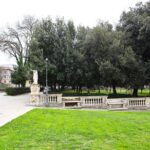
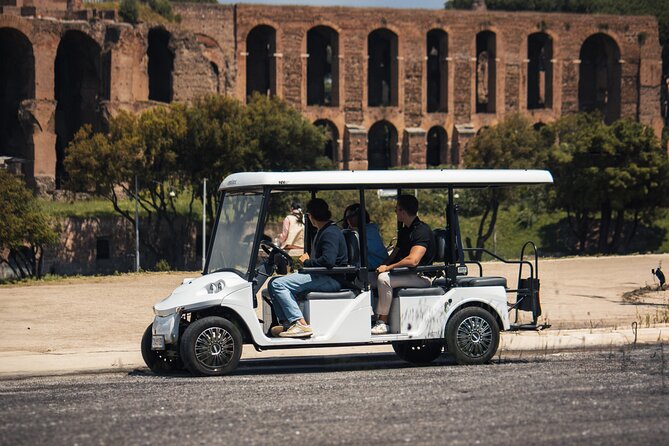
Next comes Circo Massimo (Circus Maximus), with a 10-minute stop. Admission is listed as free, and the guide paints a vivid picture of chariot-racing crowds—imagine the scale, even when today’s view looks quiet.
This stop works because it’s wide-open space. That makes it easier to get photos with the Palatine Hill backdrop, and it also keeps the pacing from feeling too stop-and-go.
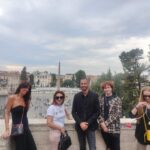
Then you head to Giardino degli Aranci (Orange Garden) for about 15 minutes, and this is the one stop where admission is included. If you want Rome’s postcard views without paying for a long detour, this is often the payoff moment of the tour.
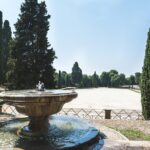
The Orange Garden is a hilltop pause with orange trees and panoramic sightlines. It’s also a great “reset” between heavy hitters. You’ll still be with the guide, but the tone shifts to slower strolling and quick photo time rather than racing from one ruin to another.


Bocca della Verità and Teatro di Marcello: quick looks from outside
Two stops that many visitors love for their pop-culture pull are Bocca della Verità and Teatro di Marcello—and both are short.
At Bocca della Verità, you’ll spend around 5 minutes. Admission isn’t included, and you’ll admire the ancient marble mask from outside while the guide covers the legend associated with it. If Roman Holiday is part of your trip memories, this stop hits in an instant.
Then you move to Teatro di Marcello for another 5 minutes. Again, admission isn’t included, and you’ll view the ruins from outside as the guide explains its role as an ancient performance venue and its architectural influence.
The consideration here is also straightforward: these are fast “see it, learn it, photograph it” moments. If you’re the type who wants deep interior access and long reading time, you’ll likely wish you had more.
But if you want variety—big amphitheater energy, a movie-famous mask, and another layer of ancient performance architecture—these two stops give the tour texture without dragging.
Campo de’ Fiori’s street life, then the Pantheon and Trevi
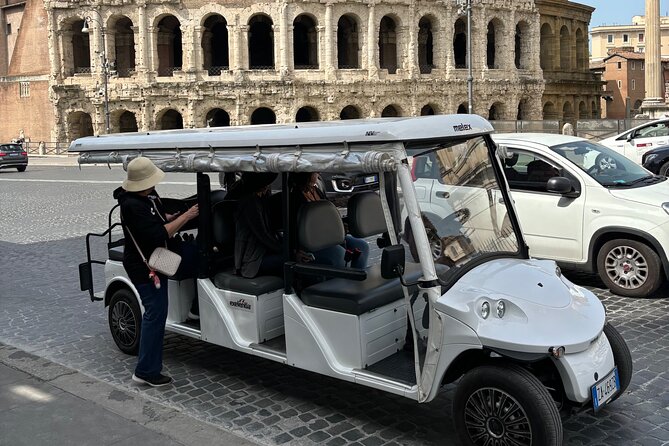
After the ancient-performance segment, the tour slows down in a different way with Campo de’ Fiori. You get about 15 minutes here, with admission free.
This square is known for markets across centuries, and the guide helps you notice what makes it feel alive today. Even if you don’t plan on buying anything, it’s one of the best places to feel the city’s rhythm without needing a separate walking tour.
From there, you head to the Pantheon, where the stop is about 10 minutes. Admission isn’t included, so you may need your own plan for entry if that’s part of your priorities. Still, you get the chance to view the iconic dome and columns with the guide explaining what you’re looking at.
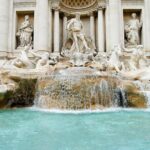
Then comes Trevi Fountain, a 15-minute stop with admission free. The guide covers the origin of the coin-toss tradition and the fountain’s legend set in motion by how people behave around it. And yes, the best use of this stop is photos plus a little time just watching other people do the tradition.
The timing strategy is the key here: Pantheon and Trevi are crowded and photo-demanding. By keeping each stop focused, the tour helps you see them without losing your whole schedule to lines and slow-moving crowds.
How the tour stays flexible (so you don’t feel boxed in)
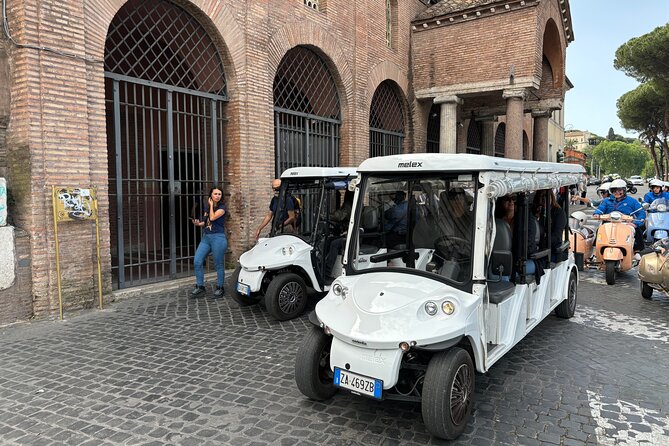
This experience is built for customization. Your guide asks what you care about most, then steers the pacing so you’re not stuck watching a scripted route that ignores your interests.
In practice, this can mean more time at viewpoints if your group loves photos, or a tighter feel at the squares if you’d rather prioritize monuments. Guides such as Matteo and Val are highlighted for making the story click, not just reciting dates.
It also helps if you’ve already visited a major site and want a different angle. Since you’re on a private cart with a professional guide, it’s easier to shift the order of emphasis inside the overall time window.
If you’re traveling with kids or teens, this flexibility matters even more. You want stops that feel meaningful, not exhausting. A fast but well-explained route can keep attention better than an all-day march.
Tickets, what’s included, and why it affects your value
The tour includes private transportation, insurance, pickup service, and a professional guide. It’s priced at $181.02 per person, for about 3 hours.
Here’s the value math that matters: you’re paying for guide time plus the convenience of private cart travel that compresses the day. That’s why this feels like a smart use of money—especially in heat, if your walking stamina is limited, or if you just want to maximize the number of “must-see” Rome moments.
What you should plan for is admissions. The tour does not include tickets for several major sites, including the Colosseum, Bocca della Verità, Teatro di Marcello, and the Pantheon. Meanwhile, Giardino degli Aranci is listed as admission included, and Circo Massimo, Campo de’ Fiori, and Trevi Fountain are listed as free.
So before you book, think about your personal priorities:
- If you want to enter every monument, you may need to budget separate tickets on top of the tour price.
- If you’re happy with guided views, photos, and key context, the included/free stops help keep the total spend reasonable.
When 3 hours is the right length (and when it isn’t)
A 3-hour private tour is a sweet spot for a first visit or for a day when you don’t want to burn half your energy on transit. It also helps if your Rome time is short, because you still get major icons like the Colosseum, Pantheon, and Trevi.
But it’s not built for a slow, museum-style day. The stops are intentionally time-boxed, which means you’ll get highlights rather than deep exploration. If you’re the kind of traveler who likes to sit with a place for 45 minutes, plan either to add time before or after the tour.
One more practical note: the cart experience is the star here, so arrive ready to move. It’s a short loop, and your group will cover a lot of ground without lingering long at each corner.
Price and planning: how far ahead to book
At $181.02 per person for roughly three hours, this is positioned as a premium convenience day. You’re not just buying a ride; you’re buying a private guide with vehicle access that helps you avoid some of Rome’s worst bottlenecks.
The tour is described as being booked about 60 days in advance on average, which tells me it’s popular and timing matters. If you’re traveling during peak season or you have a tight schedule, booking earlier gives you more options.
Also, if you’re hoping to tailor the tour heavily—more viewpoint time, fewer crowds, or a specific focus—booking earlier improves your odds of aligning guide and timing.
Should you book this Rome private golf cart tour?
Book it if you want a comfortable, private way to see major Rome sights in a short time, especially if heat and walking distance are factors. This tour shines when you want guided context fast, photo-friendly stop windows, and the flexibility to steer the day a bit.
Skip it (or pair it with other time) if your priority is long interior visits at the Colosseum or Pantheon, or if you know you’ll want extended wandering beyond a quick guided stop. In that case, you may feel constrained by the time limits and separate ticket needs.
If you fall in the middle—want the icons, like learning as you go, and prefer to spend your energy on the city rather than on logistics—this is a strong value buy for Rome.
FAQ
How long is the Rome private golf cart tour?
It’s about 3 hours.
What does the tour cost?
The price is $181.02 per person.
Is this tour private?
Yes. It’s a private tour/activity, and only your group participates.
Where do we meet, and does the tour end nearby?
The start is at P.za di Santa Maria Maggiore, 7a, 00186 Roma RM, Italy. The activity ends back at the meeting point, and pickup is offered.
What language is the guide?
The tour is offered in English.
Are monument admission tickets included?
Not for all sights. Admission is not included for the Colosseum, Bocca della Verità, Teatro di Marcello, and the Pantheon. Giardino degli Aranci is listed as admission included, and Circo Massimo, Campo de’ Fiori, and Trevi Fountain are listed as free.
Are snacks included?
No. Snacks are not included.
Can I cancel for a full refund?
Yes, free cancellation is available up to 24 hours before the experience for a full refund.
How far in advance should I book?
On average, it’s booked 60 days in advance.