REVIEW · ROME
Borghese Gallery Private Tour with Skip-the-Line Entry
Book on Viator →Operated by Doooing Experience · Bookable on Viator
Nothing says Roman highlight like Bernini.
This private Borghese Gallery tour is built around your time: skip-the-line admission plus a live English guide who points out what most people miss. You’ll move through the gallery in a tight 2-hour loop, with multiple start times to match your schedule.
Two things I really like here are the guide-led storytelling (artworks get explained with meaning, not just names) and the use of headsets if you need them, so you can actually hear the guide without leaning in. The itinerary is also focused on big-ticket pieces, so you’re not wandering for your money.
One consideration: some rooms may close for refurbishment, and during the Jubilee Rome can have restoration-related access changes. That can affect what you see, so I’d check your messages right before you go.
In This Review
- Key highlights to look for before you go
- Why the Borghese skip-the-line private setup matters
- Meeting at Piazzale Scipione Borghese and starting the visit right
- Stop 1: Apollo and Daphne (Bernini’s climax in marble)
- Stop 2: Pauline Bonaparte as Venus Victrix (Canova’s political mythology)
- Stop 3: Two busts of Cardinal Scipione Borghese (Bernini’s face study)
- Stop 4: Truth Unveiled by Time (Bernini’s allegory with a missing figure)
- Stop 5: David (marble tension from 1623 to 1624)
- What private really means inside the gallery
- Price and value: what you’re paying for at $361.23
- Timing and crowds: book ahead and pick a smart start time
- Who this Borghese private tour suits best
- Should you book this Borghese Gallery private tour?
- FAQ
- How long is the Borghese Gallery private tour?
- Is skip-the-line entry included?
- Is it really private?
- What language is the guide?
- Do I get a mobile ticket?
- What if some rooms are closed during refurbishment?
- Is transportation included to the meeting point?
Key highlights to look for before you go
- Skip-the-line entry so you spend time inside the gallery, not outside in queues
- Private, small-group feel so you can ask questions and set a calmer pace
- Headsets provided if needed for clear listening
- Major sculpture stops built around famous Bernini and Canova works
- Mobile ticket for simpler entry on the day
Why the Borghese skip-the-line private setup matters
Rome’s biggest museum bottleneck is often simple: lines. The Borghese Gallery is famous enough that waiting can cut into the part you actually care about. This tour solves that with skip-the-ticket-line entrance and the admission fees handled with your tour. Translation: you get into the collection faster, and your guide can start the explanations right away.
The “private” part also changes how the visit feels. Even inside a museum, you’ll get a more personal rhythm. If you’re someone who likes to ask questions, or you want extra context for why a sculpture was made, this format tends to work better than a fast group march.
And with a 2-hour duration, you get an efficient overview. The Borghese Gallery isn’t huge in the way some museums are, but it’s dense in masterpieces. This tour focuses on a smart selection so you don’t leave feeling like you only saw “the famous stuff on the surface.”
You can also read our reviews of more private tours in Rome

Meeting at Piazzale Scipione Borghese and starting the visit right
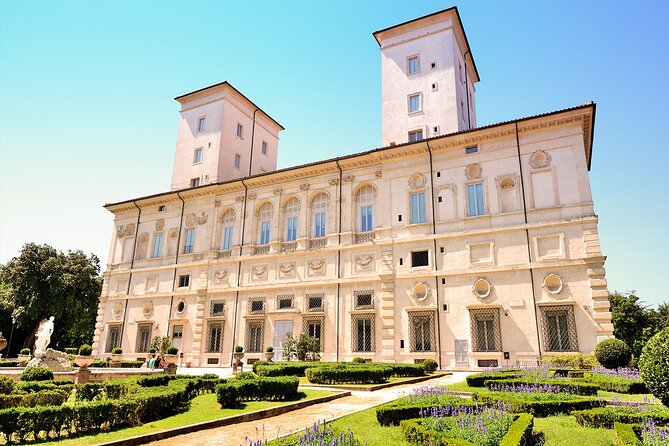
Your tour starts at Piazzale Scipione Borghese, 5, 00197 Roma RM, Italy, and it ends back at the same meeting point. It’s near public transportation, which matters because you don’t want the start of your museum day to become a transportation scavenger hunt.
Because the tour lasts about 2 hours, you’ll want to arrive a bit early, get your bearings, and be ready when the group gathers. That’s also when you’ll want to confirm you have your mobile ticket ready on your phone.
One practical tip: if you’re traveling with anyone who needs extra time (mobility constraints, hearing support, or just a slower pace), plan to be early so you’re not rushed before the first artwork.
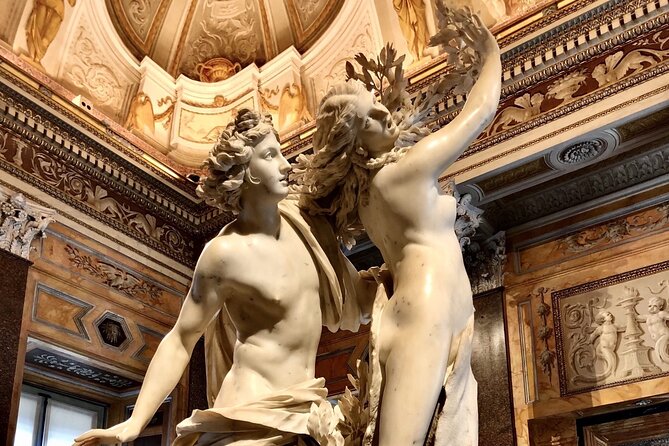
Stop 1: Apollo and Daphne (Bernini’s climax in marble)
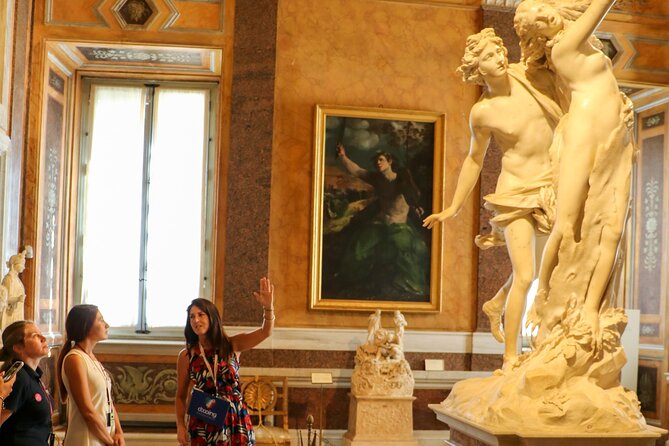
Your first sculpture stop is Apollo e Daphne, a large marble work created by Gian Lorenzo Bernini and executed between 1622 and 1625. It depicts the dramatic culmination of the Apollo and Daphne story from Ovid’s Metamorphosis.
What makes this stop special is how Bernini turns narrative into motion. You’re not just looking at a “myth sculpture.” The guide’s job here is to help you read the scene—how the story is frozen at the moment of transformation and tension.
Time allocation is about 20 minutes, which is long enough to notice details without turning it into a slow classroom lecture. One drawback to keep in mind: if you’re expecting only a quick look, this is the exact opposite of that. The value is in explanation and visual cues.
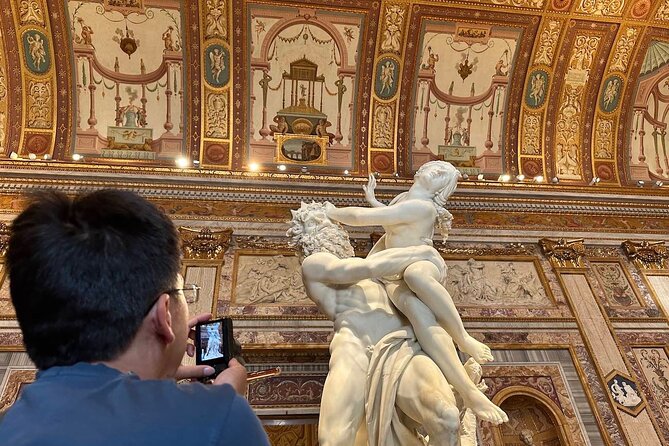
Stop 2: Pauline Bonaparte as Venus Victrix (Canova’s political mythology)
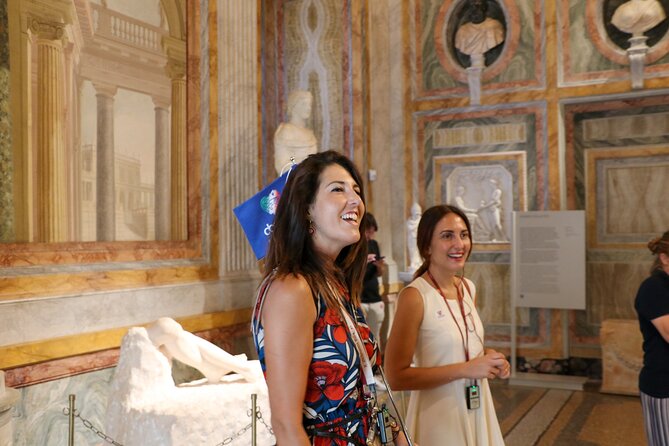
Next is Pauline Bonaparte as Venus Victrix, a life-size neo-Classical portrait sculpture by Antonio Canova. It was executed in Rome between 1805 and 1808, commissioned by Camillo Borghese after Pauline married into the Borghese family.
This is a great stop if you want to understand how art, power, and image-making work together. The guide can help connect the dots: this isn’t just a beautiful figure, it’s also about status and transformation—how portraiture can borrow the authority of mythology.
A neat detail you’ll learn here: the sculpture moved after Pauline, passing through Turin and Genoa before arriving at the Borghese Gallery around 1838. That kind of provenance story helps you see the sculpture as something that traveled through real human choices, not just an object that magically appeared in Rome.
Time allocation is again about 20 minutes. If you like “why this exists” as much as “what it looks like,” you’ll get good value here.
Stop 3: Two busts of Cardinal Scipione Borghese (Bernini’s face study)
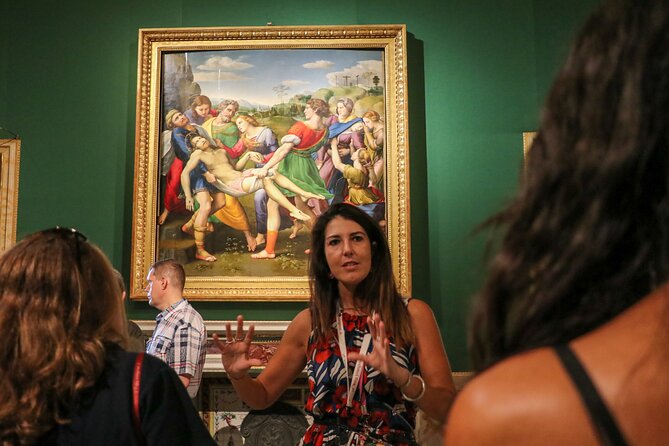
After that, you’ll spend about 15 minutes on Two Busts of Cardinal Scipione Borghese. Both are marble portrait sculptures by Gian Lorenzo Bernini, dated 1632, and both versions are located at the Borghese Gallery.
Busts can feel dry if you’re expecting big action like David’s showdown. But this is where a good guide earns their keep. Portrait sculptures reward attention: the way hair and facial structure are handled, how the expression communicates authority, and how Bernini manages presence even in a small form.
The main consideration: if you’re purely in “famous statues only” mode, busts can feel less immediate than full figures. Still, this stop is worth it if you want to understand how the Borghese collection builds an entire world of power and personality around its patrons.
You can also read our reviews of more museum experiences in Rome
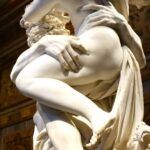
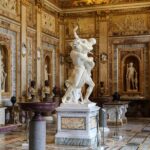
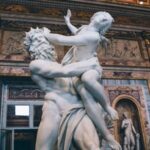

Stop 4: Truth Unveiled by Time (Bernini’s allegory with a missing figure)
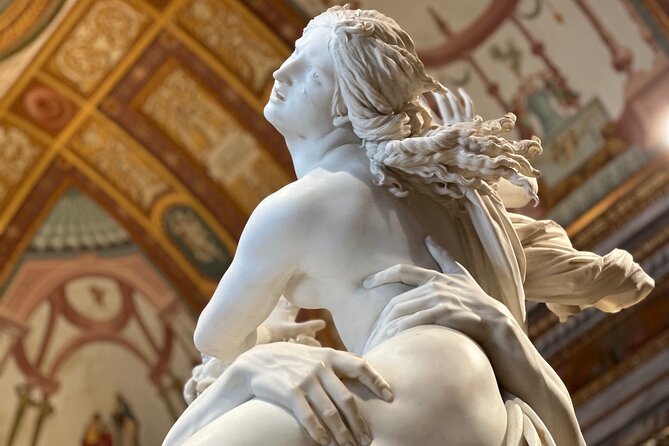
Your fourth stop is Truth Unveiled by Time, a marble sculpture executed between 1646 and 1652 by Bernini. The concept shows Truth as a naked young woman being unveiled by a figure representing Time above her.
Here’s the detail that makes the artwork more interesting: the figure of Time was never executed. Bernini adapted the idea later by adding the Time element in 1665, which changes how the story of the sculpture feels in your mind.
This is the kind of stop where hearing the explanation helps you “see” what you might otherwise miss. Without context, the work can come off as just another nude allegory. With context, it becomes about intention, incompletion, and artistic problem-solving.
Time allocation is about 15 minutes. That’s enough to cover the conceptual twist without rushing you through it.
Stop 5: David (marble tension from 1623 to 1624)
Finally, you’ll reach David, the life-size marble sculpture by Bernini, commissioned by Cardinal Scipione Borghese to decorate the Borghese Gallery. The work was completed in about seven months, from 1623 to 1624.
The subject is biblical: David just before throwing the stone that will bring down Goliath. You’ll also get the fuller context—this is not only about the moment of action, but the moment right before consequence.
What I like about finishing here is that the energy spikes. Early stops are about narrative and image-making. David is about force, focus, and readiness. It’s the sculpture stop that often sticks with people after the tour ends.
Time allocation is about 20 minutes. That length helps because David is one of those works where angles and surface details matter. If your guide points out what to look for, you’ll notice more than you thought possible in a short window.
What private really means inside the gallery
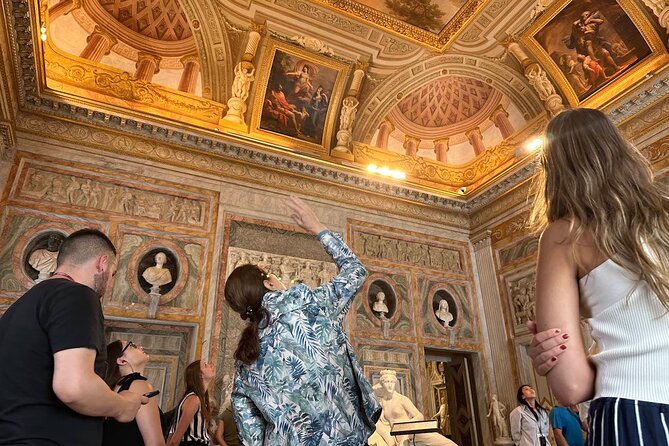
“Private” isn’t just a marketing word here. The tour is designed so your group stays together and you follow the guide’s pacing through the gallery. That matters in a collection like this, where the difference between a good visit and a great one is usually attention.
Headsets are also part of the value. If you’re in a louder environment or you prefer not to constantly turn your head to hear, having audio support lets you focus on the art instead of the logistics.
And the guide’s approach seems to be a major strength. Multiple people highlight guides who bring humor and make the stories feel like they connect to something real. If you like learning that feels practical and human, you’ll probably enjoy this tour more than a dry facts-only format.
Price and value: what you’re paying for at $361.23
At $361.23 per person, this is not a budget outing. But it’s also not just someone telling you where to stand. Your price includes:
- the live guided tour
- skip-the-ticket-line entrance and entrance fees
- private tour access for your group
- headsets if needed
That bundle is the key to the value. In practice, skip-the-line access can be the difference between a relaxed first hour and a stressed one. Entrance fees are also handled, which removes one of the most annoying “oops” moments when you’re trying to coordinate timing.
Private guidance in a high-demand museum also costs more than group tours because you’re buying time, clarity, and a calmer pace. If you’re going with a small circle and you care about understanding Bernini and Canova beyond the postcard level, this price can feel fair.
If you’re only hunting for the biggest names and you’re comfortable reading on your own, a cheaper group option might work better. But if you want context and a guided storyline through the masterpieces, this tour is built for that.
Timing and crowds: book ahead and pick a smart start time
This tour is commonly booked around 22 days in advance. That tells me two things: demand stays strong, and it’s wise to lock in your slot early rather than waiting until your Rome schedule is set.
Start times also matter. Choose a time when you’re not rushed by the rest of your day. Because it’s a tight 2-hour tour, you’ll enjoy it more if you treat it like your main museum block, not a side quest squeezed in.
Also note: during the Jubilee, some monuments may be under restoration and access routes could change. Even if the gallery itself is your destination, Rome’s general movement can feel different. Check your messages before you go, especially if your day includes other nearby sights.
Who this Borghese private tour suits best
This is a strong match if you:
- want skip-the-line entry and a guide-led route through top works
- prefer learning with a human guide over reading alone
- like art explanations tied to story, symbolism, and technique
- are okay with a focused selection rather than seeing every room
It can be less ideal if you:
- want a super casual, walk-and-look visit with no depth
- expect to cover the entire gallery in one sitting
- are flexible about possible room closures due to refurbishment
Should you book this Borghese Gallery private tour?
If you want a well-paced, guide-led look at major Borghese masterpieces, this tour is easy to recommend. The combination of private format, skip-the-line entry, and included entrance fees adds up to a smoother museum day with less time lost to queues.
Just be smart about your confirmation. The provider is Doooing Experience, and as with any timed-ticket attraction sold through multiple channels, I’d double-check that your booking matches what you think you bought: private tour, correct date/time, and that your mobile ticket is valid for entry. That one bit of prevention can save you a lot of stress on the day.
If you’re aiming for your Rome art day to feel clear, focused, and worth the money, this is a solid pick.
FAQ
How long is the Borghese Gallery private tour?
The tour runs about 2 hours (approx.).
Is skip-the-line entry included?
Yes. The tour includes skip-the-ticket-line entrance and the entrance fees.
Is it really private?
Yes. It’s a private tour/activity, and only your group participates.
What language is the guide?
The tour is offered in English.
Do I get a mobile ticket?
Yes. The tour includes a mobile ticket.
What if some rooms are closed during refurbishment?
Some rooms of the gallery might be closed due to refurbishment works, so what you see could be affected.
Is transportation included to the meeting point?
No. Private transportation isn’t included. The meeting point is at Piazzale Scipione Borghese, 5, 00197 Roma RM.