REVIEW · BERLIN
Berlin’s Gallery Scene
Book on Viator →Operated by Insight Cities · Bookable on Viator
Berlin’s gallery scene feels like it has doors everywhere. This small-group, historian-led walk threads through Mitte and nearby gallery corridors, explaining how Berlin became a contemporary art hotspot since the Berlin Wall fell in 1989. I love that you’re not just looking at art—you’re getting context for what you see, delivered by an art historian guide.
Second, I really like the variety of spaces. You move from the KW Institute for Contemporary Art (a place that runs like a laboratory) to galleries housed in older buildings with serious backstories, including former Jewish school spaces. One possible drawback: KW has an entrance fee that isn’t included, and the tour also adjusts on Tuesdays because KW is closed.
In This Review
- Key points at a glance
- Berlin’s Mitte art scene on foot, in three hours
- Price and group size: what $330 really buys
- Stop 1: KW Institute for Contemporary Art and why it works without a collection
- Auguststrasse: Michael Fuchs Galerie in former Jewish school rooms
- Potsdamer Straße galleries: Esther Schipper, Eigen & Art, and Giti Nourbakhsch
- How the guide ties what you see to Berlin since 1989
- What the walking route feels like in practice
- Tickets, days, and the Tuesday closure wrinkle
- Who this gallery scene walk is best for
- Should you book the Berlin Gallery Scene tour?
- FAQ
- Where does the tour start?
- How long is the Berlin gallery tour?
- How much does it cost?
- Is pickup included?
- What’s included in the price?
- Do I need tickets for the galleries?
- What happens if I book for a Tuesday?
- How soon will I get confirmation?
- Can I cancel for a full refund?
Key points at a glance
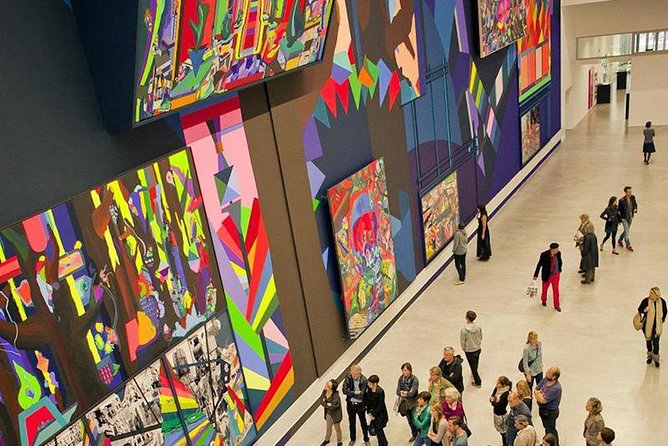
- Art historian-led, small-group pacing through Berlin’s center
- KW Institute as the anchor stop, with a ticket cost you should plan for
- Galleries in historic buildings, including former school and assembly spaces
- Multiple free stops (so you can spend your budget on the one paid museum visit)
- A post-1989 art story that helps you read Berlin’s contemporary scene
- Ticket in your pocket via a mobile ticket, plus pickup available
Berlin’s Mitte art scene on foot, in three hours
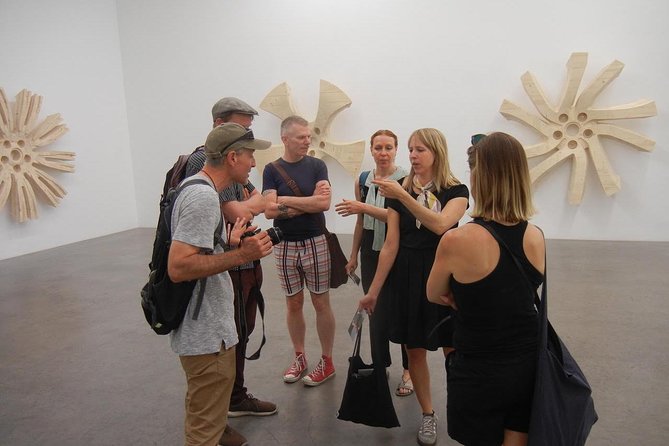
Berlin’s contemporary art world has a particular energy, and this tour is built to catch it fast. You cover a cluster of galleries in and around the Mitte neighborhood, plus nearby corridors like Potsdamer Straße, in about 3 hours. The time is tight enough to feel efficient, but the stop lengths are long enough that the art doesn’t become a blur.
The tour is designed for people who want more than a quick photo stop. The guide connects what you’re seeing to bigger forces: politics, migration, shifting cultural identities, and the way Berlin reinvented itself after 1989. You’ll walk, look, and listen—then you’ll leave with a clearer sense of why certain artists and institutions thrive here.
Small groups matter on a tour like this. With fewer people, you get a better chance to ask questions and to get your bearings in the space—especially in gallery rooms where the meaning is wrapped into the details.
You can also read our reviews of more museum experiences in Berlin


Price and group size: what $330 really buys
The price is $330 per group, up to 10 people. That structure can be great value if your group is near the top of the limit, because the cost per person drops a lot when everyone shares the bill. Even if you don’t fill all 10 spots, you’re still paying for a private tour with a professional art historian.
Also, the tour includes the guide and makes the experience feel “handled.” You’re not figuring out which building to enter first or how to connect the dots between institutions. You’re given a route where each stop adds a new piece of the Berlin art puzzle.
One detail to keep in mind for budgeting: the tour includes a paid museum-style stop and several free galleries. KW’s entrance fee is not included, so plan that extra cost if you’re counting every euro.
Stop 1: KW Institute for Contemporary Art and why it works without a collection
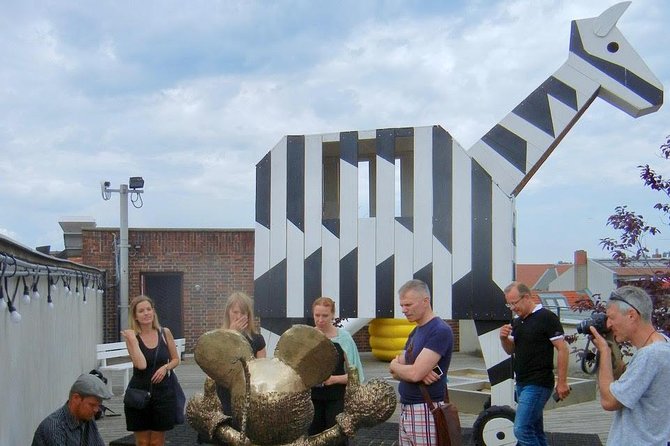
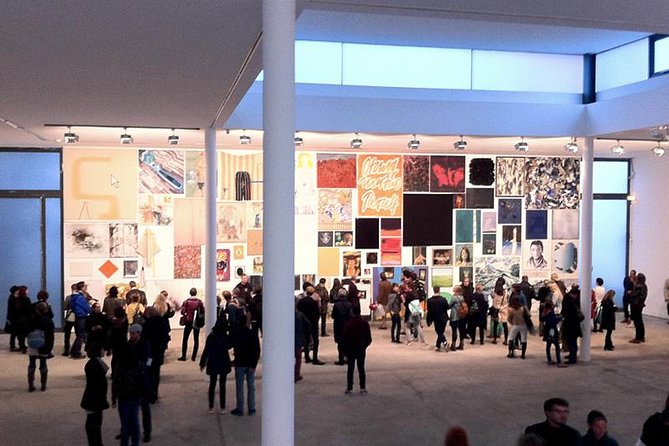
KW Institute for Contemporary Art is one of the most important contemporary art institutions in Germany. Here’s the key idea that your guide will help you notice: KW has no permanent collection. Instead, it operates like a laboratory—presenting rotating exhibitions, artist ateliers, and the latest events in contemporary culture.
That changes how you experience the building. You’re not touring “the highlights of the collection.” You’re watching an organization in motion: ideas arriving, exhibitions staging new conversations, and artists pushing forms forward. If you like contemporary art as a living process, this is a smart place to start.
Stop length is about 40 minutes, which is enough time to see more than one major work or room and still keep momentum for the rest of the walk. Ticket cost for KW is €10 for adults and €6 for seniors/students, so make sure you’re prepared before you get inside.
Auguststrasse: Michael Fuchs Galerie in former Jewish school rooms
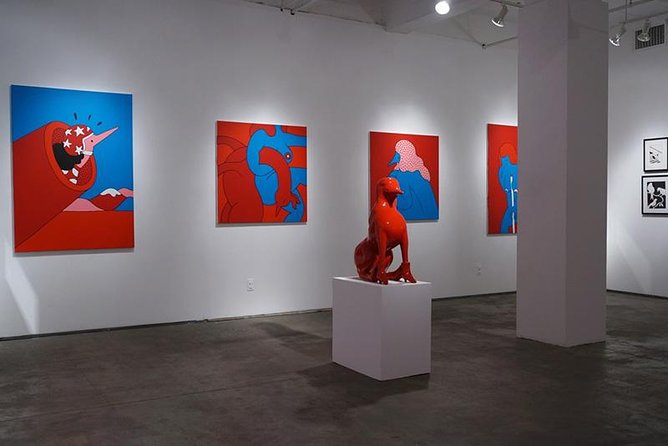
After KW, the tour shifts gears into a gallery space with a different kind of gravity. On Auguststrasse, you visit Michael Fuchs Galerie, which shows contemporary art alongside classical modernist works. That mix can be surprisingly useful because it lets you compare how modern traditions echo inside newer artistic ideas.
The setting is part of the story. This gallery is hosted in the former assembly hall and in two classrooms of the former Jewish Girls’ School in Berlin. When you’re standing in those rooms, it’s hard not to feel how layered Berlin is—how art spaces can carry memory even when they’re showing current work.
You’ll spend about 30 minutes here, and the admission is free. That combination—solid time plus no entry fee—makes it one of the easiest places on the route to enjoy without checking your wallet every few minutes.
Potsdamer Straße galleries: Esther Schipper, Eigen & Art, and Giti Nourbakhsch
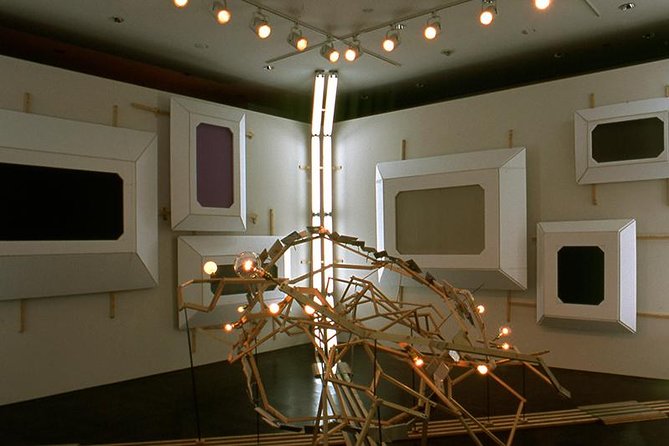
Potsdamer Straße is where the tour leans into pure contemporary gallery energy. The stops you make here are the kind you’d miss if you only stuck to the big museum names.
First up: Esther Schipper on Potsdamer Straße. It’s a contemporary art gallery with a Berlin base here, and your guide uses it to explain how gallery careers and reputations grow in the city. This is one of those stops where the art doesn’t need a big label to be interesting—the rooms and curatorial choices do the talking.
Then you move to Galerie Eigen & Art. This one is housed in a former school and focuses on temporary exhibitions of international contemporary artists. A former school setting matters: it subtly frames the act of learning. Your guide’s job is to help you see how curators use temporary shows as teaching moments—introducing ideas rather than presenting a fixed canon.
Both of these stops are free, with about 20 minutes allocated each. That time is ideal for contemporary work because it gives you enough attention to notice pacing, materials, and the way different artworks talk to each other across a room.
Finally, you end this gallery cluster with Galerie Giti Nourbakhsch. The guide connects it to the broader growth of the Potsdamer Platz gallery district, including Giti Nourbakhsch’s role as a founding member of Berlin Gallery Weekend. This is a good place to learn how events and institutions feed the everyday art market rhythm.
One planning note: the ticket for this stop is not included, so it’s one more place where you might want to budget for admission.



How the guide ties what you see to Berlin since 1989
The art historian leadership is the point of the whole experience. The best guides on this route don’t just identify works—they explain why Berlin’s art world took off and how the city’s shifts after 1989 shaped what galleries could take risks on.
In guides’ approaches you can see the difference. With Justin, the tour experience is described as an insider view with depth on both local artists and iconic German painters, and with explanations that link art choices to motivation. With Laureline, the emphasis leans into the feel of the city: that sense that there is a secret gallery hiding behind almost every door, along with reflections on why the buildings themselves matter. In both cases, the guide is doing the same core job—turning visual confusion into a map you can carry with you.
Expect historical context layered into your viewing. The route passes through parts of Berlin’s historic center, including buildings that reflect former East Berlin’s character. Your guide uses those architectural clues to help you read the city alongside the art.
What the walking route feels like in practice
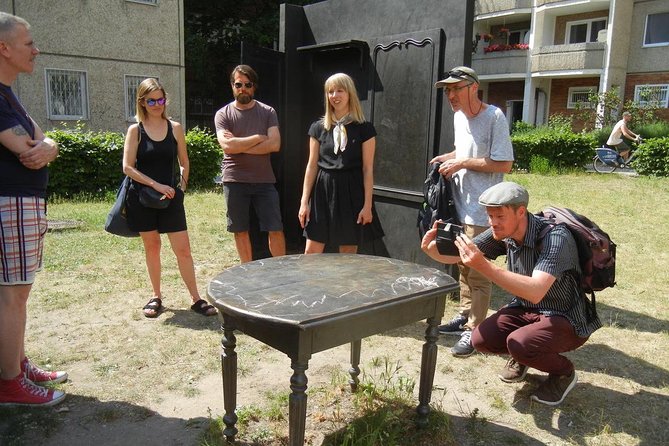
You’re out for about 3 hours, and you’re moving between stops in central Berlin. The good part is that each stop is close enough to keep the day flowing without turning into a sprint. The less fun part is that it’s still walking, so you’ll want to treat it as a proper half-day plan.
Pickup is offered, which helps if you don’t want to hunt down your own start point. The meeting location is Schöneberger Ufer 65, 10785 Berlin, and the tour ends back in Berlin (the exact finish can vary).
You’ll also have a mobile ticket, which is handy for a city where you might not want to deal with paper tickets. And since you’re near public transportation, you’re not stuck if your schedule changes slightly.
Tickets, days, and the Tuesday closure wrinkle
KW is the only stop where entry fees are clearly specified as not included: €10 adults, €6 seniors/students. Because the other galleries on the route have free admission, your budgeting math gets easier once you know you’ll likely pay for KW (and potentially the final stop, where admission is also not included).
One other detail can matter if you’re planning around your calendar: KW Kunst-Werke Berlin is closed on Tuesday. On Tuesdays, the tour will operate the walking portion only. That means you might still get the route and context, but don’t expect the KW museum visit itself on that day.
If you care most about seeing the interior exhibition spaces at KW, choose a day other than Tuesday. If you’re mainly there for the gallery district walkthrough and historical framing, Tuesday can still work.
Who this gallery scene walk is best for
This is a smart fit if you:
- Want contemporary art in Berlin explained by an actual art historian, not a generalist
- Like comparing different types of spaces—museum-style exhibition labs and galleries in historic buildings
- Prefer short, purposeful stops over rushing through a single museum
It’s also a good option if you’re not sure where to start. Berlin’s art scene can feel like a maze. A guided route helps you learn the logic of the neighborhood: why certain streets cluster galleries, and how institutions build reputations over time.
If you only want famous old-master landmarks or you’re looking for a long, sitting-down tour of one building, this format may feel too compact. But if you enjoy walking, reading art in context, and moving between spaces, this tour hits a strong balance.
Should you book the Berlin Gallery Scene tour?
Book it if you want an art-focused Berlin experience that’s practical and focused: five gallery stops, a route built around Mitte and nearby corridors, and a guide who ties contemporary work to Berlin’s post-1989 story. The price makes sense when you split across a group, and the mix of paid KW plus free galleries is a nice way to keep costs from ballooning.
Skip it (or at least pick your day carefully) if KW is the main reason you booked and you’re traveling on a Tuesday, since the tour runs as a walking portion only that day. Also, if you hate walking tours or prefer museum visits with lots of quiet time, you may find the pacing too active.
If you’re aiming for the kind of Berlin you can’t get from a guidebook list, this tour is a very solid way to get your bearings fast—then go out on your own and recognize what you’re seeing.
FAQ
Where does the tour start?
The tour starts at Schöneberger Ufer 65, 10785 Berlin, Germany. The tour ends back in Berlin (the exact end point can vary).
How long is the Berlin gallery tour?
It lasts about 3 hours.
How much does it cost?
The price is $330 per group, for groups of up to 10 people.
Is pickup included?
Yes. Pickup is offered.
What’s included in the price?
You get a professional art historian guide and the tour is described as private for your group. The tour also uses a mobile ticket.
Do I need tickets for the galleries?
KW Institute for Contemporary Art requires an entrance fee (not included). Several other stops on the route are free, while one other gallery stop is listed as admission ticket not included.
What happens if I book for a Tuesday?
KW Kunst-Werke Berlin is closed on Tuesday, and the tour will operate the walking portion only.
How soon will I get confirmation?
You receive confirmation within 48 hours of booking, subject to availability.
Can I cancel for a full refund?
Yes, you can cancel for a full refund if you cancel at least 24 hours before the experience starts.